
Impact of the Iranian Armed Forces’ Strong Punch on the Relationship Between the Two War Criminals
TEHRAN (Defapress) - After weeks of meaningful silence about the Iran war, Benjamin Netanyahu finally tried to present an image of his complete coordination with Trump by releasing a video message. A claim that, rather than being reassuring, sparked a new wave of doubts in Israel and US political circles.
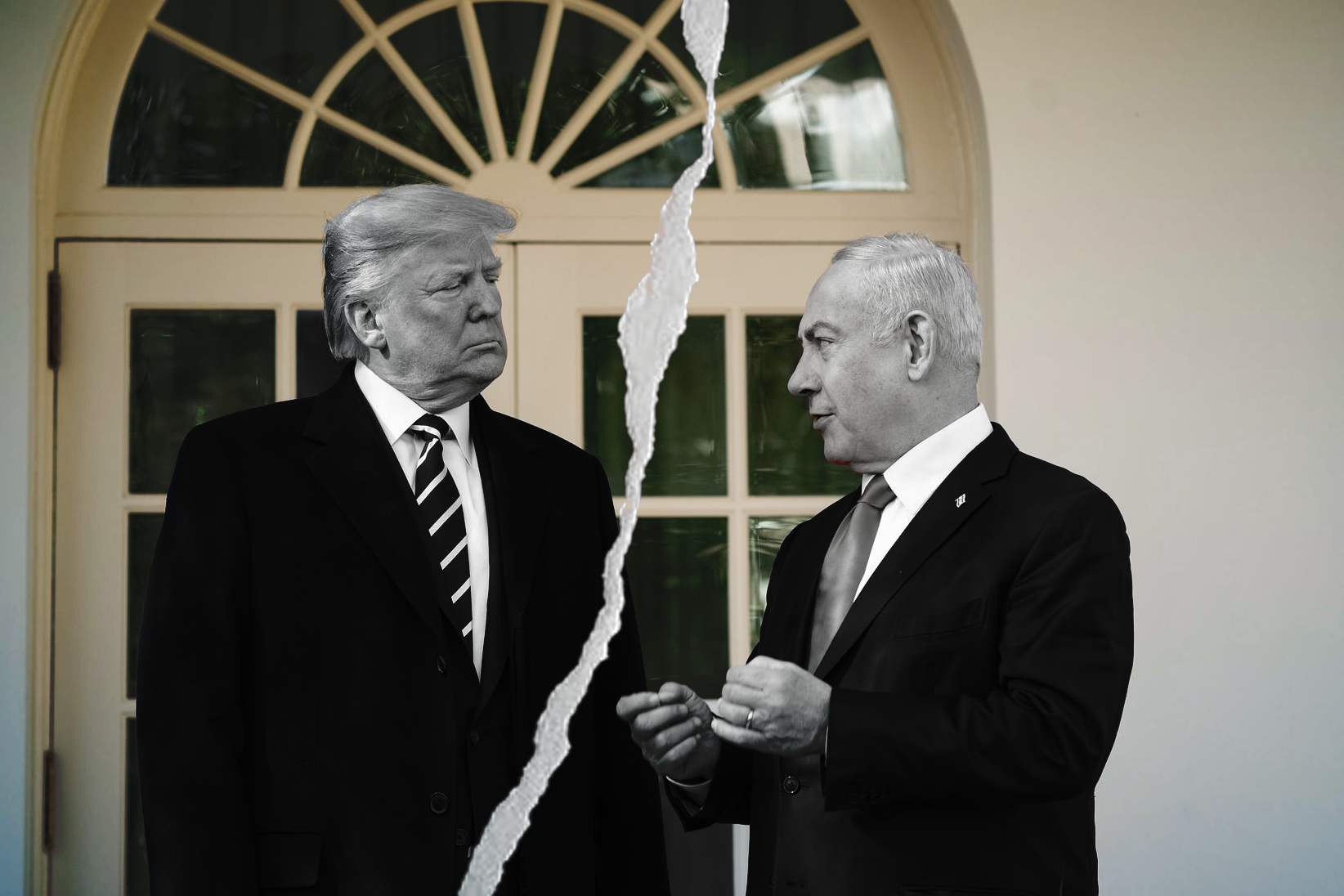
In the video, the Israeli prime minister emphasized that he is in contact with the US president “almost every day” and that there is “complete coordination” between the two sides; however, this unusual insistence was seen by many observers as a sign of a hidden crisis in relations between Washington and Tel Aviv.
In recent weeks, Israeli media have repeatedly reported that Netanyahu’s government has been effectively sidelined from the informal talks to end the war and has not even played a direct role in the ongoing peace talks brokered by Pakistan. This has raised doubts about the extent of Netanyahu’s real influence over White House decisions, especially as the war has not only failed to achieve its initial goals but has also become a regional and economic crisis.
Israeli-American analyst Dahlia Scheindlin believes that Netanyahu’s frequent emphasis on “excellent relations” is precisely the manifestation of the apparent tension. According to her, the war has “gotten in almost every respect against the initial goals,” which has made the gap between the two even more pronounced.
Trump and Netanyahu have consistently portrayed themselves as populists over the years, redefining the traditional rules of domestic politics to their advantage. But now, that same political alliance has embroiled them in a war that has cost them more than they initially anticipated. Since the joint US-Israeli attack on Iran on February 28, the political fates of the two sides have become so intertwined that it has become difficult for either side to back down.
Netanyahu has spent years trying to convince US presidents that the only way to contain the Islamic Republic is through military action. He has even directly intervened in US domestic and foreign policy to destroy the JCPOA, considered the most important foreign policy achievement of Barack Obama. However, Trump’s withdrawal from the JCPOA in 2018, which was pushed and encouraged by Netanyahu, not only did not stop Iran’s nuclear program, but also led to the expansion of Tehran’s stockpile of enriched uranium.
According to unpublished statistics, Iran accumulated more than 450 kilograms of highly enriched uranium in the following years, enough material to make about a dozen nuclear warheads. Thus, the very nuclear program that Netanyahu’s withdrawal from the JCPOA was supposed to stop, not only did not stop, but also accelerated.
Numerous reports in the American media indicate that Netanyahu has once again played a major role in convincing Trump to enter the war in recent months. Citing the successful US operation in Venezuela and the sudden transfer of Nicolas Maduro, he tried to create the impression that regime change in Iran could also be quick, cheap, and successful.
Alon Pinkas, a former Israeli diplomat, says that Netanyahu, using intelligence data and the assistance of the head of the Mossad, presented a picture of Iran on the verge of collapse: an economy in crisis, a society ready for rebellion, and an IRGC incapable of responding effectively. According to him, the Israeli prime minister had promised Trump that the war would end in victory within “three to four days.”
But developments on the ground proved otherwise. The Iranian government was not overthrown, domestic protests did not escalate into a full-scale uprising, and separatist forces did not take action against Iran. In contrast, Iran was able to inflict heavy blows on US and allied bases in the Persian Gulf, close the Strait of Hormuz, and deliver a major shock to the global economy.
These failures gradually distanced Trump from Netanyahu. According to Israeli sources, signs of the US president’s dissatisfaction became apparent in late March. Trump no longer mentioned Israel or Netanyahu in his public speeches, and at the same time, secret negotiations between Washington and Tehran began with Pakistan as a mediator.
During this period, Tel Aviv was forced to turn to its intelligence sources even to learn the details of the talks. More importantly, the initial draft of the ceasefire agreement did not mention prioritizing Israel’s concerns, such as limiting Iran’s missile program or containing Tehran’s proxy forces.
Trump’s behavior also gradually took on the color of public criticism. After Israel’s attack on the South Pars gas field, the US president openly announced that he had told Netanyahu not to do it. He even warned that if he did not like an action, he would not allow it to be repeated. This tone was in stark contrast to Washington’s past unconditional support for Tel Aviv.
The rift between Trump and Netanyahu became more apparent when, after the ceasefire was announced, the Israeli prime minister attempted to interpret it broadly to exclude Lebanon from the terms of the ceasefire. Trump initially agreed with this interpretation, but when the ceasefire was on the verge of collapse, he reversed his position and forced Israel to fully comply with its terms.
Now, as a fragile ceasefire has been established between the parties, signs suggest that the Iran war has not only transformed the security order in West Asia, but has also pushed the political alliance between Trump and Netanyahu into a state of distrust. An alliance once built on a show of strength is now deeply fractured under the strain of the costs of war and the failure of early calculations.
