
History Reversed with the Epic Funeral of the Martyred Leader in Iraq
TEHRAN (Defapress) - Elnaz Rahmatnezhad - The contemporary history of Iraq, especially during the Saddam regime, is full of pressure, restrictions, and frustrations that first and foremost affected the Shiite scholars and authorities. At that time, not only the voice of religion and authority, but even the right to openly mourn for the elders was restricted under the shadow of the Baathist tyranny. Ayatollah Khoei, one of the greatest figures in the Shiite world and the number one Shiite authority, who was imitated by millions of people around the world and dozens of other authorities who had emerged from his school and presence, was buried at night and secretly at the height of oppression. For such a peak of authority, only about 20 people prayed for him in the shrine of Imam Ali, and he was buried in imposed silence.
This same estrangement also cast a shadow over the blood-soaked bodies of Muhammad Baqir Al-Sadr I and Sadr II; the great men who, instead of being buried in a Shiite manner worthy of their position, were buried strangely and in an atmosphere of fear and repression. This was the image of Iraq under Saddam's rule; an Iraq where the Baathist regime tried to keep the authority, the domain, and the political and social identity of the Shiites in silence.
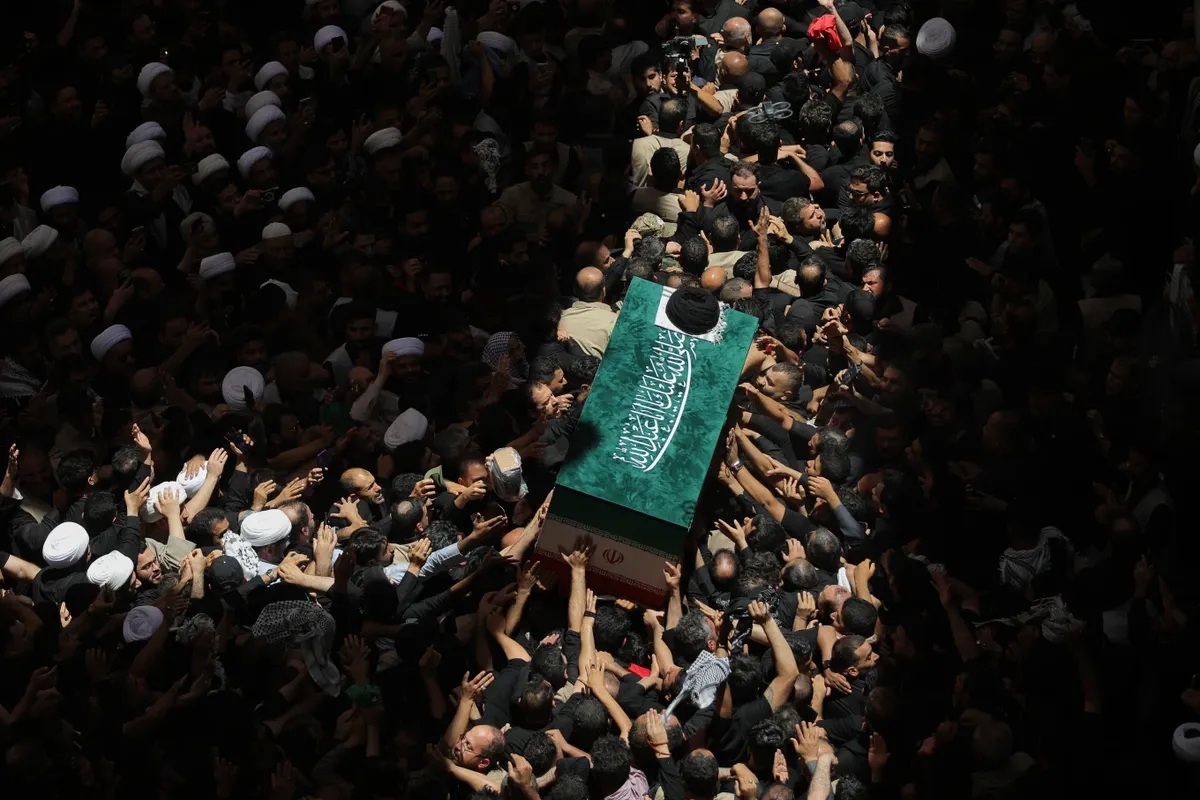
From the heart of this atmosphere of oppression, Saddam, with an ambitious but failed dream, issued the order to attack Iran; A dream that, according to him, would lead to the capture of Tehran within a few weeks. The same days when the Baathists wrote on the walls of Khorramshahr: “We have come to stay,” the same days when Iranian fighters were surrounded and martyred in the Kumail Canal, few people imagined that history would turn such a page. Few people thought that the day would come when millions of Iraqis, in the scorching heat of Iraq, would carry the coffin of the martyred Ayatollah Khamenei, emblazoned with the Iranian flag, and with the slogans “What a pity that loved ones are lost”, they would solemnly and triumphantly mourn him and pray over his body.
This scene was not just an emotional farewell; It was a historical reversal. From the time of Imam Hussein (AS) to the days of Sadr and Hakim, Iraqis had never been able to hold a funeral of this magnitude and openness for their elders. What took place in Najaf and Karbala was not simply a gathering of mourners; it was a grand demonstration of a profound transformation in Shiite political, social, and civilizational relations.
The martyred Ayatollah Sayyid Ali Hosseini Khamenei, as the greatest political and revolutionary leader in the world today, was buried in Najaf and Karbala with the presence of millions of people, officials, scholars, and students; and that in a land where there was once serious skepticism about political and revolutionary activities. This image clearly shows that the Shiite political and civilizational geography has been elevated under the light of his leadership. This funeral left behind traditional, purely religious boundaries and became a major identity and strategic event.
The people of the region demonstrated their unity in this funeral and depicted a rare scene of solidarity, especially where the flags of Iran and Iraq were carried side by side and in the middle of it was the image of the Leader’s scholars. These images carried a clear message: the bond between the two nations of Iran and Iraq is not a mere transitory and political bond, but is rooted in the Ummah, authority, Resistance, and shared historical memory. The people were not just mourning; they conveyed the message of unity and solidarity of the Ummah with its scholars, and the inseparability of the two nations of Iran and Iraq to the world and the American-Zionist enemy.
From this perspective, the funeral of Ayatollah Khamenei in Iraq cannot be considered an ordinary ceremony. This event was both a historic response to the years of Baathist repression and strangulation, a sign of the failure of Saddam’s unfinished dream of dominating Iran, and a living testament to the elevation of the political and civilizational status of Shiites in the region. With this scene, Iraq showed that it had reached a new and conscious unity; A unity that manifested itself on the streets of Najaf and Karbala, under the scorching sun, next to the flags of Iran and Iraq.
