
Axis of Resistance Authority and Self-Confidence Showcased by the Funeral of the Martyred Leader in Karbala and Najaf
TEHRAN (Defaress) - Holding the funeral ceremony for the martyred Imam Seyed Ali Khamenei (may his soul be sanctified) in Iraq, at the request of the government and official institutions of that country, is a move that goes beyond mere symbolism; it is a precise and calculated choice. This event has instilled fear and terror in America and Israel; these two evil entities have always been afraid of the consolidation of Iranian and Iraqi power and regional solidarity around the Axis of Resistance.
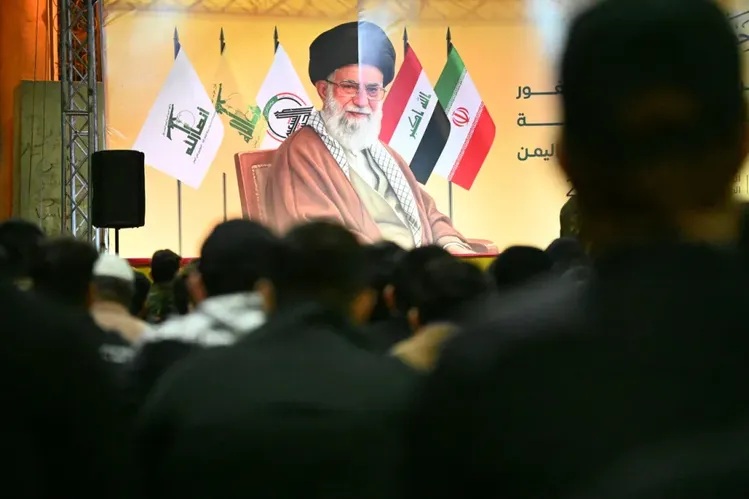
The funeral of the martyred Ayatollah Seyed Ali Khamenei is not a matter oriented toward the past, but rather indicates the future path. Holding this great event in a neighboring country carries very important messages.
Deep Human and Religious Connection
The cities of Najaf and Karbala hold extremely high significance for Shiites. The funeral of Ayatollah al-Uzma Khamenei (may his soul be sanctified) in these two cities demonstrates his lofty religious standing and conveys the message that his religious role extends beyond Iran and encompasses the Shiite world.
Najaf and Karbala also carry historical and identity weight in Shiite politics. The funeral ceremony for the leader of the Islamic Revolution in Iraq is a completely doctrinal act and an announcement of allegiance and loyalty. The people of Iraq come not to weep, but to renew their pledge. The funeral ceremony for Imam Khamenei the Martyr in Najaf and Karbala will transform from a mourning ritual into a ritual of popular mobilization.
Political Unity and Proximity
In the last two decades, Iraq has not been merely a neighbor for the Islamic Republic of Iran, but is considered a strategic ally. Defending Iraq is defending Iran, and defending Baghdad is defending Tehran. The destinies of these two countries are intertwined, and indeed, the victory of the Iraqis is the victory of the Iranians.
The funeral of the martyred Leader of the Islamic Republic of Iran in Iraq indicates political closeness and unity between the two governments. Holding this ceremony in Iraq signifies political respect and solidarity.
Addressing the Shiite World
When a leader's funeral ceremony is held in another country, it means this ceremony is not merely national. Rather, it takes on a transnational character. Therefore, the audience of the funeral ceremony of the martyred Ayatollah Seyed Ali Husseini Khamenei (may his soul be sanctified) in Iraq is the entire Shiite community in the region. Imam Khamenei the Martyr is introduced not only as the leader of Iran, but as a pivotal figure of a regional movement, whose martyrdom has shaped a more cohesive regional network possessing popular and ideological depth.
Despair of Israeli Media
Israeli International Television, after the trip of Seyyed Abbas Araghchi, Iran's Minister of Foreign Affairs, to Iraq and the coordination regarding the funeral of the martyred Leader's body in the holy shrines (Atabat-e Aliyat), could not conceal its terror of this great event.
In this regard, Mahdavi Azad, the host of this Zionist network, said: "Why does the Iraqi government allow this to happen? When have we seen the ruler of one country be given a funeral in another country and then return to his own country? This event (the funeral of the martyred Leader) could be a great show of power. This time, Iran's government wants to send a signal to America and Israel, that look, Iraq is in my hands. The government wants to give this signal to Europe that I am still established and I can rally the majority."
Iran-Iraq Relations in the Context of Historical and Security Developments
Iran-Iraq relations must be understood within a historical, cultural, and security framework; relations that are much deeper than temporary developments and changes of governments. During the eight-year war, Iraq's Ba'ath regime, with the support of about 80 countries, including the United States, the UK, Argentina, and Brazil, which provided Baghdad with various types of weapons, attacked Iran. However, with the fall of Saddam, Iraq's political orientation changed, and this change became more apparent when ISIS threatened large parts of Iraq.
At that juncture, the martyred Lieutenant General Qasem Soleimani and the Defenders of the Shrine intervened to prevent the fall of Baghdad and protect holy sites, standing alongside the Iraqi people. From that time, the bond between the two countries entered a new phase; a phase that, despite enemies' efforts to revive the era of Saddam and create rifts between the two nations, has remained stable and robust.
In recent years as well, field realities have shown that the Iraqi people have a positive view of Iran. During the Ramadan War, Iraqi Resistance Forces intervened to support Iran, and the Iraqi people showed their solidarity with Iran every night by taking to the streets. These behaviors demonstrate that the enemies' claims about discord between the two nations lack social backing.
The relationship between Iran and Iraq has been formed over centuries; from the extensive travel of seminary students, clerical families, pilgrims, and religious commerce between Najaf, Karbala, Qom, and Iranian cities, to the long-term residence of many prominent Iranian scholars in Najaf and the presence of Iraqi clerics in Iran. Therefore, for a significant part of Iraq's religious elite, Iran's developments are not merely a foreign matter, but an issue related to the entirety of the Shiite community.
On the other hand, Iraqi Shiites have experienced the heavy burden of repression during the Saddam era. After 2003, many Iraqi Shiite groups viewed the Islamic Republic as a support against the return of previous threats. For a segment of Iraqi commanders and political currents, the relationship with Iran is not merely a political alliance; it is a security and identity necessity rooted in historical experiences.
With the emergence of ISIS, this security bond became more apparent than ever. During that period, the Najaf religious authority (Marja'iyyah) and various Iraqi Shiite forces acted within the framework of defending the community and sanctities. For them, cooperation with Iran was not defined purely from an ideological perspective, but from the viewpoint of national survival. This shared experience strengthened the sense of a "single security destiny" between the two nations.
Over the past years, enemies have attempted to create discord between Iran and Iraq and prevent the two countries from utilizing each other's vast capacities. However, field realities, historical ties, and shared security experiences show that the Iranian and Iraqi nations stand together, are brothers, and are aligned in a single rank.
Stability of Baghdad is the Security of Iran
Today, the Iranian and Iraqi nations stand in a single rank, and the stability of each depends on good relations with the other. For Tehran, the stability of Iraq and the prevention of this country becoming a base for security conspiracies by Washington or Tel Aviv is an absolute red line. For this reason, the development of relations with Iraq will always remain at the top of Tehran's priorities.
Undoubtedly, the most vital dimension of Iraq's foreign policy is regulating its relationship with its powerful eastern neighbor, the Islamic Republic of Iran. Tehran-Baghdad relations are tied to deep historical, religious, geographical, and security bonds that no government in Iraq, with any political inclination, can ignore or deny.
