
Riyadh's Nuclear Gift to Yemen's Ansar Allah
TEHRAN (Defapress) - The changing equations in the Persian Gulf in recent years have shown more than ever how vulnerable traditional calculations of power can be in a region with active geopolitical fault lines. In response to military aggression and the continuation of the comprehensive blockade of Yemen, the resilience and deterrent responses of Ansar Allah and the Yemeni Armed Forces are not merely a military reaction in accordance with legitimate defense rights; rather, they reflect the reality of moving beyond the classical defense paradigm and imposing new equations based on indigenous capabilities.
At the center of this equation lies another long-standing miscalculation by Riyadh: viewing "extra-regional hard power" and "macro-technologies" as a protective shield. Continuous reliance on the United States for national security is a failed strategy, as superpowers always play according to the scales and their temporary interests, abandoning their regional allies at decisive moments. Faced with this truth, the inclination toward developing nuclear technologies and facilities emerges as a tool to achieve immunity or regional superiority; however, the notion that "going nuclear" issues a permanent security guarantee is nothing more than a mirage.
Historical experience within this very regional ecosystem has proven the invalidity of this assumption. Pakistan is a prominent and leading example in this regard: a country that, despite acquiring nuclear power and joining the club of atomic powers, was never able to resolve its chronic tensions, internal instability, and ongoing border conflicts with its neighbors such as India and Afghanistan. In fact, nuclear weapons and technology did not create a protective umbrella for Islamabad; instead, they became a new source of international sensitivities, geopolitical pressures, and added security threats. This historical lesson makes it clear that nuclear tools, without political convergence with one's surroundings, bring neither balance nor stability. This issue takes on even more concrete dimensions regarding Saudi Arabia.
Accordingly, it must be noted that Yemen possesses a defined territorial identity, an identity-shaping history, and an independent nation in which no foreign power has the right to dictate terms or intervene. Sanctions, arms pressure, and maneuvers over costly development programs have not eroded Ansar Allah’s stance on fundamental rights and lifting the blockade of Yemen in the slightest. Precisely at this juncture, the existential contradiction of nuclear facilities reveals itself.
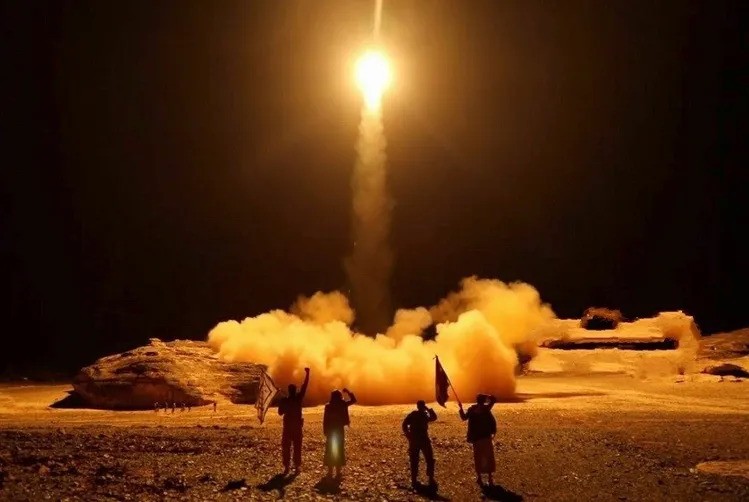
The dramatic upgrade in precision-striking capabilities and operational range of Yemeni missiles and drones that were previously used in precise operations against vital and seemingly unreachable arteries such as Aramco facilities has imposed a new model of deterrence. This technological leap clearly proves that the Ansar Allah movement and the Yemeni Armed Forces today possess the necessary structural and operational capacity to target, with high precision, Saudi Arabia’s nuclear facilities and power plants in addition to its oil infrastructure, if hostilities continue.
This undeniable reality confronts Riyadh’s security calculations with self-defeat; because the more a country constructs costly, complex infrastructure without fundamentally resolving surrounding conflicts, the more it simply places "larger, more sensitive, and more vulnerable targets" within the crosshairs of the opposing side's deterrent power. Under such circumstances, nuclear infrastructure will not serve as a protective umbrella, but will instead turn into a self-inflicted security Achilles' heel.
Saudi Arabia must keep in mind that amid regional tensions, the real solution to breaking this deadlock cannot be found in Washington or through the construction of nuclear power plants. If the country seeks stability, sustainable development, and even the safe utilization of peaceful nuclear energy, it has no choice but to yield to regional realities and reconcile with its neighbors.
A progressive diplomacy can alter equations completely. Instead of looking to Westerners who view security as a rented commodity, Riyadh can engage in genuine intra-regional cooperation. Even imagining a model of peaceful diplomacy in which convergence with regional powers such as Iran leads to peaceful agreements and shared ventures in the field of nuclear energy would not only reduce the sensitivity surrounding unilateral programs, but also pave the way for collective and regional security.
Ultimately, regional realities demonstrate that Ansar Allah's indigenous deterrence has reshaped the balance of power, proving that regional security is neither an externally constructed project nor achievable through dangerous technologies. The only true guarantee of stability for Riyadh is to end hostilities, respect Yemen's sovereignty, and pivot toward diplomacy and peaceful coexistence with its neighbors.
