

When Everyone Plays in the Hands of the Iranian Armed Forces
TEHRAN (Defapress) - In recent months, the outbreak of the regional war in Iran has dramatically altered the security dynamics of West Asia. While Western powers assumed this conflict would conclude swiftly through overwhelming American military superiority, Tehran’s comprehensive resistance, adoption of the "mosaic defense" doctrine, control over the vital energy artery in the Strait of Hormuz, and utilization of asymmetric capabilities shattered the calculations of both Washington and Tel Aviv.
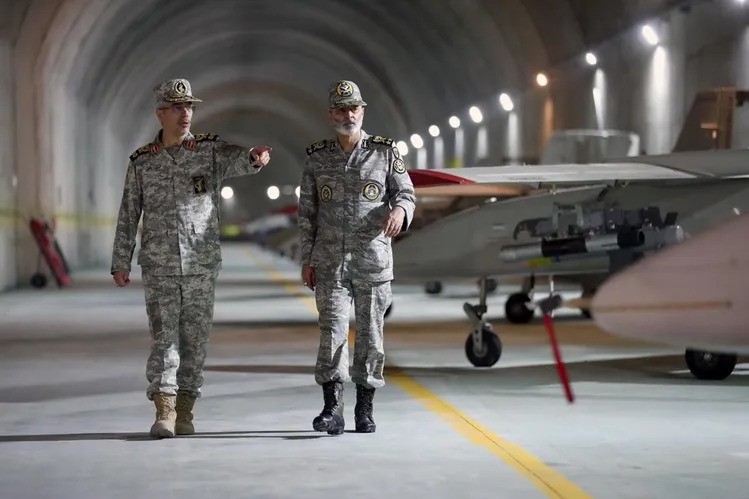
In this context, the "War on the Rocks" think tank issued a report analyzing the reasons behind the U.S. failure, Iran’s strategic show of strength, the shift in regional balances of power, and why this war ended under terms dictated by Iran.
The text of this think tank's analysis is as follows:
While the U.S. and Israel assumed that technological military superiority would yield a swift victory, Iran approached the conflict with a strategic vision of victory based on Clausewitz’s principle of war as an extension of politics. After two decades of preparation, Iran’s Islamic Revolutionary Guard Corps introduced the "mosaic defense" doctrine in 2005, employing a decentralized command structure that allowed mid-level commanders to act independently if senior leadership was targeted. Eschewing symmetrical warfare, Iran engaged in asymmetric attrition, deploying multi-thousand-dollar drones and missiles that depleted the coalition's multi-million-dollar interceptor reserves, thereby inflicting unsustainable financial and material costs.
In the geopolitical and maritime arenas, Washington's miscalculation regarding Iran's ability and resolve to close the Strait of Hormuz shifted the primary U.S. war objective from dismantling Iran’s military capabilities to merely reopening this vital transit route. Despite damage to its conventional navy, Tehran maintained control over the strait using asymmetric tactics, mines, missiles, drones, and swarms of speedboats, akin to Ukraine's strategy in the Black Sea. The failure of the U.S.-led "Project Freedom" to escort tankers, combined with Iranian missile and drone strikes on Saudi Arabia and the UAE, frightened Persian Gulf Cooperation Council (GCC) countries into closing their airspace to U.S. military aircraft. These nations ultimately acknowledged Iran's victory by sending delegations to the memorial service for Supreme Leader Ayatollah Ali Khamenei and strengthening diplomatic ties with Tehran. Economically, Iran's five-year preparation for a sanction-resilient economy, expanding its "shadow fleet" of tankers from 70 in 2020 to nearly 550 by 2025 and relying on Chinese refineries for 90% of its crude exports, guaranteed its financial endurance.
In the psychological and regional domains, Iran advanced its strategic messaging beyond traditional propaganda by utilizing engaging AI-generated animations, effectively shaping global narratives and amplifying U.S. public opposition to a prolonged conflict. On the ground, Iraqi militias proved to be the most persistent direct threat to U.S. forces, conducting over 180 attacks on American bases before the war, and significantly elevating their strategic posture within Iran's regional network. The war culminated in a severe rift between Washington and Tel Aviv, highlighted by reported humiliating exchanges between Trump and Netanyahu. Israel was sidelined from negotiations, Hezbollah gained immunity under the terms, Iran’s missile and nuclear programs remained intact, and hopes for expanding the Abraham Accords were shattered. Ultimately, the resulting understanding was dictated on Tehran’s terms, leaving Iran with preserved strategic assets, substantial economic concessions, and enhanced regional leverage.
