
Footprint of Ukrainian Mercenaries on the Front of Iran’s Enemies
TEHRAN (Defapress) - The war between Ukraine and Russia is no longer merely a regional battle in Eastern Europe; rather, it has become a catalyst for the export of advanced military technologies worldwide, particularly in the domain of drone and anti-drone warfare. Realizing in 2026 that its political and military survival depends on Washington's satisfaction, the Kyiv regime has adopted a new strategy: becoming a "security and drone advisor" to the U.S. and its allies in the world's most sensitive region, namely West Asia. Designed to strengthen the confrontation front against the Islamic Republic of Iran, this approach is viewed from Tehran's perspective as going beyond a geopolitical competition; due to its destabilizing nature and support for terrorist groups, it is classified as a hostile and terrorist act. By linking its military capabilities to Western security arrangements, Ukraine has practically brought the fires of war to Iran's security backyard, a move that will certainly not be without consequences for Kyiv.
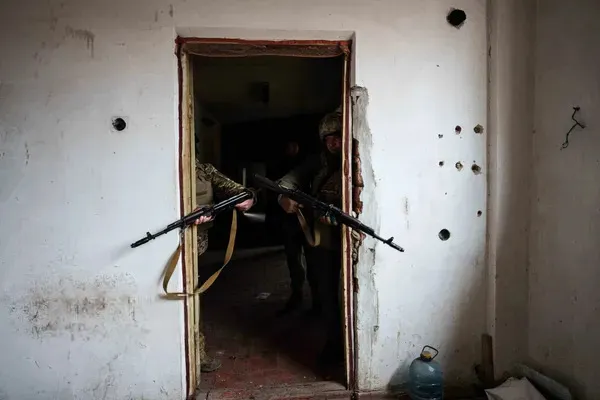
Ukraine Becoming Washington's Security Arm in the Persian Gulf
The first and perhaps most overt dimension of this confrontation is Kyiv's direct entry into the anti-drone cooperation network of the U.S. and its regional allies. In March 2026, the deployment of 228 Ukrainian specialists to Persian Gulf Arab states, including Saudi Arabia, the UAE, Qatar, Kuwait, and Jordan, unveiled a massive intelligence-military operation. The deployment of the advanced "Skymap" command and control system at Saudi Arabia's King Sultan Air Base and the training of U.S. forces by these advisors reveal the strategic dimensions of this cooperation.
These actions are not merely exchanges of technical experience; rather, they signify an enhancement of the capability to detect, track, and counter drones in the region. By transferring its wartime experiences, the Ukrainian government is participating in strengthening the military capacity of actors who are in direct security confrontation with Iran. From the perspective of Iran's national security, these drone advisory services, conducted to neutralize Tehran's defensive deterrence, are considered a hostile act and an effort to upset the regional security balance in favor of U.S. hegemony.
Drone Coalition with Tel Aviv and Support for Radical Groups in Syria
Ukraine's security convergence with Israel and its support for terrorist groups in Syria form another dark side of these equations. According to analytical reports by the Institute for National Security Studies (INSS) on June 7, 2026, Ukrainian military intelligence has provided drone and military assistance to the headquarters of the "Hayat Tahrir al-Sham" terrorist group in Idlib since 2024. This synergy peaked in April 2026, when Volodymyr Zelenskyy and Mohammad al-Golani met in Damascus, signaling Kyiv's effort to cement its position in Syria's new structure and secure Israel's interests on the northern borders of the occupied territories. Concurrently, on July 23, 2025, the foreign ministers of both sides agreed to launch a "strategic dialogue regarding the Iran threat." Furthermore, the Ukrainian ambassador to Israel officially confirmed in March 2026 that Kyiv has provided Israel and the U.S. with information and years of experience in countering Shahed drones. By offering low-cost interception methods and radar integration, Ukraine has practically become an accomplice and a logistical and intelligence sponsor in the U.S.-Israeli regional war against Iran.
Assault on Iran's Maritime Security: From the Caspian Sea to the Horn of Africa
The Ukrainian government's confrontation with Iran has not been limited to West Asia and has spilled over into maritime terrorist acts. The July 2026 incident involving the Iranian commercial vessel "Anna" in the Caspian Sea is one of the most serious points of tension and a clear manifestation of Kyiv's maritime terrorism. The Ukrainian attack on this civilian vessel, which resulted in the martyrdom of one crew member and the injury of another, shows how Ukraine's proxy war has targeted shipping security and the lives of Iranian citizens.
Kyiv's behavioral pattern of utilizing military tools to create instability in extra-regional geographies is also traceable in the Horn of Africa. A September 2026 report by CNN regarding the presence of roughly 15 Ukrainian drone specialists in northern Mali and their cooperation with local rebel forces exposes a dangerous strategy. To advance its competition with Russia, Kyiv has turned to exporting drone terrorism and training paramilitary groups in conflict hotspots; a capacity that, alongside the country's anti-drone cooperation with the U.S. in West Asia, confirms Kyiv's hostile behavioral pattern on a global scale.
The collection of actions taken by the Ukrainian government in 2026, from dispatching hundreds of drone advisors to U.S. bases in the Persian Gulf and intelligence cooperation with Israel, to supporting radical groups in Syria and attacking Iranian vessels in the Caspian Sea, demonstrates a strategic miscalculation by Volodymyr Zelenskyy. Believing that it can secure concessions in Europe by entering West Asian security equations and serving Washington and Tel Aviv's interests, Kyiv has effectively exposed itself to grave political and security consequences; consequences that could jeopardize Ukraine's territorial integrity.
Zelenskyy's Favors to the U.S. and Israel Amid Patriot Shortages
Zelenskyy's obsequious services to the U.S. and Israel are taking place while the U.S. government cannot even supply Patriot systems to the Ukrainian army. In this regard, CNN reports that years of utilizing this system in Ukraine, alongside U.S. and allied commitments in West Asia, have severely depleted pre-existing Patriot stockpiles. Expert estimates indicate that up to 50% of U.S. Patriot interceptor reserves have been drained due to multiple conflicts, including the war in Ukraine and West Asian regional developments; moreover, the global production capacity for these missiles is severely restricted.
Lockheed Martin, the primary contractor for this system, continues to face serious bottlenecks in its component supply chain and a shortage of specialized labor despite billions of dollars injected by the U.S. government to increase production capacity. Reports indicate that global Patriot production capacity is so low that simultaneously meeting Ukraine's urgent needs, Washington's commitments to the Zionist regime, and replenishing U.S. domestic stockpiles appears virtually impossible.
From the perspective of the Islamic Republic of Iran, any aggression against national interests, whether in the form of drone advisory to strengthen the military arm of the U.S. and Israel, or in the form of terrorist acts against civilian vessels, constitutes a red line. By stepping outside the circle of a regional war and becoming an active actor on the security-pressure front against Tehran, Ukraine is imposing high costs on its own security and that of its allies, because Tehran will show no leniency toward any of the elements involved in these hostile actions when it comes to defending the regional security balance and the lives of its citizens.
