
Vulgarity of America's Upper Class in the Epstein Case
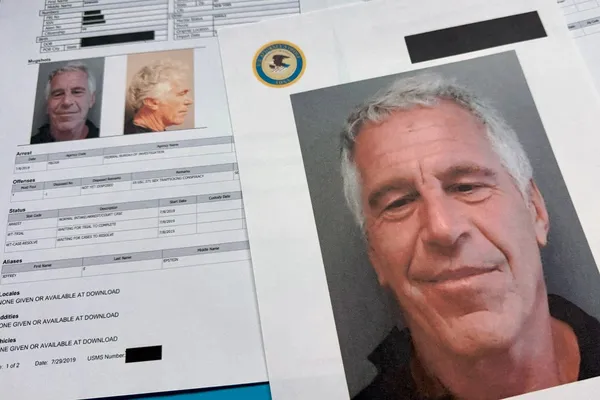
TEHRAN (Defapress) - Seven years after Jeffrey Epstein, the corrupt financier and convicted sex offender, was found hanged in Cell 220 on the ninth floor of the Manhattan prison, all initial reactions and public sentiment toward this sudden and violent death have completely inverted. In August 2019, it was the victims of the Epstein case, those harmed by sexual exploitation, and all who sympathized with them who were consumed by anger, shock, and grief upon hearing the news of his death. They feared that through his self-inflicted death in prison, the entire truth regarding the dark dimensions of his life, his hidden network, and his organized crimes would be buried forever beneath tons of earth, and that the hand of justice would never reach him or his accomplices.

In contrast, it was his vast network of friends, allies, politicians, and a huge array of influential and powerful figures who breathed a sigh of relief during those final days of summer 2019. They hoped that the humiliating chapter of disclosures would be closed with his sudden death in his cell, and that the secrets of his accomplices would remain suppressed forever. However, with seven years having passed, it has become clearly evident today that all the calculations and chuckles of the wealthy and powerful back then were completely wrong. The erosion of credibility, loss of reputation, and storm of scandals only truly began after Epstein’s death, swallowing prominent figures one after another in the fires of ignominy.
Today, in 2026, a full review of the dimensions of this case demonstrates that Epstein was not merely an abusive sex offender and a financial fraudster, but a symbolic, pivotal figure and a full mirror reflecting a corrupt, unchecked, and degenerate era. Contrary to initial assumptions and the fear that the case would close, the truth did not fade with Epstein’s death in a prison cell, nor were the answers to many questions destroyed.
Although specific details, such as the exact circumstances surrounding his death in a heavily guarded, high-security facility, as well as the cause of the rift in his long-standing close friendship with Donald Trump in the early 2000s, remain shrouded in ambiguity and mystery, and despite many survivors and victims of his crimes still being distressed, bewildered, and thirsty for fuller answers, his villainous nature, manipulative personality, and seductive methods of laying traps to ensnare the wealthiest, most powerful, and most successful individuals on Earth have now become part of clear, universal public understanding. This is a reality that, had he lived, might never have been exposed in such a bright and stark manner.
Had Epstein survived, he likely would have reached a plea deal with prosecutors behind closed doors or been put on trial in a courtroom where strict evidentiary rules would have narrowed the scope of focus to only a few specific, confined crimes, bypassing the broad angles of his lifestyle, covert relationships, and network of influence. Nevertheless, every one of Epstein’s prominent partners and friends who had breathed a sigh of relief upon hearing of his death in 2019 was completely mistaken.
The disclosure of a massive and unprecedented treasure trove of his emails, letters, and text documents, made public under an official act of the U.S. Congress, primarily due to the persistence and stance of key figures in the MAGA movement and subsequent Democratic alignment against Trump's initial distaste and reluctance, provided a highly detailed, raw, and embarrassing picture of behind-the-scenes whispers, nauseating humor, and transactional quid pro quos that formed the core essence of Epstein’s relationships with global elites.
Examining Jeffrey Epstein’s record on the seventh anniversary of his death highlights two fundamental and central paradoxes, both of which are directly or indirectly, yet inevitably, the result of actions and consequences stemming from his old friend and companion, Donald Trump. The first paradox lies in the astonishing degree of unintended transparency that was produced. His death prevented a limited trial and instead threw open the doors to his vault of private documents to the public.
The second paradox, which is deeply painful and unsettling, relates to his unexpected and unintended historical immortality. At the time of his death, his end seemed like the cowardly and wretched departure of a fraudster and sex offender who would soon be forgotten with the healing balm of time, relieving society of his name. The adjectives "cowardly" and "shameful" still apply to him, but "rapid oblivion" never occurred and never will. Epstein’s life will, in all likelihood, be discussed, studied, dissected, and written about for the next hundred years.
The primary reason for this historical endurance lies in the fact that Epstein’s complex network of relationships exposed how an era that generated an immense accumulation of unprecedented power and wealth became, at least in certain elite circles, completely devoid of self-restraint, discernment, prudence, and even basic morality and humanity. Naturally, not everyone whose name and reputation were tarnished by the release of documents and emails related to Epstein was necessarily his close friend or aware of all the criminal details of his operation of a supply and exploitation network of underage girls. However, in the vast majority of revealed cases, they were aware of his reputation as a womanizer and a libertine.
Just as Trump explicitly stated about him in 2002, noting that he liked women "on the younger side," many of these elites, exactly like Trump, had concluded that this trait did not diminish his value, but rather added to their assessment that he was a "terrific guy" and a "lot of fun to be with." In almost all instances, these individuals saw Epstein’s appeal in his vast wealth, his unrestricted access to other wealthy figures, his private jets, his private island, and his self-manufactured aura as an astute, wise genius who used his exceptional brain to generate income incomprehensible to ordinary people.
If an inquisitive researcher in the early 22nd century wants to understand how the upper echelons and governing tiers of American society functioned in the early 21st century, it will be impossible for them to overlook a man whose professional and personal paths destructively intersected with two U.S. presidents (Donald Trump and Bill Clinton), a prominent prince from the UK royal family (Prince Andrew), the most prominent tech figure of the 20th century and the largest philanthropist of the 21st century (Bill Gates), a king of Wall Street (Jes Staley, senior executive at JPMorgan Chase and later CEO of Barclays Bank in the UK), a star of the academic and governance worlds (Larry Summers, former U.S. Treasury Secretary and former president of Harvard University), a long list of the world’s wealthiest individuals (such as Leon Black, private equity titan), and even the most prominent intellectuals and scientists of the era (including linguist Noam Chomsky, molecular biologist and Nobel laureate Richard Axel, and computer scientist David Gelernter).
Human flaws regarding lust, alcohol, and money are nothing new in human history, and those studying this era a century from now will not be surprised to learn that greed and desire can drag human beings into the darkest places. However, the Epstein file possesses three completely distinct signatures and characteristics that will leave future researchers questioning: What were Epstein’s friends and partners really thinking, and what logic governed their behavior?
The first prominent feature in Epstein’s documents and emails is an extreme, strange, and incredible thirst for connection and a sense of belonging that permeates the behavior of many individuals caught up in this scandal. It should be noted that almost all key figures in this case were eminent, successful individuals with grand scientific, political, or economic achievements who could have had a wide circle of influential friends with no criminal records or sex offense convictions (which Epstein had officially been convicted of since at least 2008).
Yet, they were still drawn to the flames of Epstein’s corruption. Former Barclays CEO Jes Staley, whose exchanged emails with Epstein were filled with crude, metaphorical references to women using Disney cartoon characters, poured his heart out in 2009 to the man who would later ruin his professional life, writing to him: "I owe you a lot. I value our friendship. I have few friendships that run this deep and mean this much."
Larry Summers, the former U.S. Treasury Secretary, sought advice from Epstein regarding his romantic relationships just before Epstein’s re-arrest in 2019. Even in the case of Bill Gates, who was presumed to be at the pinnacle of global wealth and fame and in need of nothing more, the same pattern repeated. In a 2011 email to a colleague about Epstein, he wrote: "His lifestyle is very different and kind of intriguing though it wouldn't work for me." These interactions ultimately took a toll on his marriage with Melinda French Gates, with media reports indicating that her anger and disgust over her husband’s ties to the Epstein scandal were among the primary reasons for the breakdown and divorce in their multi-decade marriage.
The second signature of the Epstein documents is reminiscent of Hannah Arendt’s famous theory on the "banality of evil," but here we face an "elite banality." The collection of birthday wishes and notes compiled for Epstein’s 50th birthday serves as the quintessential evidence proving this. These pretentious friends and holders of the world’s highest achievements filled page after page with vulgar sexual jokes, crude double entendres, and foolish laughter reminiscent of middle school students' scribbles in yearbooks to pay tribute to Epstein, including a sketch attributed to Trump (which he denies) depicting a nude figure signed at a specific spot.
The sobering point is that in these individuals' middle age, there were no notes from friends reminiscing about hard times, helping each other during a parent's illness, or even deep discussions lasting until 3 AM about politics, philosophy, or sports in an all-night diner. Was this all there was to life at the apex of global power and wealth? The superficiality, vulgar humor, and libertinism of Epstein and his wealthy friends were a shocking revelation of the emptiness at the top levels of society.
The third and final signature revealed by the Epstein documents, which can without exaggeration be called a fascinating yet pathological aspect, is the astonishing social fluidity among today's elite and privileged class. In past historical periods, hereditary social class and family lineage were decisive forces that smoothed the career paths of the well-born while creating an exhausting barrier for other talents. But Epstein’s circle was a heterogeneous blend from all walks; on one side were well-off individuals like Staley, whose father was a CEO and who studied at expensive universities before heading to Wall Street, while on the other side stood Epstein’s most important financial patron and primary backer, Les Wexner, the retail billionaire who was the child of a middle-class Russian immigrant and educated at Ohio State University.
Epstein himself grew up near Coney Island and was a college dropout. This structure demonstrated that modern social norms rewarding networking, presence in glamorous scenes, and flashy displays of wealth are a far more vital and powerful force than the old, exclusive culture of previous generations' aristocratic clubs, a phenomenon previously proven earlier this century by Bernie Madoff’s massive financial scandal.
What can be stated with absolute certainty in 2026, which was not as clear in 2019, is that Jeffrey Epstein’s name will remain in national and historical memory for as long as people are curious about the Trump era, American political developments, and the decay of 21st-century elites. The disclosure of his emails and remaining document vault has become a primary source for dissecting the structure of power far beyond an individual's criminal case, and these documents will continue to engage audiences, historians, and sociologists of power for decades and centuries to come.
