
Election of Khalil al-Hayya Is a Continuation of Hamas Field Strategy
TEHRAN (Defapress) - The selection of Khalil al-Hayya as the highest official of Hamas, beyond an organizational shift, is a clear message of the continuation of Resistance amidst the most difficult diplomatic and military battles. Having previously steered complex ceasefire negotiations, he is now the inheritor of the martyr Yahya Sinwar during an era in which the movement faces unprecedented crises in determining its political headquarters and rebuilding alliances. With a background combining higher religious education and field experience, al-Hayya is a leader who derives his legitimacy not only from the ballot box, but also from the extensive sacrifice and martyrdom of dozens of his family members. This political transition places Hamas before a great test to maintain the balance between diplomacy and steadfastness in the heart of Gaza.
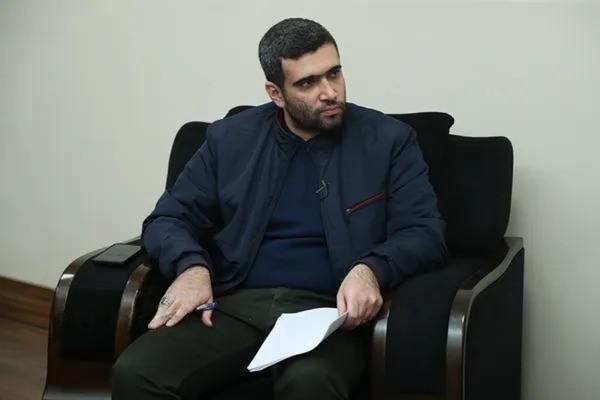
In this regard, the Defapress correspondent spoke with Mohammad Ali Hasannia, an expert on West Asian affairs, the full details of which are presented in the continuation of the report:
At the beginning of his remarks, he said: "By officially announcing the news of the election of Khalil al-Hayya as the new head of its political bureau, the Islamic Resistance Movement, Hamas, opened a new chapter in the history of this movement. This election, which takes place after a period of interim leadership and the martyrdom of several key leaders, demonstrates the continuity of Hamas's deep and flexible organizational structure in the face of external pressure."
Hasannia continued: "Khalil al-Hayya emerged victorious in a close race with 35 votes against 34 votes for Khaled Mashal, the former head of the political bureau. This election was held to find a successor to Yahya al-Sinwar, who had assumed the leadership of Hamas after Haniyeh. Khalil Ismail Ibrahim al-Hayya, born in 1960 in Gaza, is considered one of the veteran figures and intellectual pillars of Hamas. He received his doctorate in Islamic jurisprudence from the Sudan University of the Holy Quran and Islamic Sciences and is considered one of the founders of the movement during the First Intifada (1987)."
He added: "His political record has many ups and downs. He spent three years of the 1990s in the prisons of the Zionist regime on charges of anti-Israeli activities. In 2006, he entered the Palestinian Legislative Council as a representative of Gaza and chaired the Hamas bloc in this council. But most importantly, his key role is as the head of Hamas's negotiating delegation. Al-Hayya has had a prominent presence in all major ceasefire talks, including the Cairo negotiations in 2012 and 2014, as well as the sensitive negotiations of 2025 that led to the ceasefire agreement."
Hasannia stated: "Khalil al-Hayya's connection with Yahya Sinwar went beyond an organizational relationship. In August 2024, Sinwar appointed al-Hayya as his deputy in Hamas's political bureau. This choice indicated Sinwar's deep trust in al-Hayya and their shared thinking on strategic issues."
This expert on West Asian affairs said: "Al-Hayya, who himself lost four sons named Osama, Hamza, Humam, and Azzam in Israeli attacks and has been targeted for assassination multiple times, has experience close to Sinwar, who was also in prison for years and lost members of his family in wars. In September 2025, al-Hayya himself was targeted in an assassination attempt in Doha that led to the martyrdom of his son Humam, but he survived it."
He declared: "Analysts consider the election of al-Hayya a sign of the continuation of field strategies and Resistance. Having closer relations with the Axis of Resistance, particularly Iran, compared to Khaled Mashal, he has managed to act as an expert diplomat in the international arena while maintaining Hamas's military positions. Given Hamas's deep organizational structure, this choice shows that despite the martyrdom of its senior leaders, the movement still possesses the capability for reconstruction and the rotation of power."
This expert on West Asian affairs said: "The election of Khalil al-Hayya, rather than showing a strategic shift, expresses Hamas's effort to maintain leadership cohesion and the continuity of the previous line. The electoral process that was drawn to a second round, and the failure of any candidate to achieve the necessary quorum in the first round, indicates a deep rift within the group regarding future policymaking. Al-Hayya is recognized as the person continuing Yahya Sinwar's path, and this election must be viewed as strategic continuity rather than a change."
Hasannia said: "The election of al-Hayya shows that despite the heavy losses of its leaders, Hamas still has the institutional capacity to rebuild leadership. Holding internal elections with the participation of the remaining 69 members under conditions where key leaders such as Haniyeh and Sinwar have been lost indicates the survival of organizational structures and the effort to continue political and military life. Hamas itself has characterized this process as an 'emphasis that it is a movement managed by its institutions and its consultative mechanism.'"
He continued: "Al-Hayya has been both a chief negotiator and is close to the Resistance network. This combination makes him a unique figure. For years, he has headed Hamas's negotiating delegation, including the 2012 and 2014 negotiations in Cairo, and after October 7, he also played a key role in ceasefire negotiations. At the same time, he played an essential role in rebuilding relations with Iran and Hezbollah after they were severed during the Syria era. This dual characteristic distinguishes him from Sinwar, who was more of a military-field figure, and Haniyeh, who was more of a political-diplomatic figure. The presence of an individual who is both a negotiator and connected to the Axis of Resistance can be more complex and challenging for Israel, as he is capable of simultaneously using both levers of diplomacy and military deterrence."
According to Hasannia, Israel has not shown an official reaction to the selection of al-Hayya. Considering that al-Hayya has been threatened with assassination by Israel and was targeted in the attack in Doha in 2025, the possibility of continued military pressure exists. However, since al-Hayya was the chief negotiator in the ceasefire and a delegation headed by him has currently arrived in Cairo to negotiate, the path of negotiations will also be pursued more seriously. The sum of these factors indicates that Israel will likely pursue both paths simultaneously.
He said: "Al-Hayya has held harsh positions against Mahmoud Abbas's Palestinian Authority in the past, calling it 'illegitimate.' His selection will likely deepen the rift between Fatah and Hamas and weaken Abbas's position, as Hamas, by choosing a more hardline and resistance-oriented leadership, practically postpones the option of reconciliation and the formation of a national unity government. Furthermore, al-Hayya was elected as a member of Hamas in the 2006 parliamentary elections, which was the last Palestinian election held since then."
Stating that this election should be considered to be in favor of Iran and the Axis of Resistance, the expert noted: "Al-Hayya, as one of Sinwar's closest allies, calls for the continuation of military and security cooperation with the Axis of Resistance and the 'acceptance of the Islamic Republic's guardianship over Palestinian groups.' He personally played a pivotal role in the project of rebuilding relations with Iran and Hezbollah and has met with the leaders of Iran and Hezbollah in recent years."
At the end of his remarks, he emphasized: "Turkey and Qatar continue to play a key mediating role in negotiations. Recently, these two countries, along with Egypt, presented a framework of key principles for negotiations between Iran and the United States. Qatar hosts Hamas's political bureau, and al-Hayya is also present in Doha. Turkey also maintains political relations with Hamas. As effective actors in the political-humanitarian equations of Gaza, these two countries continue to play their role."
Hasannia added: "Given the shared Rafah border and security concerns in Sinai, the election of a leadership close to Iran and Hezbollah will increase Egypt's concerns. Nevertheless, Egypt will see its hand more open for mediation, because al-Hayya has a history of lengthy negotiations with Egyptian officials. He led negotiating delegations in the 2012 and 2014 talks in Cairo and has currently arrived in Cairo to negotiate as well. Egypt can use this relationship to advance the ceasefire."
This expert on West Asian affairs stated: "The election of al-Hayya shows that Hamas still prioritizes armed resistance and the continuation of cooperation with the Axis of Resistance. He is opposed to Hamas's disarmament. In a post-war scenario, given the widespread destruction of Gaza and Israel's military presence in more than 60 percent of the coastal area, Hamas's governance in Gaza will face immense challenges. However, he has been elected as an interim and transitional leader, declaring his priority to be 'stopping the aggression, protecting the rights of the Palestinian nation, and striving to alleviate the suffering of the people of Gaza.' The future of Hamas depends on its ability to simultaneously maintain both its military and political wings, but the election of al-Hayya indicates that the military-Resistance weight is heavier."
