
Iran's New Deterrence: A Major Challenge to US Strategies
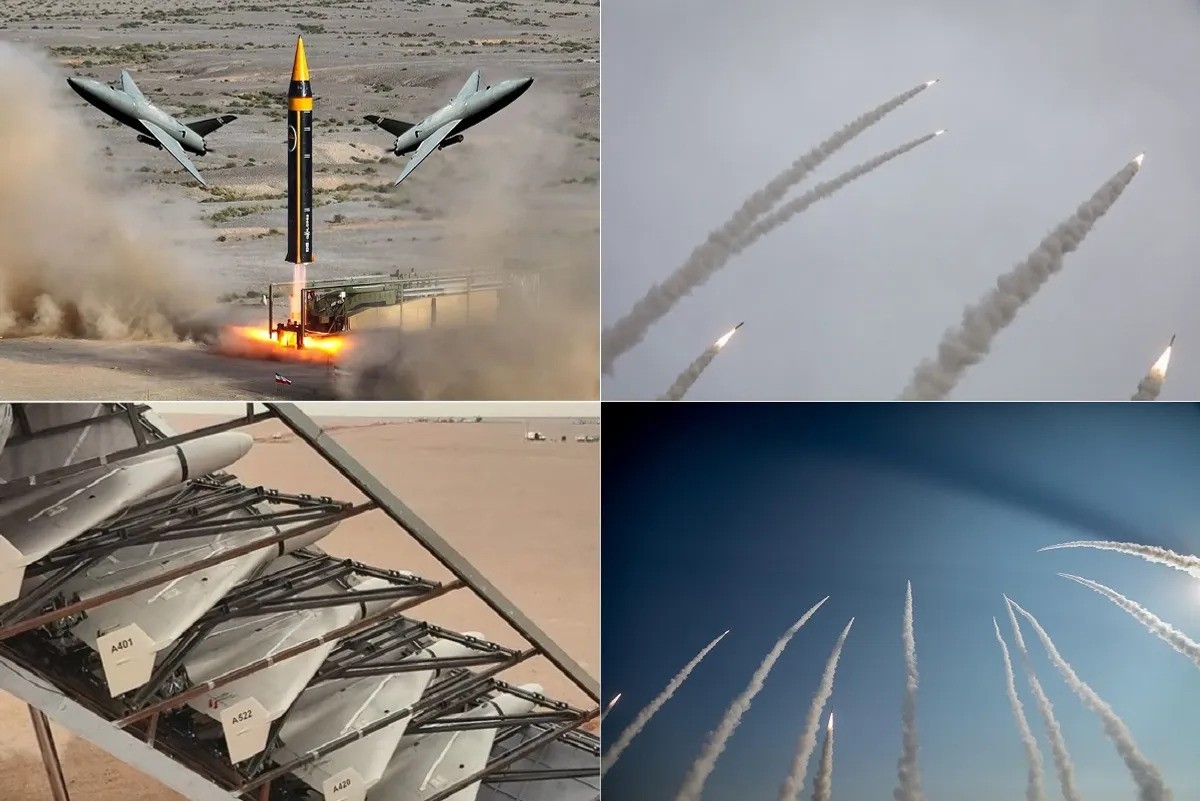
TEHRAN (Defapress) - Mohammad Zarchini - Over the past two decades, Iran has redefined the security equations of the West Asia region through a clever combination of three elements: intelligence supremacy, affordable and accessible drone technology, and a diverse missile arsenal. This combination has allowed the Armed Forces of Iran to establish effective deterrence against significantly better-equipped forces without entering a classical war and without the need for a conventional air force.
What this analysis demonstrates is not the "defeat" of one side and the "victory" of the other, but rather a shift in combat from classical warfare characterized by absolute air superiority to asymmetric warfare utilizing low-cost, precise, and abundant weaponry. In this new equation, the cost of defense has risen dramatically, and the vulnerability of fixed United States military bases in the Ramadan War has increased. For Washington, these developments signify the necessity of reviewing its force deployment doctrine, investing in multi-layered air defense, and reducing reliance on fixed bases; for Tehran, they mean continuing the path of defense self-sufficiency and employing asymmetric tools as leverage for deterrence and political bargaining.
Through this very strategy, the Armed Forces of the Islamic Republic of Iran were able to strike U.S. military bases severely during the Ramadan War, a significant matter that has also been confirmed by prominent American media outlets. In this regard, The Wall Street Journal states: Since the start of the operation known as Epic Fury by the U.S., Iran has conducted more than 2,000 (retaliatory) aerial, missile, and drone attacks across the Middle East, damaging at least 20 sites in eight countries used by the U.S. military. The newspaper adds: Iran has so far inflicted $13 billion in costs on the U.S. alone through equipment damage and damage to facilities; in fact, 42 American aircraft were destroyed or damaged in Iranian attacks.
Various causes and factors contribute to the victories of the Armed Forces of the Islamic Republic of Iran, including intelligence supremacy, a focus on low-cost drones and missiles, and the use of advanced intelligence systems to strike deep into enemy positions.
Intelligence Supremacy of the Armed Forces of the Islamic Republic of Iran
The Institute for the Study of War (ISW) think tank has confirmed in numerous reports that Iranian-backed armed groups in Iraq (Resistance groups) have access to precise, up-to-date intelligence regarding bases such as Ain al-Asad, Erbil, Taji, and Victory. This intelligence is gathered through a combination of human intelligence (HUMINT), signals intelligence (SIGINT), and commercial satellite imagery.
The annual "Annual Threat Assessment" report published by the Office of the Director of National Intelligence (ODNI) has repeatedly identified Iran as one of the most active intelligence actors in West Asia. In the 2023 and 2024 assessments, Iran's capabilities in "advanced reconnaissance and precise targeting" were emphasized.
The Armed Forces of the Islamic Republic of Iran also clearly demonstrated during the 40-Day Ramadan War and the critical Battle of Hormuz that they possess deep knowledge of U.S. military bases in the West Asia region. In this regard, heavy and precise strikes by Iranian armed forces on the Al-Dhafra, Arifjan, Bubiyan, Al-Kharj, Aqaba, Muwaffaq al-Salti, Al-Udeid, Ali Al-Salem, and Sheikh Isa military bases, among others, demonstrated that Iran, backed by prior intelligence, was able to inflict lethal blows on the body of the American adversary.
One of Iran's main intelligence strengths is its deep spiritual presence within the structures of certain regional countries. Since the fall of Saddam in 2003, Iran has built a network of relationships with political parties, Popular Mobilization Forces, and even parts of Iraqi state institutions and those of other regional countries. This network allows Tehran to accurately monitor and strike troop deployments, equipment types, movement schedules, security vulnerabilities of bases, flight routines, aircraft refueling times, guard shifts, supply routes, ammunition depots, and critical infrastructure points.
Another dimension of Iran's intelligence supremacy during this Ramadan War, which has roots in the past, is its serious and principled confrontation with separatist terrorists in the northern region of Iraq. While the United States military had delivered numerous weapons to separatists in northern Iraq, these terrorists were unable to use their weapons due to the swift and precise strikes inflicted upon them by Iran.
U.S. President Donald Trump remarked in this context: "The U.S. sent weapons to the protesters; we sent a lot of weapons to them through the Kurds; I think the Kurds kept them." However, in reality, the separatists in northern Iraq did not simply keep the weapons; rather, they lacked the opportunity to use them because the devastating strikes of the Armed Forces of the Islamic Republic of Iran set fire to the separatists' ammunition depots, a direct outcome of Iran's intelligence supremacy.
Another form of intelligence supremacy stems from the empathy of the people of certain regional countries, as well as anti-imperialist elements within the militaries of regional nations such as Jordan. When the Armed Forces of the Islamic Republic of Iran targeted precise military sites in Jordan, they expressed gratitude to the military and people of that country for their accurate intelligence data.
In this context, the Islamic Revolutionary Guard Corps issued a statement thanking the nation and army of Jordan, declaring to them: The holy land of Jordan is the stepping stone of prophets and is no place for international occupiers and criminals; do not miss any opportunity to destroy American institutions in Jordan and expel American soldiers from Jordan.
Iran's Drone and Missile Power
Over the past two decades, Iran has developed one of the world's largest and most diverse drone programs. According to reports from the International Institute for Strategic Studies (IISS) in London and the Center for Strategic and International Studies (CSIS) in Washington, Iran's most important drone families are the Shahed, Mohajer, Fotros, and Karrar.
Shahed-136 Drone: A suicide/loitering drone with a range of approximately 2,000 kilometers, very low production costs (estimated at $20,000 to $50,000), and the ability to strike fixed targets. This drone has also been used in the war in Ukraine, drawing global attention.
Shahed-129 Drone: A reconnaissance-combat drone with an operational range of 1,700 kilometers and the capability to carry guided missiles. It possesses a flight endurance of up to 24 hours.
Mohajer-6 Drone: A tactical drone capable of carrying Qaem guided bombs, utilized for both reconnaissance and attack missions.
Fotros and Karrar Drones: High-altitude and strike drones with ranges exceeding 2,000 kilometers.
The key element in Iran's drone doctrine is the tactic of swarm attacks and the saturation of enemy air defense systems. Tehran has demonstrated that it can launch dozens or hundreds of drones simultaneously along different flight paths toward targets. This tactic overwhelms the opponent's expensive air defense systems. Iran's April 2024 attack on the occupied territories (Operation True Promise), in which more than 300 drones and missiles were fired simultaneously, served as a prime example of this doctrine. Although these operations were conducted directly against the Israeli regime, their implications were highly significant for U.S. security calculations. The simultaneous launch of hundreds of drones, cruise missiles, and ballistic missiles demonstrated that Iran possesses the capability to execute large-scale combined attacks. Even though a portion of these projectiles was intercepted, the sheer capability to fire such volume simultaneously impacts deterrence equations.
The Missile Power of the Iranian Armed Forces
Iran possesses the largest and most diverse missile arsenal in the West Asia region. According to reports published by the U.S. Defense Intelligence Agency (DIA) and independent think tanks, ballistic missiles include the Sejjil family (range of 2,000 km), Ghadr and Emad (range of 1,700–1,950 km), Kheibar Shekan (range of 1,450 km), and Fateh (shorter ranges). A new generation of hypersonic missiles, such as the "Fattah," has also been introduced. Cruise missiles include the Soumar, Hoveyzeh, and Paveh with various ranges, while anti-ship missiles like the Khalij Fars and Hormuz can effectively disrupt enemy focus and inflict severe damage on their naval assets in the region. Furthermore, the accuracy of these missiles has increased significantly in recent years; for instance, in the January 2020 operation against the Ain al-Asad base, Iranian ballistic missiles struck specific points on the base with remarkable precision.
Similarly, during the 12-day and 40-day wars with the U.S. and the Zionist regime, Iran's ballistic missiles struck at the heart of the enemies with high precision, causing extensive damage.
Combining Drones and Missiles: The Iranian Armed Forces' Combined Attack Doctrine
Iran's primary strength lies in its ability to combine drones and missiles simultaneously in a single attack. In this scenario, drones act as decoys to saturate radar and defense systems, while ballistic and cruise missiles navigate the main attack path. This tactic sharply raises the cost of defense; firing a Patriot or THAAD missile to intercept a $20,000 to $50,000 drone or a $70,000 to $110,000 missile costs millions of dollars. Naturally, during the Battle of Hormuz, which unfolded as a continuation of the Third Imposed War, it was observed that even the simultaneous launch of 12 Patriot missiles failed to neutralize a single advanced Iranian missile, marking significant successes for Iran against the terrorist U.S. military.
Numerous reports from think tanks such as CSIS emphasize that fixed and pre-known bases are vulnerable to precision missile strikes. By investing in reconnaissance and targeting, Iran has identified this vulnerability and integrated it into its operational doctrine.
It appears that continuing the war with Iran will remain costly for the terrorist U.S. military and the Pentagon, a reality recognized by both General Dan Caine, Chief of Staff of the U.S. Army, and U.S. President Donald Trump, and the ongoing negotiations have no underlying cause other than Iran's strength. Significantly, domestic economic conditions must also be prepared as meticulously as military foundation work so that the enemy cannot achieve through blockades and pressure on people's livelihoods what it failed to accomplish through war. Therefore, statesmen must fulfill their duties with even greater effort and precision, mirroring the armed forces, so that the country can navigate this historical juncture and advance toward becoming a global power.
