
Primary Documents Prevent the Distortion of the History of the Sacred Defense
TEHRAN (Defapress) - Brigadier General Ismail Ahmadi-Moghaddam, President of the Supreme National Defense University, emphasized during a visit to an exhibition showcasing the achievements of the Foundation for the Preservation of Sacred Defense Works and Values that foreign military interventions in Yemen will yield no results. He described the country as a 'quagmire' for invading forces while underscoring that recording firsthand accounts of recent events serves as a strong bulwark against the distortion of history.
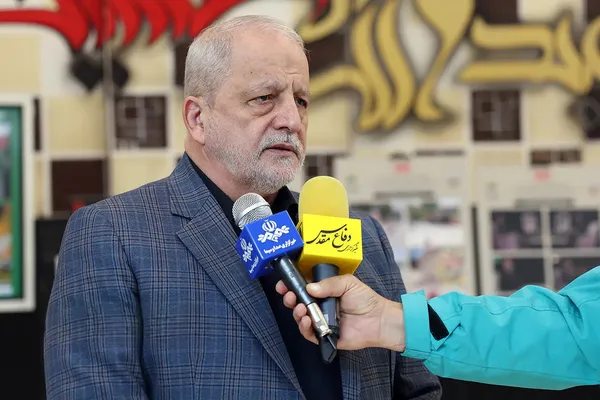
Referring to regional developments and reports regarding the deployment of forces affiliated with the Julani faction to support Saudi Arabia, the President of the Supreme National Defense University stated that regional backing and coalitions in the Yemen war will not go beyond political, training, and advisory levels.
He added that even the Syrian government has walked back its previous stance, limiting its troop deployment strictly to Saudi territory, as all actors have learned through experience that direct ground involvement in Yemen means getting trapped in a quagmire with no easy exit.
Elsewhere in his remarks on resolving the Yemen crisis, Brigadier General Ahmadi-Moghaddam noted that deploying foreign military forces will have no impact on the equation, and that the enemies of the Yemeni nation must recognize the Yemeni people's right to self-determination.
He stressed that in the absence of foreign interference, Yemenis are fully capable of resolving their internal issues on their own, and the only way out of the crisis is to respect the choice and will of the Yemeni people.
Evaluating the exhibition held by the Foundation for the Preservation and Publication of Sacred Defense and Resistance Works and Values, the President of the Supreme National Defense University described it as a reflection of extensive efforts to document the events of the 'Second Sacred Defense, the Third Sacred Defense, and the January 2026 coup.'
Noting that the passage of time makes narrating events more difficult, he called the initiation of documentation from the very first days of these incidents a smart move to shape authentic history and prevent foreign entities from replacing it with fabricated narratives, adding that the foundation has now become a credible reference for public opinion as well as domestic and international media.
