
Will Terrorists from the Jolani Regime Enter the War in Yemen?
TEHRAN (Defapress) - Currently, a shift is taking place in Yemen that could dramatically alter the dynamics of this conflict. The significance of this development is not confined to the Yemeni battlefield; its security and political repercussions could extend well beyond the borders of West Asia, potentially influencing events in other parts of the world.
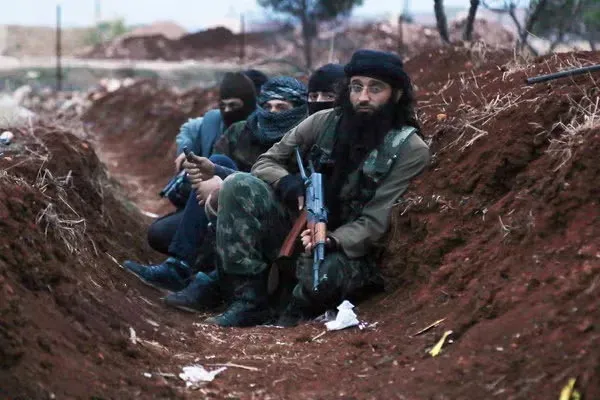
Reports have emerged claiming that the interim Syrian administration is preparing to deploy thousands of armed Syrian personnel to the Saudi-Yemeni front to participate in military operations against Yemeni armed forces. According to these reports, some of these forces have already been organized into military units and are set to enter the fray in support of Saudi-backed factions.
This information has been disseminated by several Yemeni sources, who claim that hundreds of Syrian fighters are already stationed along the Saudi-Yemeni border, with more expected to join them.
It should be noted that these claims originate from sources aligned with the Saudi-backed government in Yemen. Nevertheless, regardless of the political leanings of these sources, the reports warrant careful examination and verification. According to these reports, the deployment of about 3,000 Syrian fighters to participate directly in military operations has been prearranged; it is alleged that Abu Mohammad al-Jolani reached this agreement during a visit to Riyadh in late October.
Some reports further claim that the Ministry of Defense of the Saudi-backed administration has confirmed these figures, suggesting that the total number of troops deployed in subsequent phases could reach 10,000. It is also alleged that some of these forces are already involved in directing and supporting drone operations.
Conversely, officials within the Syrian interim government have denied these claims. The Syrian Arab News Agency (SANA) has described reports regarding the deployment of Syrian fighters to Yemen as "completely baseless under the current circumstances." This official stance represents a significant aspect of the matter.
If these reports are accurate, the issue extends beyond the mere use of proxy forces in a regional conflict; rather, it involves the presence of fighters who previously operated within armed groups but have now been organized into formal military structures. This development could carry broad security implications for the region.
The key distinction between this scenario and past instances, where regional conflicts primarily involved irregular armed groups, is that this case concerns forces operating as organized military units. Such a shift could alter both the scope and the nature of security threats in the region.
Meanwhile, some analysts point to the role of the United States in the Syrian conflict, suggesting that Washington continues to provide support to certain armed factions active in Syria. This perspective holds that organizing these forces into formal military structures could facilitate their broader deployment within regional dynamics.
Overall, regardless of the accuracy of these reports, the emergence of such claims points to concerns regarding the development of new patterns in the use of non-state armed forces in the region, a trend that, if realized, could have significant implications for security and stability in West Asia.
