
Expensive Flames of Survival in Gaza
TEHRAN (Defapress) - The severe livelihood crisis and scarcity of basic consumer goods in the Gaza Strip, the ongoing all-out siege and severe cross-border restrictions, have led to unprecedented inflation and widespread disruption in the daily life infrastructure of more than two million displaced people; so much so that the price of a simple lighter for coocking has jumped more than 300 times from a few cents to between $27 and $33, making lighting a fire with firewood the only remaining way to prepare food, bake bread, and provide hot water in the absence of cooking gas.
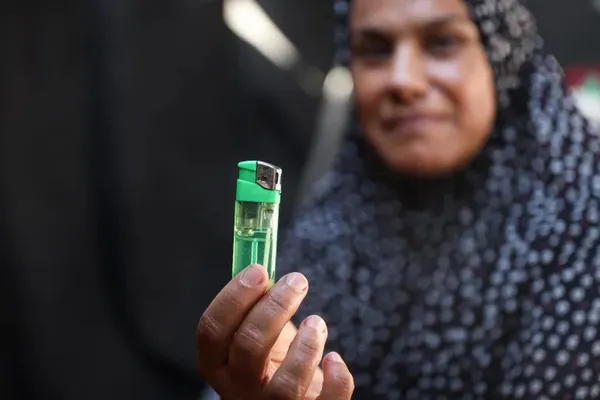
According to the latest economic reports and field analyses by international institutions, the collapse of the supply chain and the blockage of border crossings since the start of the war in October 2023 have exposed the Gaza Strip's domestic market to structural famine. The UN Office for the Coordination of Humanitarian Affairs (OCHA) has cited strict border barriers and the classification of a wide range of basic consumer goods as dual-use goods as the main reasons for the ban on the import of data-x-items such as lighters and similar devices.
An assessment of official trade statistics by the Gaza Chamber of Commerce and Industry (GCCI) reveals the full extent of this supply crisis. According to the organization, during the first five months of this year, a total of about 30,000 trucks carrying commercial and humanitarian cargo were allowed to enter Gaza, with a daily average of up to 191 trucks.
Compared to pre-conflict needs, this number of trucks has created a very severe deficit in the distribution chain and has exacerbated the scarcity of small consumer goods. In this regard, the official ban on lighters has turned this low-value basic item into a rare, valuable, and even strategic commodity in refugee tents.
An examination of the price index changes reveals a deep economic gap between the pre-war era and the current situation in Gaza. While before October 2023, it was possible to buy three new lighters for just one shekel, equivalent to about 33 US cents, and each lighter was worth about 11 cents, in the current Gaza market, buying a new lighter requires spending between $27 and $33, which is equivalent to an increase of approximately 30,000 percent, or 300 times its base price.
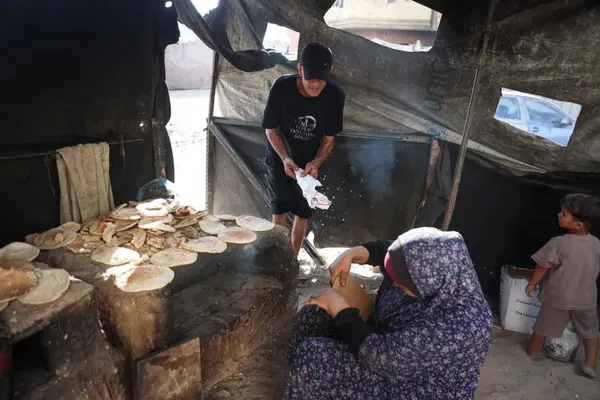
On the other hand, due to the unprecedented fall in citizens’ purchasing power and widespread unemployment, most residents cannot afford such an amount to buy a new item and have resorted to repairing old and used lighters. However, the cost of repairing an old lighter has also reached about $12, which is a very high cost for displaced households, leaving them with a difficult choice between repairing their lighter flint or buying basic food data-x-items such as flour.
In addition to the total cost of the lighter, the price of its spare parts has also experienced a stunning jump, such that a simple lighter flint is traded on the black market for between 25 and 30 shekels, equivalent to 8 to 10 dollars. The severe shortage of standard fuels and domestic gas has limited the residents’ dependence on lighting fires with firewood, and as a result, lighters play a key role in survival.
In refugee settlements, such as the Al-Karmel school in western Gaza City, the situation of lighter distribution is so critical that sometimes there are no more than four working lighters in the entire area of a school with hundreds of families living there. This has forced families to share a lighter among dozens of tents or to take pieces of cardboard and half-burnt charcoal from neighbors’ tents to light a home fire; A move that, if not accessible, leads to eating cold food or skipping meals altogether.
The pressure from shortages and price hikes has also led to the creation of new, non-standard jobs that were previously unavailable in Gazan society. Many people who previously worked in jobs such as tailoring or driving have now turned to repairing discarded lighters to earn a meager income to support their families.
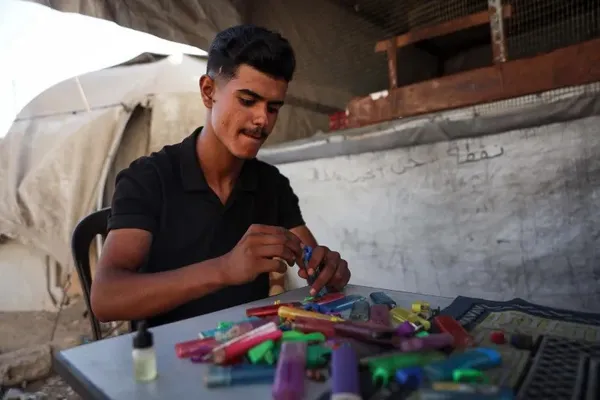
These repairmen extend the life of these devices by separating the healthy parts of broken lighters and reassembling them. However, due to the lack of standard spare parts, some residents resort to charging lighters directly using large gas cylinders, which has so far caused various incidents such as small explosions and severe skin burns for citizens.
The ongoing border blockade and severe disruption of import arteries have raised the cost of basic living in Gaza to unbelievable levels. International organizations warn that the Israeli regime’s ban on the import of simple and dual-use data-x-items has not only faced fundamental obstacles to the relief process, but has also pushed the social and economic structure of society towards risky behaviors and deeper humanitarian crises.
