
Papa Delta: Taiwanese Version of Shahed Drone
TEHRAN (Defapress) - Mohammad Zarchini - In a new development in East Asian defense technology, Taiwan-based Thunder Tiger has announced a new attack drone, the Papa Delta, which bears a clear resemblance to the famous Iranian Shahed-136 drone in its wing design and suicide-mission capabilities. This move comes at a time when the use of low-cost and lethal drones in asymmetric warfare has transformed regional and global defense equations.
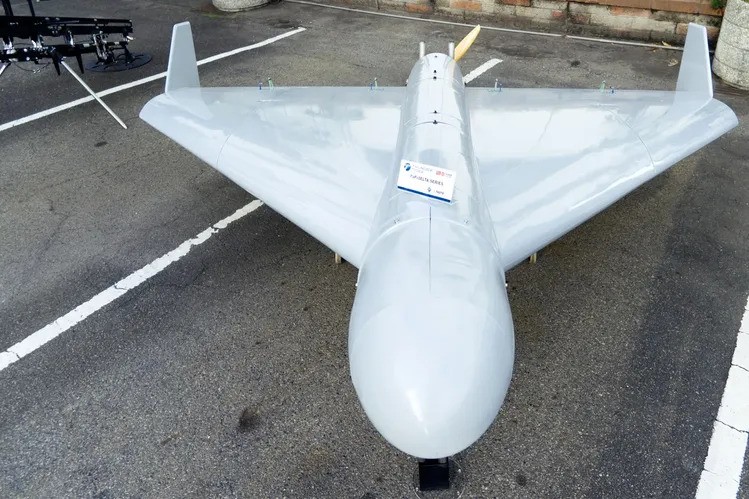
Targeting China with copies of Iranian drones
According to reports in Western media, including the White House whistleblower Axios, representatives of Thunder Tiger have acknowledged the effectiveness of Iranian drones in recent battles and stated that they have learned many lessons from the Ukraine war. Allan Chi, the company's spokesman, said in an interview with foreign media, referring to Taiwan's need for long-range weapons: "We know that Taiwan needs drones that can target Chinese cities from the island; a drone that can travel long distances."
These statements come at a time when the Iranian-made "Shahed-136" drone has been recognized in recent months as one of the most effective weapons in conflicts in Eastern Europe and the Middle East, and has proven its ability to penetrate advanced defense systems at a much lower cost than conventional cruise missiles.
Technical and strategic details of Papa Delta
According to published information, the Papa Delta drone was developed based on the composite wing and fuselage design of Iranian drones and is capable of carrying a multi-purpose warhead to target manpower, armor, and fixed installations. The price of each unit of this drone is estimated at "tens of thousands of dollars", which is a significant economic advantage compared to conventional cruise missiles that cost hundreds of thousands or millions of dollars.
Thunder Tiger also announced the launch of a military production line in Taiwan with a capacity of about a thousand units per month and emphasized the use of automation technologies to increase the scale of production. The company, which previously operated in the field of remote-controlled models and civilian drones, has changed its strategy towards the production of offensive drone weapons, taking advantage of the experiences of the Ukrainian war and the geopolitical developments in the region.
Taiwan-China tensions escalate with the deployment of strategic weapons
The development of the Papa Delta drone is taking place in the context of escalating military and political tensions between Taiwan and China. Beijing has always considered Taiwan an inseparable part of its territory and has condemned any action to strengthen the island's defense capabilities with foreign support. On the other hand, Taiwan, relying on the strategy of “asymmetric warfare,” seeks to offset the numerical and technological superiority of the People’s Republic of China by developing low-cost, large-scale, and dispersed weapons.
Military experts believe that the emergence of suicide drones with an operational range of hundreds of kilometers could overshadow the balance of power in the Taiwan Strait. However, some analysts have warned that relying solely on offensive weapons without the support of integrated defense systems may expose Taiwan to more severe countermeasures.
Regional and international reactions
Although Thunder Tiger has stated that the main purpose of exporting the “Papa Delta” is to “allied democratic partners,” this has raised concerns about the spread of instability in the Asia-Pacific region. At the same time, the inclusion of Taiwanese-made drones on the US Department of Defense’s Blue UAS Cleared List reflects Washington’s desire to diversify its arms supply chain and reduce its dependence on traditional manufacturers.
The future of drone warfare in Asia
The development of the Papa Delta drone by the Taiwanese company Thunder Tiger has opened a new chapter in the military-technological competition in East Asia. While Taiwan is trying to improve its deterrence against China by taking advantage of its experience on the battlefield in Ukraine, this move could lead to a cycle of reciprocal reactions and increased tensions in the region.
From the experts’ perspective, the key to stability in the Taiwan Strait and beyond lies not in the accumulation of offensive weapons, but in diplomatic dialogue and the creation of regional confidence-building mechanisms. However, as long as the logic of power dominates international relations, the competition over the development of low-cost and intelligent drones is expected to gain momentum.
Meanwhile, Iran’s defense industry, by pioneering the design and production of strategic drones (similar to what Taiwan copied), has not only ensured its national security but has also become an influential player in global defense equations. The field successes of Iranian drones have inspired many countries to localize defense technologies, and this trend will overshadow the future of the world’s military industry.
Other countries’ emulation of Iranian defense technologies is not only a confirmation of the efficiency and effectiveness of the achievements of the Islamic Republic of Iran’s defense industry, but also shows that the oppressive sanctions of the West have failed to prevent Iranian technologies from having an impact on the global arena. Today, Iranian drones are not only in the hands of regional allies but have also become a model for weapons design in other parts of the world.
