
Iraqi Armed Movements Align Against the American Disarmament Project
TEHRAN (Defapress) - While the issue of “arms monopoly in the hands of the government” has become the main priority in Baghdad, Iraqi armed groups have split into two groups in response to these pressures. In an important development, groups such as the Imam Ali Brigades (led by Shabal Al-Zaidi), Saraya al-Salam (led by Muqtada al-Sadr), and Asaib Ahl al-Haq (led by Qais Khazali) have taken a step towards coordination with the “Coordination Framework” by officially announcing their split from the Popular Mobilization Forces and initiating measures related to arms monopoly.
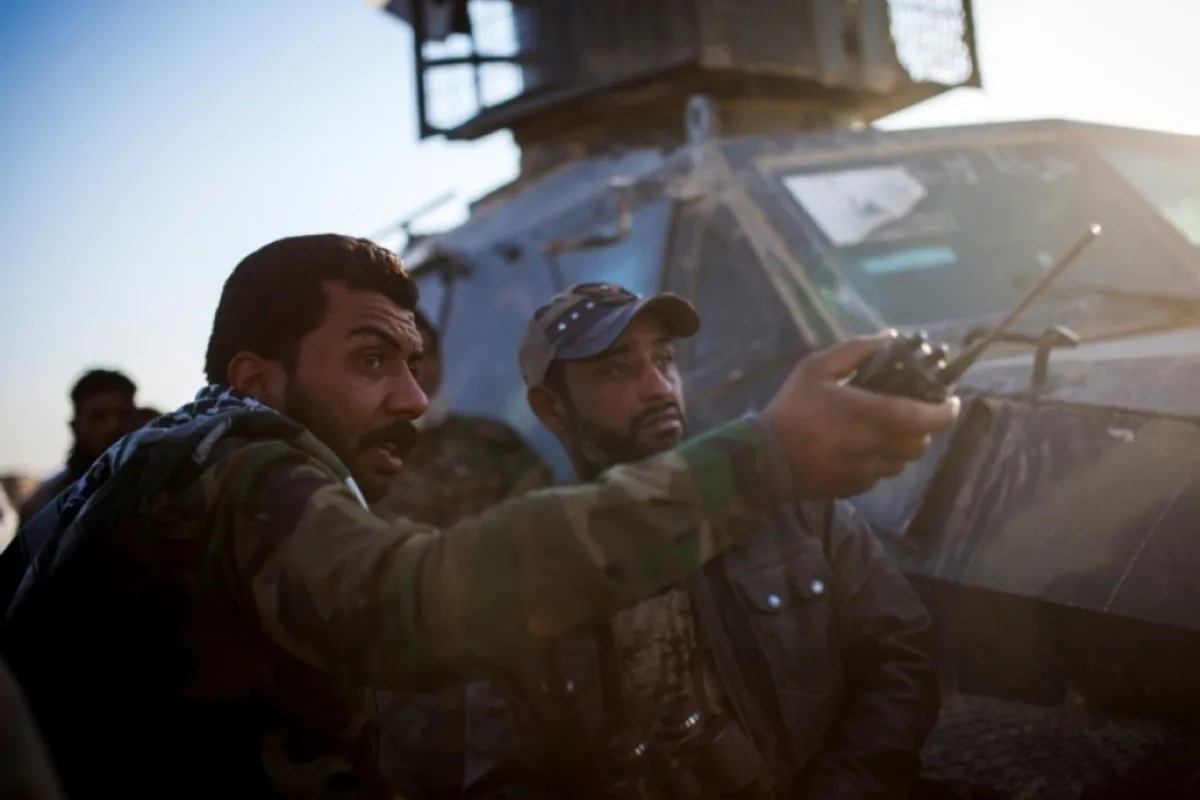
These decisions, which were also welcomed by the US Embassy's Chargé d'Affaires, Joshua Harris, are aimed at strengthening the government's authority and separating security institutions from party relations. However, groups such as Kata'ib Hezbollah, Al-Nujaba, and Ashab Al-Kahf have rejected any disarmament plan and have emphasized that they will continue to oppose this process. Even rejecting political references to the positions of authority to legitimize the disarmament plan, the Ashab Al-Kahf group announced that the weapon of Resistance will remain.
Reports indicate that Washington, with its "maximum decisions" approach, is not satisfied with only formal disarmament. According to information received, the US is demanding the dissolution of the Popular Mobilization Forces and the integration of its forces into official institutions, and has opposed any political participation of armed groups in the cabinet and sensitive institutions. It is expected that in the coming months and on the eve of September, about 3,000 people from special government, military, and financial positions associated with these groups will be “purged”. In this regard, the “Coordination Framework” has also delegated special powers to the Prime Minister to make the necessary decisions to protect the supreme interests of the country and sever the ties of the Popular Mobilization Forces with party structures.
The discussion of “weapons handover” in Iraq will be accurate and realistic when we distinguish between the different types of armed forces in the country. Not all armed actors in Iraq are at the same level and with the same legal status, and putting them all in one category does not provide a true picture of the Iraqi security structure.
The Popular Mobilization Forces, as a legal entity that was formed after the Jihad Kafai fatwa in 2014 to confront ISIS, is defined within the budgetary and administrative structure of the government and operates under the supervision of the Commander-in-Chief of the Armed Forces. From this perspective, this institution should not be considered on the same level as groups operating outside the formal framework. Any discussion of arms control, to strengthen national sovereignty, must address groups operating outside this legal umbrella.
An examination of the dimensions of the issue shows that the arms challenge in Iraq is not limited to militia groups. Unofficial estimates indicate that there are about 13 million light and semi-heavy weapons in the country, the majority of which are in the hands of citizens and tribes, not armed groups. Despite the government’s efforts to register weapons through the “Aur” platform, the lack of public trust in the government’s ability to provide security has led to very low participation in this project. In other words, as long as “insecurity” continues to weigh heavily on Iraqi society and there are no accurate and legal statistics on the weapons in the hands of the 70 armed groups and tribes, the “Arms Control by the State” project will face structural difficulties.
