
Diplomacy of Balance in Baghdad's Relations with Tehran and Washington
TEHRAN (Defapress) - Recent developments in Iraq's political arena and Baghdad's efforts to redefine its relations with regional and international powers have become one of the most important axes of political analyses. In this context, Al-Zaidi's recent trip to the United States and his meeting with Donald Trump, followed by his trip to Tehran, have raised many questions about the future of Iraq's foreign policy and the country's approach to existing tensions. Within this framework, careful examination of the dimensions of these diplomatic movements and their impact on Iraq's domestic situation, especially in the security and economic spheres, has taken on double importance.
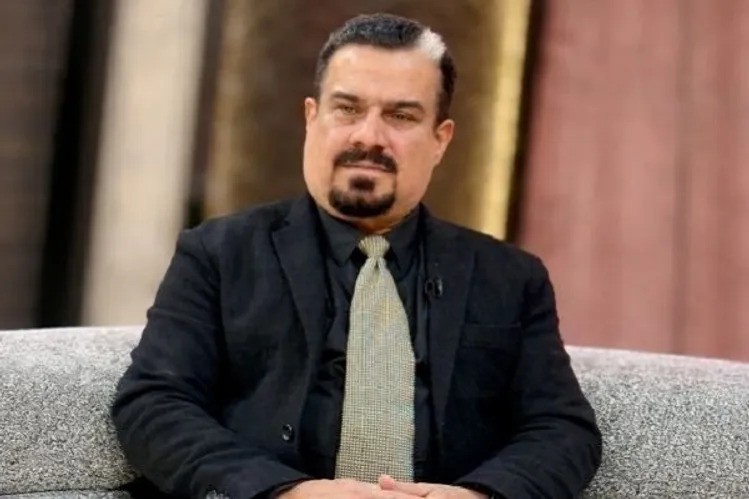
Defapress correspondent has interviewed "Sabah Zanganeh," Head of the Iraq Center for Strategic Studies Experts, about Al-Zaidi's meeting with Trump and his trip to Tehran, the full text of which follows in this report.
At the beginning of his remarks, Zanganeh referred to the details of the Al-Zaidi-Trump meeting and said: In the meeting between Al-Zaidi and Trump at the White House, the economic aspect was the most prominent part, although security and political issues were also clearly on the agenda. Iraq is seeking to attract investment in the energy, electricity, and infrastructure sectors, and on the other hand, Washington is focusing on security, stability, and preserving common interests. In truth, these two areas cannot be separated, because Iraq's economy is tightly tied to security and stability, and both have a direct impact on the nature of political relations between Baghdad and Washington.
In analyzing the diplomatic formalities between the two sides and Trump's remarks about calling Al-Zaidi a "hero," he added: These remarks should be seen as a combination of diplomatic courtesy and political messages. Leaders use positive language in official meetings to facilitate mutual understanding and build trust. At the same time, speaking of "love for Iraq" is a message indicating that the United States is willing to maintain its partnership with the Baghdad government, not necessarily with a specific political faction. This is also a signal to regional countries that Washington still considers Iraq an important partner in the equations of security, energy, and regional stability.
The head of the Iraq Center for Strategic Studies Experts commented on the differing reactions inside Iraq, saying: The positions of the Iraqi people and factions toward Trump's remarks are not uniform. Some consider it a diplomatic custom that does not necessarily reflect previous US policies, while other factions view these moves with suspicion due to the bitter memory of the assassination of Resistance commanders, Lieutenant General Qasem Soleimani and General Abu Mahdi al-Muhandis, and its political consequences. In contrast, some parties believe international relations should be regulated based on the current interests of the Iraqi government. Therefore, the assessment of these remarks depends heavily on the political background and the degree of alignment between factions and future US policies.
Regarding Al-Zaidi's response to the question about the assassination of the Resistance commanders and his referral to "not being involved in politics at that time," Zanganeh stated: This response is an attempt to separate the legacy of past disputes from the priorities of the current government. Focusing on the economy and investment indicates prioritization of issues that yield tangible results for citizens. This does not mean setting aside controversial issues, but rather managing them through diplomatic channels rather than making them the main axis of bilateral relations. This approach can be viewed as a pragmatic outlook that seeks to expand cooperation while preserving sovereign positions.
He added: Advocates of political realism argue that the government is obliged to manage its relations according to current interests, but some Resistance factions and their supporters do not tolerate ignoring these sensitive issues. The success of this approach depends on the government's ability to strike a balance between respecting national memory and managing foreign relations in a way that preserves Iraq's stability.
The Head of the Iraq Center for Strategic Studies Experts spoke about the issue of handing over weapons by September 30, saying: If this decision is implemented, it is consistent with the principle of 'the government's monopoly on weapons' stipulated in the constitution. However, its practical application does not necessarily mean full integration of all factions; rather, it may involve reorganizing command, restructuring formations, or regulating the status of armed forces within legal frameworks. The success of this path depends more on political consensus and guarantees provided to various parties than on administrative procedures.
Zanganeh continued: This matter goes back to the implementation mechanism. If the goal is to unify security decision-making in official institutions, it is considered a strengthening of the government, but if it is perceived as diminishing the role of some factions, it may provoke security protests. The Popular Mobilization Forces are, according to law, an official institution, but the status of other factions varies depending on their relationship with state institutions. The government has a legal basis for dealing with the Hashd al-Shaabi, but engagement with groups that have organizational independence is more complex and requires political tools and dialogue.
Emphasizing the challenges ahead in controlling weapons, he added: Achieving full government control over all weapons is a serious challenge that requires time and broad consensus. The multiplicity of centers of influence among political forces and the impact of regional relations are the main obstacles on this path. Every step in this direction requires internal acceptance. If pressure tactics prevail over dialogue, there is a likelihood of tension, but if this process proceeds gradually and with the participation of relevant factions, the likelihood of escalation decreases.
At the end, Zanganeh commented on Al-Zaidi's trip to Tehran and the government's foreign policy, saying: Al-Zaidi's trip to Tehran after Washington carries the message that Iraq seeks to maintain effective communication channels with both sides and to avoid full alignment with a specific axis. Given Iraq's geopolitical position and economic interests, the policy of "balance" is a rational choice. In fact, this trip emphasizes the continuation of relations with Iran, parallel to developing relations with the United States, to secure national interests and reduce the impact of regional polarizations. The success of this policy depends on the government's ability to make independent decisions and maintain balanced relations.
