

Street Protest in Syria and the Failure of Ankara's Security Doctrine
TEHRAN (Defapress) - A new wave of street unrest and general strikes has engulfed various provinces of Syria, an event that followed the sudden resolution on price deregulation and a 25 to 40 percent increase in the price of fuel and petroleum products, immediately shutting down the country's main transport arteries, including the vital M5 highway on the Damascus-Aleppo axis. By creating blockades, burning tires, and preventing the movement of oil tankers in centers such as Al-Hasakah, Deir ez-Zor, Idlib, Hama, and Aleppo, protesters have demanded the removal of inefficient officials, the revocation of the fuel resolution, and a fundamental review of welfare policies. These developments are not an isolated incident, but rather the result of the intersection of an acute energy crisis, the structural failure of the free-market economic model, the invalidation of the claims of the Turkish governance model during the management of Idlib, and, of course, the targeted censorship of these realities by mainstream Western media.
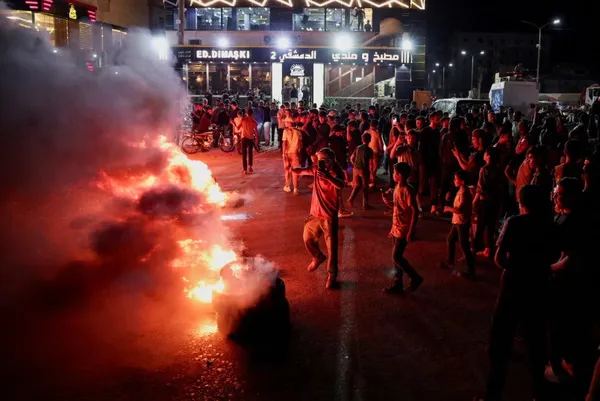
The root of this unrest is the government's inability to supply basic energy needs and the consequences arising from an acute budget deficit. Syria currently requires more than 12 million liters of diesel and 8 million liters of gasoline daily, but the volume of domestic production and refining capacity is far from these figures.
Meanwhile, the severe reduction or complete cessation of free oil donations and aid from foreign supporters and allies placed the energy structure in a state of collapse and forced the government to import all petroleum products at real global prices and heavy transportation costs. The financial burden of compensating for this deficit was directly transferred onto the shoulders of a society where more than 90 percent live below the poverty line.
The people's anger stems from this clear contradiction: why, despite the country's main oil resources being located in eastern regions, must society pay the price for mismanagement, refineries going offline, and the cancellation of subsidies, a pressure that, along with unbridled inflation, has destroyed the livelihood of the underprivileged classes?
These street riots are, above all, proof of the deadlock and complete failure of the free-market economy doctrine in Syria; a model that the new economic managers claimed, through non-native copying, the sudden elimination of subsidies, and reliance on trade liberalization, could attract capital and bring prosperity.
However, implementing such a formula in a geography and society damaged by crisis, which lacks strong productive infrastructure and a social safety net, has had no result other than a structural inflationary shock. This structural failure caused the protesters' slogans to shift very quickly from a temporary request for a reduction in diesel prices to a macro-criticism of the ruling economic system and its inability to handle the administration of the country.
Other dimensions of this crisis drew a prominent line of invalidation across Ankara's long-standing claims, which for years had conducted extensive promotional maneuvering to create a successful governance model in Syria's northern regions. Turkey, which during Assad's rule and throughout the crisis tried to show, through managing Idlib, promoting the Turkish Lira, and creating affiliated trade networks, that it was capable of presenting a sustainable version of economic, political, and security stability and extending it to the entire country, now faces a complete impasse with this plan.
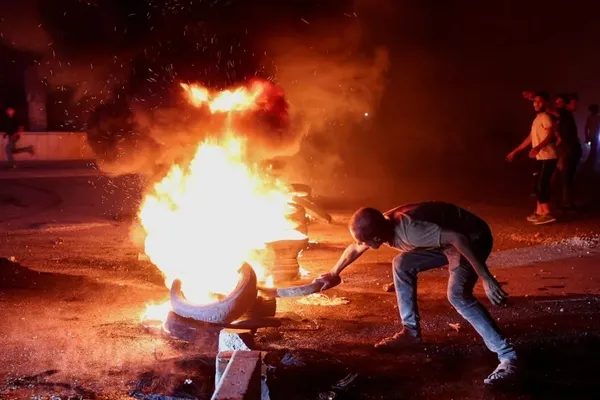
The rapid spread of protests to the heart of Idlib and Hama and the blockage of commercial crossings by angry people revealed that the Turkish model is also extremely fragile against initial economic shocks and devoid of efficiency. The complete dependency of these areas on foreign supply chains and the inability to curb inflation proved that Turkey's developmental claims were merely a superficial political cover that failed to bring any sustainable welfare security for the people of the region.
Amid this deep crisis and the widespread protests that have encompassed Syria's transport arteries and economic center, the nature of news coverage in mainstream English-language and Western networks reveals guided censorship and a double standard. Western media outlets, which previously turned the smallest event or scattered gathering into international headlines, have now adopted a passive approach and a completely meaningful silence in the face of the collapse of the economic model they supported and the people's anger toward liberalization policies.
This concealment of the true dimensions of the unrest by Western news agencies occurs because its reflection exposes the failure of free-market formulas, the inefficiency of Western developmental plans in the region, and the invalidation of the governance claims of their allies. For this reason, the mainstream media prefers, through deliberate disregard, to prevent global public opinion from paying attention to the deep failure of this model in Damascus.
In response to this crisis, the self-proclaimed government of Ahmad al-Sharaa took a hasty approach over the past week to control the situation. Jolani, on the one hand, by dispatching security forces to deal with protesters, forcibly reopened the M5 highway and dispersed the crowd; on the other hand, by summoning Energy Minister Mohammad Al-Bashir to the People's Assembly and public platforms, tried to justify the public's anger toward a technical and inevitable bottleneck by presenting figures on the budget deficit, the breakdown of the Baniyas refinery, and rising global oil costs. He also tried to prevent the spread of strikes by proposing a small amount of subsidies to the agricultural and public transport sectors, but evidence shows that these temporary palliatives do not have the power to repair the acute livelihood gaps.
Ultimately, the recent eruption of protests in Syria proved that the fuel crisis is merely the outer shell of a far deeper fault line: structural inefficiency, the lack of a clear economic outlook, and the disconnect between governance slogans and the livelihood realities of society. Resorting to security measures and providing temporary solutions may quiet the streets in the short term, but until the roots of the energy crisis, the unquestioning reliance on the failed free-market model, and the neglect of a social safety net for the underprivileged classes are addressed, political and social stability in Damascus will remain fragile, and any other price or technical shock in the near future could be a new spark to this powder keg.
