
West’s Failure to Change the Iranian Regime From the Parthians and Sassanids to the Islamic Republic
TEHRAN (Defapress) - The experience of confronting the Iranian Plateau and its rulers throughout history has consistently been one of the most challenging strategic tests for the great powers of antiquity, a subject whose traces can be found in the bitter and catastrophic fates of Rome's renowned generals and emperors. The "Responsible Statecraft" think tank, in a profound and thought-provoking analysis, revisits antiquity to re-examine the failed campaigns of historical figures such as Crassus, Mark Antony, and Valerian into the territories of the Parthians and Sasanians.
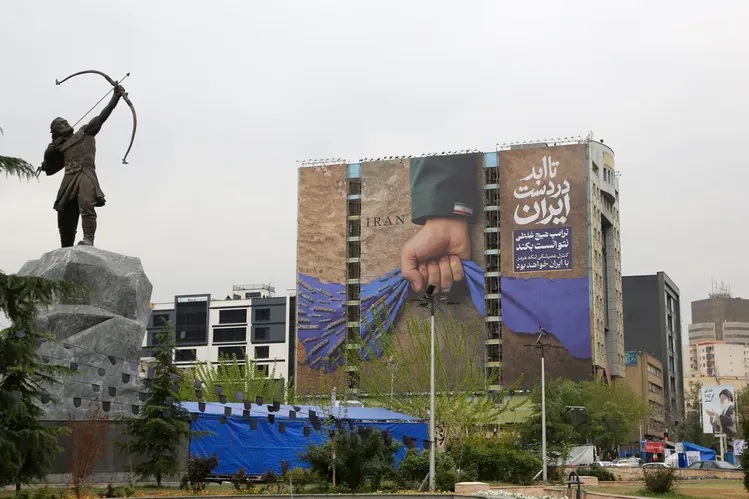
By drawing striking parallels between military hubris, disregard for geographic realities, reliance on misinformation from exiled opposition figures, and underestimation of Iran's defensive capabilities in the past and the decisions of today's leaders in the White House and Tel Aviv, this think tank issues a serious warning. This historical review demonstrates how strategic ignorance and miscalculations by modern warmongers are mere repetitions of the very scenarios that led to the defeat and disgrace of the Roman Empire in past millennia.
The full text of the Responsible Statecraft think tank's analysis is as follows:
Donald Trump is by no means the first foreign ruler to come to grief after launching an ill-considered military operation against Iran. At least four Roman figures, driven by hubris and ignorance, launched military attacks on Iran, each ending in catastrophe. In each defeat, there are lessons for our time.
Crassus: A Greek Tragedy
In 53 BCE, Marcus Licinius Crassus, governor of Syria in the Roman Republic, who had become the wealthiest man in the Republic through real estate dealings, marched against the Parthian Empire in Iran, seeking glory and historical immortality. According to Plutarch's account, Crassus ignored the advice of his Armenian ally, Artavasdes, who had recommended sending his forces through the northern route via Armenia, where mountainous terrain would favor the Roman infantry.
Crassus, whose only military experience was the suppression of a slave revolt, convinced himself that he was a military genius on the level of Rome's military legends. He disregarded Artavasdes' advice and led his legions straight eastward along the plains of northern Syria. At the famous Battle of Carrhae, the Parthians, commanded by the renowned Iranian general Surena, caught Crassus's army in the open, and Parthian horse-archers annihilated seven Roman legions.
According to Plutarch, the Iranians killed Crassus and a messenger carried his head to the king of Iran, who was then traveling to the Armenian capital to attend his son's wedding to Artavasdes' sister.
Mark Antony: Defeat Before Battle Even Began
Seventeen years later, in 36 BCE, Mark Antony, ruler of the eastern provinces of the Roman Republic, assembled forces and equipment to attack Iran, aiming to avenge the Carrhae disaster and win military glory.
Artavasdes, the king of Armenia, who had once again switched sides, supported and welcomed Antony's advance through his territory toward the province of Atropatene (modern-day Azerbaijan in Iran). However, Antony's army lost its supply and provisioning train in Parthian hit-and-run attacks, leaving it with scant provisions. Ultimately, after an inconclusive assault on the provincial capital of Praaspa (modern-day Maragheh, in northwestern Iran), Antony was forced to conduct a catastrophic winter retreat through the mountains of Azerbaijan and Armenia.
In the end, Mark Antony not only failed to avenge Carrhae against Iran, but his folly cost the lives of some thirty thousand Romans.
Valerian: Captivity at the Hands of the Iranians
Nearly 300 years later, in the early third century CE, the powerful Sasanian dynasty replaced the Parthians in Iran. Rome encountered this formidable rival during a period of chaos and civil war known as the "Crisis of the Third Century."
While Rome endured repeated military revolts and imperial succession crises, Iran was ruled by powerful monarchs such as Ardashir I (224–242) and Shapur I (240–270). Once again, the regions of Syria, Armenia, and frontier cities like Amida (modern-day Diyarbakır in southeastern Turkey) became battlefields between Iran and Rome.
In the mid-century, an ascendant Iran and a weakened Rome were fighting for control of Armenia, which had long been ruled by the Iranian Parthian dynasty. Shapur I first defeated Emperor Gordian in 244 and forced his successor, Philip the Arab (r. 244–249), to pay tribute and cede Armenia and Mesopotamia. Most memorably, in 260, Shapur routed the Roman army at Edessa (modern-day Urfa) and captured Emperor Valerian.
The capture of a Roman emperor was a momentous event in the ancient world, and Shapur wanted it properly recorded and commemorated. A rock relief at Naqsh-e Rostam depicts the mounted Shapur triumphing over two defeated Romans, Valerian and Philip the Arab.
During recent wars in Iran, the Islamic Republic has revived this image to commemorate its "victories" over America and Israel.
Julian and the Use of Exiled Opposition
In the fourth century, the Romans repeated previous mistakes by pursuing a policy of regime change in Iran. They backed an exiled Sasanian prince named Hormizd, a relative of Shapur II (known in Western sources as Hormisdas, who reigned 309–379).
Hormizd had spent decades in Constantinople, where he gained influential friends and became fluent in Greek. He convinced his Roman patrons and the Roman Emperor Julian (r. 360–363) that if he returned to Iran with Roman military support, Iran's rule would collapse, the Iranian aristocracy would rise against Shapur, and they would welcome him as king. Despite unfavorable portents suggesting the plan would fail, Julian launched his invasion in 363.
According to the account of Ammianus Marcellinus, a Roman soldier and historian who accompanied Julian on the campaign, it ended in disaster. Iranian cities remained loyal to Shapur and closed their gates to Hormizd.
Rather than laying siege to Ctesiphon, the Sasanian capital, Julian continued his advance into Iraq. After inconclusive battles, he retreated northward into Iraq and was mortally wounded in a skirmish near Samarra. His successor, Jovian, withdrew toward Roman territory.
During the retreat, the Sasanian army blocked Jovian's crossing of the Tigris and continued withdrawal toward Roman lands. The new Roman emperor concluded a humiliating agreement with the Iranians in exchange for permission to retreat. In return for an unmolested withdrawal, Jovian abandoned Roman interests in Armenia, withdrew from five provinces, and ceded important cities, including the strategic city of Nisibis (modern-day Nusaybin in southeastern Turkey), to Iran.
Lessons to Be Learned
At least four Roman figures met with catastrophe when attacking Iran, and their fates should hold lessons for our time. Crassus perished because he ignored his ally, was infatuated with his minor victories, and assumed his real estate speculation wealth made him a military genius. Mark Antony ignored geography and underestimated his enemy. Valerian both underestimated his enemy and overestimated Rome's military power. Julian was misled when an exiled Iranian prince, who had lived abroad for decades and was fluent in Greek, claimed that Iran would welcome him as a liberator.
It may be too much to expect, but today, can an Israeli leader who considers himself a history expert and an American leader who fancies himself a military genius learn from these historical experiences to avoid the mistakes of their Roman predecessors? So far, they have followed the same paths, with the same catastrophic results.
