
Why Did Saudi Arabia Attack the Positions of the Southern Transitional Council in Hadhramaut?
TEHRAN (Defapress) - A separatist group in southern Yemen called the Southern Transitional Council, which is supported by the UAE and has seized two oil-rich provinces this month, announced Saudi airstrikes on its positions.
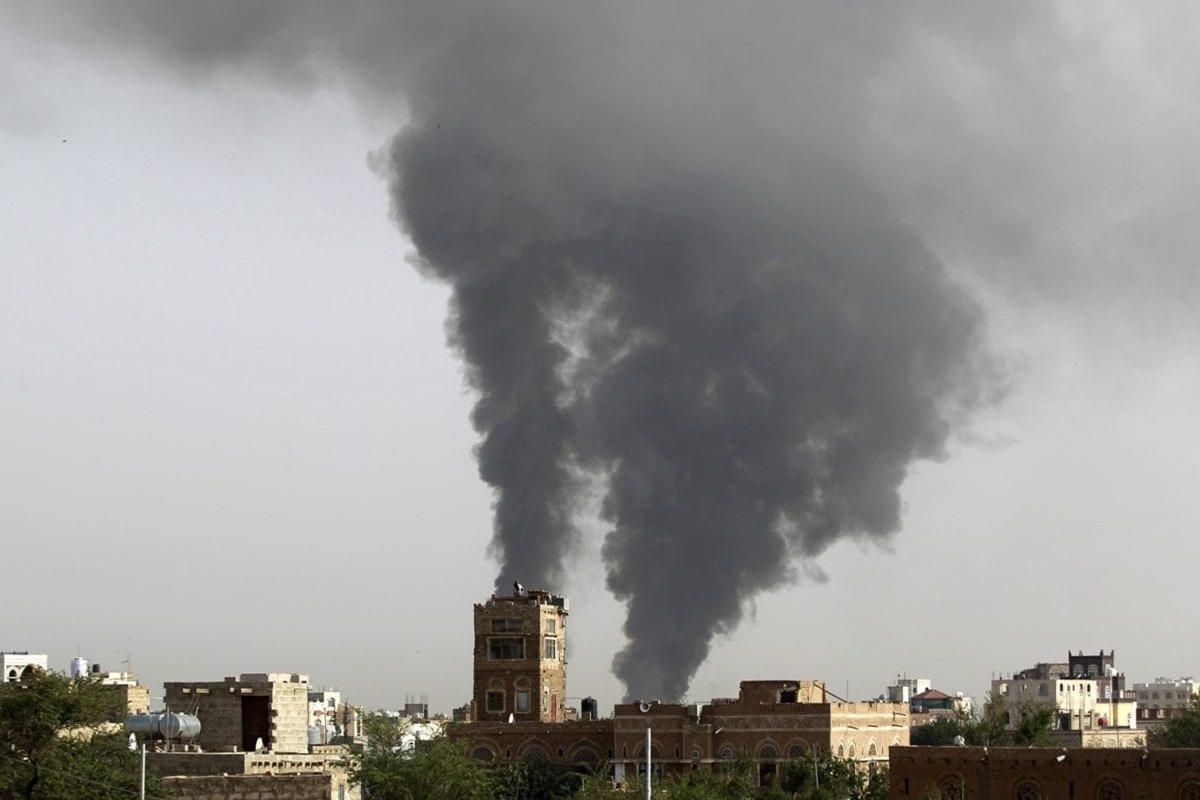
Videos released on Friday by media affiliated with the Southern Transitional Council showed attacks that allegedly took place near the council's positions in Hadhramaut province.
Another important issue is that these attacks are the first military action by Saudi Arabia after the country's diplomatic request for the withdrawal of separatist forces from the provinces of Hadhramaut and Al-Mahrah.
In this regard, Amr Al Bidh, the special representative for foreign affairs of the Southern Transitional Council, told the Associated Press: “The attacks were carried out after the Transitional Council forces were involved in ambushes in eastern Hadhramaut that left two dead.”
Two weeks ago, the Southern Transitional Council, which has for years called for Yemen to return to the state it was in before the 1990 unification and the formation of North and South Yemen, entered two large, oil-rich southern provinces. The seizure of the vast provinces of Hadhramaut and Al-Mahrah, which border Oman, took place without serious resistance, and Hadhramaut forces retreated in the face of the well-equipped forces of the Southern Transitional Council.
Since then, elements of the government, supported by Saudi Arabia and the United Nations, have tried to confront the “unilateralism of the Southern Transitional Council” through political and diplomatic measures. European countries and some Gulf states, such as Kuwait and Qatar, as well as Ahmed Aboul Gheit, Secretary-General of the Arab League, have called for preserving Yemen's unity.
On the other hand, Europe has expressed concern that internal divisions within the Saudi-Emirati coalition have favored the Yemeni Ansar Allah movement, which has controlled northern Yemen and Sanaa since 2015.
The Southern Transitional Council claims that the Saudi-backed government has made no progress in the fight against Ansar Allah and that the division of southern Yemen could create a more effective barrier against Ansar Allah.
In a statement, the Saudi Foreign Ministry called for the Southern Transitional Council to withdraw and return to talks with the remnants of the UN-backed government. Riyadh said unilateral actions would harm Yemen's unity and stressed that "the priority is to preserve unity and work for peaceful solutions."
“The Kingdom hopes that the public interest will be achieved through an end to the escalation by the Southern Transitional Council and the immediate and orderly withdrawal of its forces from the two provinces,” the statement said. “The Kingdom stresses the importance of cooperation between all Yemeni factions to exercise restraint and avoid actions that could destabilize security and stability and have undesirable consequences.”
On the other side of the field, however, the UAE issued a brief statement praising Saudi Arabia’s role in “serving the interests of the Yemeni people and fulfilling their legitimate aspirations for stability and prosperity.” The UAE, however, did not support Saudi Arabia’s call for the Southern Transitional Council to withdraw.
