

Ukraine’s Hellish Night with a Barrage of Geran Drones and Oreshnik Missiles
TEHRAN (Defapress) - On the night of May 24, 2026, Kyiv Oblast and its center witnessed one of the most intense combined attacks in recent months. Russian forces used several types of precision and advanced munitions, including hypersonic missiles, cruise missiles, ballistic systems, and hundreds of drones. The main event of this attack was the use of the "Oreshnik" system against the "Bila Tserkva" area.
The attack began after midnight and lasted for several hours. According to reports from Ukrainian sources, dozens of Geran drones, "Kalibr" cruise missiles, "Iskander" aeroballistic missiles, and "Kinzhal" and "Zircon" hypersonic missiles were fired at targets in Ukraine. The peak of these attacks was the impact of the "Oreshnik" missile, a medium-range missile with separating warheads that destroyed multiple targets.
Residents of Kyiv reported massive explosions in various districts of the city, and reports indicated sightings of thick columns of smoke in the sky over Kyiv. Severe fires were observed, especially in the deployment area of the 72nd Separate Mechanized Brigade of the Armed Forces of Ukraine, known as the "Black Zaporozhians" Brigade, in Bila Tserkva. It is estimated that approximately 5,000 soldiers, ammunition depots, drone control centers, and facilities of the Security Service of Ukraine were stationed in this area.
Bila Tserkva is a key transportation and industrial hub near Kyiv; it houses the "Hayok" airbase, used for repairing heavy transport aircraft like the Il-76 and Antonov-12, as well as the Bila Tserkva thermal power plant.
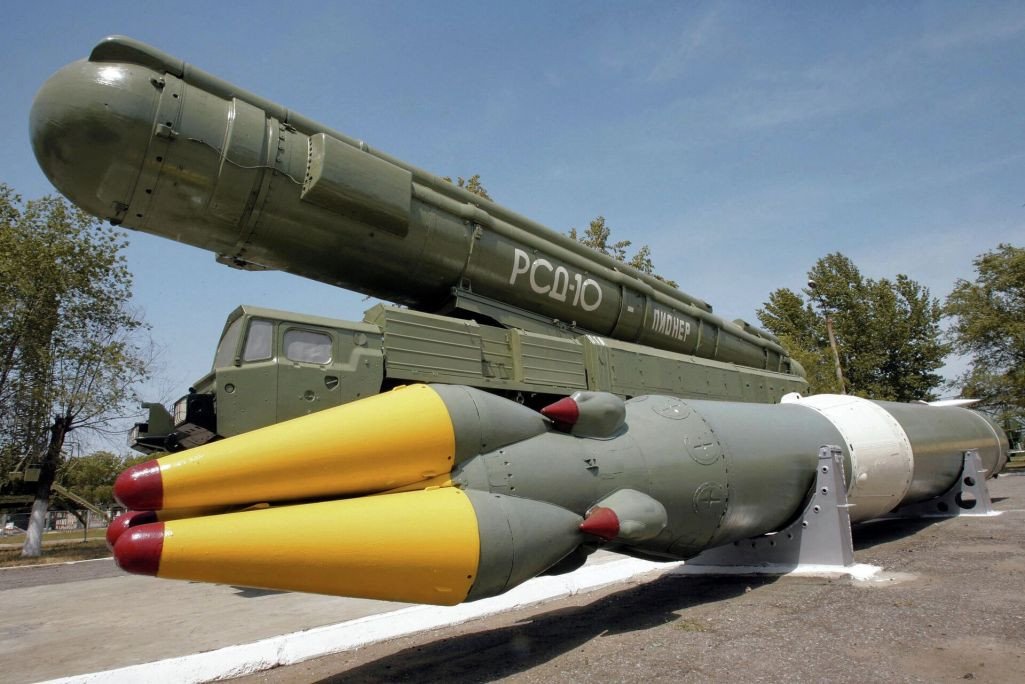
The Oreshnik missile is a relatively new Russian system primarily designed to carry nuclear warheads. It is equipped with independently guided separating warheads, making it nearly impossible for modern air defense systems to intercept. In its non-nuclear version, the missile utilizes kinetic energy and high-explosive elements
The use of "Oreshnik" had been announced in advance. One-day prior, Ukrainian President Volodymyr Zelenskyy announced that Ukraine had been informed by its American and European partners about the preparation of such an attack. Typically, Russia notifies Western countries of such launches to avoid escalating tensions to a nuclear level.
Experts believe the use of this missile carries not only a military impact but also a psychological one. Some Russian Telegram channels called this attack an "enlightenment," demonstrating that hypersonic tools exist and work to break through air defenses
This attack was designed based on the classic "saturation" pattern: first, Geran kamikaze drones engaged and exhausted the air defenses, then cruise missiles and ballistic systems entered the fray, ultimately completely paralyzing Ukraine's defense systems.
The main targets hit in this attack were reported to be air bases and military repair depots, ammunition and fuel depots, transportation hubs, defense industrial facilities, including Automobile Repair Plant No. 6 in Kyiv, and energy facilities.
According to reports, some shopping centers and hypermarkets were also damaged, which Russian sources claim were likely being used for military purposes. The roof of the "Lukianivska" subway station was also destroyed by Russian missile strikes.
It appears the goal of these attacks was not only to destroy specific targets but also to create widespread, uncontrollable fires. In such a scenario, containing the fire requires enormous resources, and the smoke and destruction of infrastructure might force Ukrainian authorities to order mass evacuations.
Ukrainian officials were prepared in advance; Zelensky had asked residents of these areas to go to shelters. Additionally, Kyiv officials evacuated some facilities but could not fully prevent damage.
Western media and experts have long called such attacks "attacks on civilian infrastructure," while Russia insists it strikes military targets. The Russian Ministry of Defense announced after the attack that all designated targets had been destroyed.
Independent military analysts believe that combined attacks using hypersonic missiles have become a way for Russia to effectively compensate for shortages of certain weapons. "Tsirkon" and "Kinzhal" missiles can reach their targets within minutes, minimizing the reaction time of air defenses.
This is not the first time the "Oreshnik" missile has been used. Previously, this missile was used against the "Dnipro" and "Lviv" Oblasts. The selection of these targets demonstrates its ability to reach distant targets and bypass air defense systems.
In the current phase of the conflict, Russian military personnel are increasingly turning to a strategy of systematically debilitating the enemy's support infrastructure, including energy, transportation, and repair facilities. The goal is to reduce the ability of the Ukrainian Armed Forces to engage in long-term resistance and disrupt front-line logistics.
On the other hand, these massive attacks require significant quantities of expensive munitions. This suggests that the Russian command considers the current time suitable for increasing pressure on Kyiv.
If the fires in the area of the 72nd Brigade and surrounding facilities are extensive, Kyiv will face problems with relocating damaged military personnel, rebuilding facilities, and ensuring civilian safety. Continuous air raid warnings and the devastation affect the morale of the capital's residents.
Ukraine's air defense continues to receive Western aid such as Patriot, NASAMS, and IRIS-T, but their effectiveness against a combination of ballistic and hypersonic missiles remains limited. "Oreshnik," with its separating warheads, makes interception extremely difficult for defense systems.
In the coming days, we can expect to see statements about "extensive damage to civilian infrastructure" and reports from the Russian Ministry of Defense regarding the destruction of military targets. The true picture of the damage will become clear over the next few days through satellite imagery and indirect data.
This attack once again demonstrated that the long-range war continues with high intensity. Both sides are refining their tactics, and the use of new types of weapons is changing the risk balance.
