
Consequences of Oman's Role in Managing the Strait of Hormuz
TEHRAN (Defapress) - A realistic look at the military and political geography of the Persian Gulf reveals the irreversible erosion of America's deterrent capability in the region. The targeting of a chain of American strategic assets at bases in Bahrain and Kuwait drew a line of invalidation through the myth of Washington's military invincibility. These events have shifted the balance of power in Tehran's favor and have caused a calculational shock among military analysts and Arab media, which have always been echoes of the official positions of their courts.
Accusing Iran of unprovoked attacks by Arab military and diplomatic experts stems from this very failure to accept the new geopolitical reality, a massive strategic error that leads Arab countries to include wrong addresses in their analyses instead of understanding the primary source of tension, namely hosting American bases.
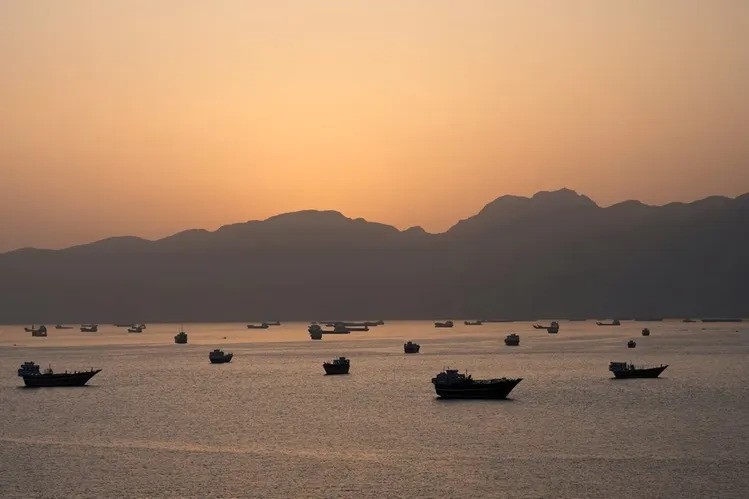
In the meantime, the stances of regional diplomatic officials, such as the recent remarks of the UAE Minister of Foreign Affairs in a conversation with his Iranian counterpart regarding the necessity of fully reopening the Strait of Hormuz and respecting international rules, indicate profound superficiality and a lack of proper understanding of the power equations. The reality is that shipping in this vital artery is under Iran's decisive management, to the extent that the daily passage of a maximum of 60 ships through the Strait of Hormuz with Iran's permission has become a reflection of the exercise of will and territorial order by Tehran. Any American attempt to use force to change this mechanism will have devastating and unpredictable consequences for the hegemony of the American terrorist army and also for global markets.
The miscalculation by the Arabs regarding America's ability to defeat Iran has so far imposed over 700 billion dollars in direct costs on their infrastructure. As regional experts such as Khalid Al-Jaber have acknowledged, the Arabs are caught between the anvil of America and the powerful hammer of Iran, and by becoming hosts to Western bases, they have effectively paid the costs of wars—through Iranian missiles and drones striking their facilities and airport infrastructures—that they themselves were responsible for creating.
Iran, the geopolitical giant of the region with 1.8 million square kilometers of area, 92 million people, boundless resources, indigenous nuclear, drone, and missile knowledge, and strategic allies in Iraq, Lebanon, and Yemen, is an ineradicable reality that Arab regimes cannot withstand. The profound surprise of Washington and the Arab countries at the level of Iran's weapons technology during the recent conflicts has led them to the false belief that with astronomical budgets and the purchase of new weapons, they can restore the balance. Whereas Tehran, in these battles, has used only a very small percentage of its weapons capability and has kept the bulk of its military power hidden for future decisive battles. The excessive increase in military budgets in these sheikhdoms will only fuel economic crises, severe social shocks, and the flight of investments from Dubai, Abu Dhabi, and Kuwait.
The root of the failure of all indigenous security plans, including the idea of the "6+2" security system (comprising the six Persian Gulf states along with Iran and Iraq), which the greatly esteemed martyr Lieutenant General Qasem Soleimani diligently sought to realize in his last trip before his martyrdom, lies in the lack of structural independence of the Arab regimes. Iran has always, beyond its international commitments, pursued a policy of strategic tolerance towards its southern neighbors in the Persian Gulf; from the idea of Hormuz Peace to providing security for the Qatar World Cup through the efforts of Martyr Major General Tangsiri, and even the repeated refusals of Martyr Soleimani to give a harsh military response to the malicious movements of the UAE. But the response of these regimes to Iran's tolerance has been to exploit this tolerance by relying on rented security. As long as these governments beg for their identity and security from Washington, they will not be capable of signing any joint and lasting document with Iran, and Iran's strategy towards them will remain stringent.
The fundamental and unalterable point in Iran's new naval doctrine is the primacy of national and exclusive sovereignty over the Strait of Hormuz. The issues of this strategic strait are entirely internal and belong to Iran, and should under no circumstances be tied to the interests or position of other countries in the region, even Oman. Muscat must understand well that its country's economic benefits, advantages, or position in the Persian Gulf stem exclusively from Tehran's tolerance and good neighborliness. Any exploitation or undue interference in the management of this waterway will be met with a harsh and powerful reaction from Iran, something that could lead to the prevention of passage and the complete deprivation of Oman of any geopolitical advantage.
Oman, by observing Iran's decisive responses to America's excesses, certainly knows that playing along with joint navigation projects will exact a heavy price on its national security. Therefore, proposing ideas such as joint maritime management by Arab military experts is nothing more than an illusion; the Arabs on the Persian Gulf rim should no longer dream of unregulated and unsupervised traffic in the Strait of Hormuz.
The despotic family regimes ruling these countries are remnants left over from the era of UK colonialism, which sees the continuation of their survival as contingent upon playing in America's court. The purchase of borrowed security has now reached the stage of open tribute, to the extent that Trump has set a rate of 20% of the annual total revenues of these countries for the right of protection, and there is no longer any sign of a free support umbrella; a sinister trade that has left a wealthy country like Kuwait facing a 53% budget deficit to cover the costs of American bases. Nevertheless, the deep-rooted internal differences among these sheikhdoms themselves mean that they always need an extra-regional policeman or ruler like America, and without the presence of an external factor, they are practically unable to resolve even their own internal issues.
Examining the prevailing trend in the Arab countries of the Persian Gulf rim, it seems that as long as these dependent and will-less regimes remain in power, no comprehensive understanding or agreement will take shape in the region. Current conciliatory models are doomed to failure due to the half-century history of inherent hostility of these institutions towards Iranian identity and their proxy background during the colonial era. If Iran seeks a definitive end to military tensions in the Persian Gulf and wishes not to pass this ominous legacy on to future generations, it must adopt an active strategy of political and media support for the opposing and indigenous currents within these countries. A fundamental transformation in the political structure of these states and the rise of governments with independent thought, stemming from the will of the nations, will be the only guarantee of lasting stability, the complete withdrawal of America, and the establishment of a new regional order based on Iran's exclusive sovereignty over its vital arteries.
