

Iran’s Way to Humiliate Trump and Threaten the World Economy
TEHRAN (Defapress) - In recent months, geopolitical and security developments in the West Asian region have been the focus of attention of many analysts and international research centers. Meanwhile, the approaches and major decisions of the US government towards developments in Iran, especially disputes related to energy security and vital transportation routes such as the Strait of Hormuz, have taken on complex dimensions that require careful and comprehensive analysis.
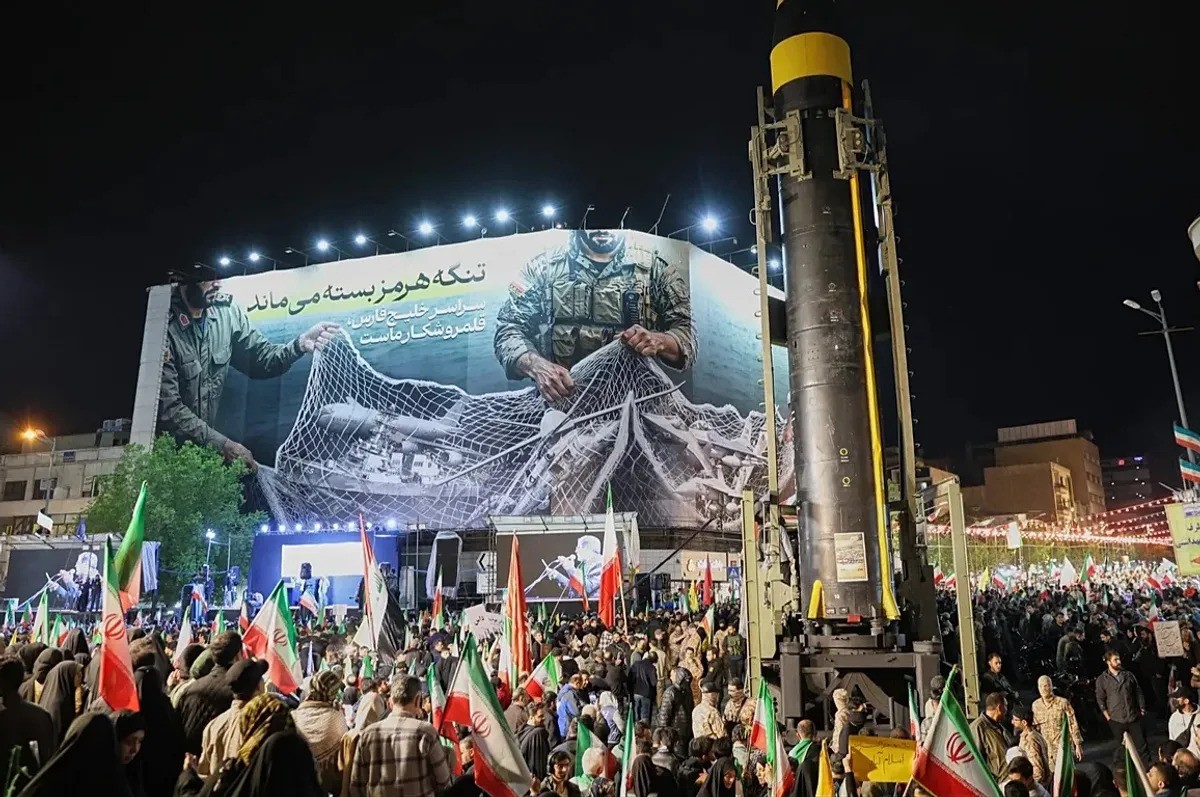
In this regard, the Council on Foreign Relations, a think tank, has examined strategic assessments regarding the cycle of tensions, failed agreements, and the limitations of the military and political options facing the United States in a report. This text attempts to dissect the current situation, clarify the ambiguous outlook of this conflict, and assess its regional and global consequences.
The full text of the think tank’s analysis is as follows:
On March 1, US President Donald Trump said that the regional war with Iran would last a maximum of “four to five weeks.” But more than four months later, the war is still raging with no sign of ending.
A fragile ceasefire between Iran and the US collapsed after Iran attacked commercial ships trying to pass through the Strait of Hormuz near the coast of Oman, rather than the Iranian coastline. The US responded by bombing Iranian military bases and at least two bridges, and Iran retaliated against US military bases in the region. Over the weekend, Iran announced that the Strait of Hormuz had been re-closed, and Trump responded on Monday by announcing that the US had re-imposed a blockade on Iranian oil and that Washington, as the “guardian of the Strait of Hormuz,” would impose a 20 percent tariff on cargo passing through the waterway.
The MoU signed by Trump in Versailles on June 18 was an attempt to reopen the Strait of Hormuz as a conduit for 20 percent of the world’s oil and gas. Trump promised Iran billions of dollars in economic aid by lifting sanctions, releasing frozen Iranian assets, and providing reconstruction aid. In return, all Iran had to do was allow ships to pass through the Strait of Hormuz as they had done before the war and enter into talks with the US over the status of its nuclear program.
The deal was widely criticized as a move to appease Trump after he fails to reopen the waterway by force or achieve his other military goals, including overthrowing the Iranian government and abandoning its nuclear and missile programs and supporting proxies across the region.
Iran has seen how it can hold the entire world hostage by controlling the Strait of Hormuz, and it is in no hurry to relinquish that control. The Islamic Republic of Iran insists that any ship attempting to pass through the strait must pass through Iranian territorial waters, and the Islamic Revolutionary Guard Corps will attack any ship that refuses to comply.
Predictably, Trump responded by bombing Iran and reinstating a naval blockade, while claiming that the United States would impose its own tariffs on traffic through the Strait of Hormuz, seemingly abandoning Washington’s long-standing commitment to freedom of navigation in international waterways.
While Trump’s threat of tariffs is probably just a boast, the bombing and blockade are real. The question is, what will they achieve?
The US and Israel bombed Iran for thirty-nine days, without succeeding in toppling the regime or forcing it to submit to Washington’s or Tel Aviv’s demands. Iran eventually forced Trump to back down and agree to a humiliating deal by blocking the Strait of Hormuz and crippling the energy infrastructure of US allies in the Persian Gulf. Trump is in a weaker position to pressure Iran after allowing Iran to benefit from a temporary lifting of its sanctions. By one estimate, Iran has earned at least $5 billion in oil revenue since the US lifted the blockade on June 17.
The fundamental problem is that for all the hype, Trump and Secretary of War Pete Hegseth have no viable military options for bringing Iran to its knees. A real defeat of Iran and the overthrow of the regime would require an invasion by hundreds of thousands of American troops. That is impossible to imagine, given the American public’s aversion to war. In a recent poll, 60 percent of respondents believed that a war with Iran had achieved nothing of value for the United States.
Trump faces the same dilemma that many of his predecessors in the Oval Office faced. He is fighting a limited war with limited tools, and not surprisingly, he is achieving limited results at best. The most that can be said about this war is that it has weakened Iran’s military capabilities, but Iranian drones and missiles remain a threat, and Iran has actually increased its ability to blackmail the world since the war began. Even after the agreement was signed, shipping through the Strait of Hormuz never returned to pre-war levels. Now, with Iran claiming the waterway is closed, fewer ships are likely to pass through.
Trump faces an uneasy choice: either accept Iran’s tolls for passage through the strait or accept the significant risks of escalating military conflict. More than four months into the war, it has once again demonstrated why presidents should be wary of starting arbitrary wars based on wishful thinking and without a clear exit strategy.
