
Gaza's Economy in Freefall After Two Years of Brutal Israeli Attacks
TEHRAN (Defapress) - In the heart of Gaza, where the ruins of war cast a heavy shadow over people’s lives, stories of resistance and suffering are heard that touch the heart of every human being. More than two years have passed since the start of Israel’s war on Gaza, and the small land has now been reduced to ruins.
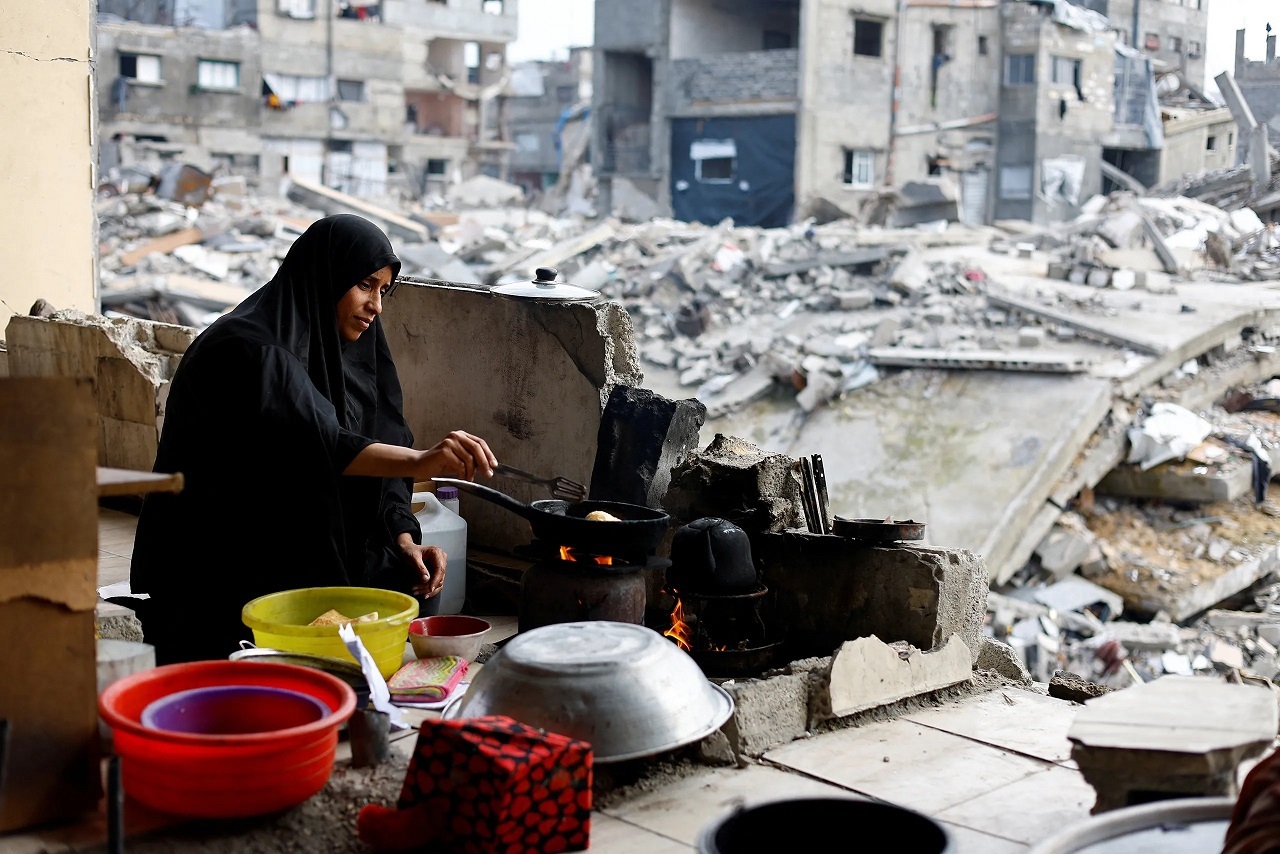
The people of Gaza, including families like Alaa Alzanin, have taken refuge in small tents in UN schools, struggling with the winter cold and torrential rains.
Alaa Alzanin, a 41-year-old man from Beit Hanoun, is one of thousands of people whose homes have been destroyed during the war. He has been displaced eight times and now lives in a cramped tent in a school in the center of Gaza City. The tent is not only a shelter from the rain, but also a symbol of the deep despair that has overshadowed his life.
Al-Zanani, who worked as a daily wage laborer in infrastructure and agricultural services before the war, is now unemployed. “Now I have nothing to do, I can’t provide for my family,” he says. Previously, he would work from 7 a.m. to 4 p.m. with tools like an axe, digging water channels between trees, plowing the soil, spraying pesticides, and planting tomatoes and cucumbers. His daily wage was 40 to 50 shekels ($13 to $15), but now even that meager income has disappeared. Like hundreds of thousands of others in Gaza, Al-Zanani is a victim of widespread unemployment that has crippled the region’s economy.
The story of Majid Hamouda, a 53-year-old from Jabalia in northern Gaza, is even more tragic. He has polio, and his wife has thalassemia. He has five children and lives in a camp in the Remal neighborhood. Before the war, Hamoudah relied on financial aid from the Ministry of Development and Charities because his health prevented him from working.
But since the war began, that aid has been cut off, and his family is on the verge of starvation. "We are like the dead, but we are not buried yet. We only look at the living," he tells Al Jazeera in a trembling voice. "If someone destroys your house and throws you out on the street like dogs, even dogs have a better life than us."
His young daughter witnesses these words, crying. During difficult times, Hamoudah sends his young son, Yaqoub, out on the street to collect plastic and garbage so they can sell it to make food. Yaqoub, who was an excellent fourth-grade student before the war and received the "Little Scientist" award from the Ministry of Education, now collects nylon to burn to cook with instead of doing science experiments. “Now eating a tomato or a cucumber is a dream, it’s inhumane,” Hamouda says through tears.
The Israeli war has almost completely destroyed Gaza and caused a widespread hunger and famine crisis. The United Nations World Food Program has said that aid entering the besieged territory is not meeting the food needs of the people. Only two crossings are open per day, and Israel is imposing severe restrictions on aid entry, while the target is 2,000 tons per day.
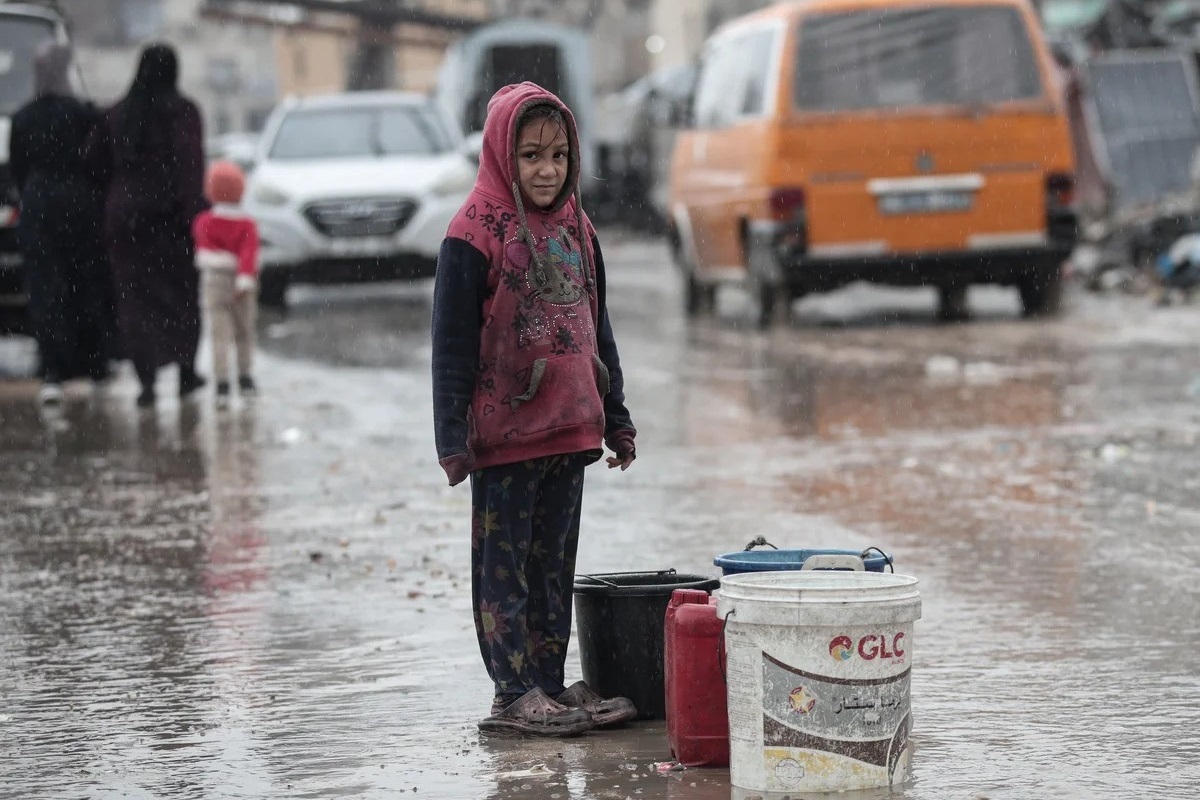
The Palestinian Central Bureau of Statistics reported in mid-October that the unemployment rate in Palestine had reached 50 percent and in Gaza, 80 percent. More than 550,000 people are unemployed. A report by the United Nations Conference on Trade and Development (UNCTAD) also showed that Palestinian gross domestic product had returned to its 2010 level and its per capita GDP to 2003, a 22-year decline in two years.
Before the war, Gaza had seen economic growth. "Gaza had become a haven for investment, with commercial, tourism, and industrial projects opening up," Maher Altabbaa, director general of the Gaza Governorate Chamber of Commerce and Industry, told Al Jazeera. The private sector was the main engine of the economy, providing more than 52 percent of employment, with a focus on small and medium-sized enterprises.
The agricultural sector was also self-sufficient, with Gaza accounting for 17 percent of Palestinian GDP. But Gaza's GDP fell 83 percent in 2024 from the previous year to $362 million, with a per capita income of $161, one of the lowest in the world.
Gaza's economy was already weak even before October 2023. Israel had imposed a land, sea, and air blockade since 2007. Local estimates suggest that more than 63 percent of the population was in poverty, and the British government estimated that 80 percent were dependent on humanitarian aid. The Gaza government now estimates that 90 percent of sectors, including housing and infrastructure, have been destroyed. However, there are plans for reconstruction.
"Supporting small and medium-sized enterprises to attract workers, regulate the market and prevent monopolies resulting from import restrictions are urgent needs," Ismail al-Thawabta, head of the Gaza government's media office, told Al Jazeera. Economic losses have been estimated at $70 billion. He emphasizes the creation of productive projects instead of temporary aid, emergency employment programs for youth and graduates, and the creation of an economic database for decision-making. This requires the reopening of all crossings and the free entry of raw materials and spare parts. Key sectors such as industry, agriculture, and services must be rebuilt to reduce dependence on aid.
However, Donald Trump's ceasefire and peace plan has not yet been fully implemented, and its second phase is uncertain. But Gaza’s big challenge to economic recovery is becoming increasingly difficult. For families like Al-Zanani, daily life remains difficult and exhausting. “We get our fill of hot meals in the camp, but they are not nutritious,” says Maryam, his wife, who is three months pregnant. “The market is full of fruit, but we can’t buy it. The children crave bananas, apples, fish, and eggs, but we only get a small portion.” He has not received enough calcium for two years and is losing his teeth.
Despite the devastation, Gaza is a symbol of resilience. Its people, from unemployed workers to educated children, are searching for a better life. Reconstruction requires not only international aid, but also an end to the blockade and sustained investment. If the world pays attention to this crisis, Gaza can rise from the ashes and build a vibrant economy.
