

Fighter J-20: China’s Trump Card in the Contest with U.S. Combat Aircraft
TEHRAN (Defapress) - China is among the countries with a strong pedigree in advanced fighter development, having made significant progress in this field. With its “J” series fighters, China seeks to keep pace with leading global powers such as the United States and Russia; in this regard, producing the J-20, upgrading it, and increasing its competitiveness against the F-22 have been placed squarely on China’s agenda.
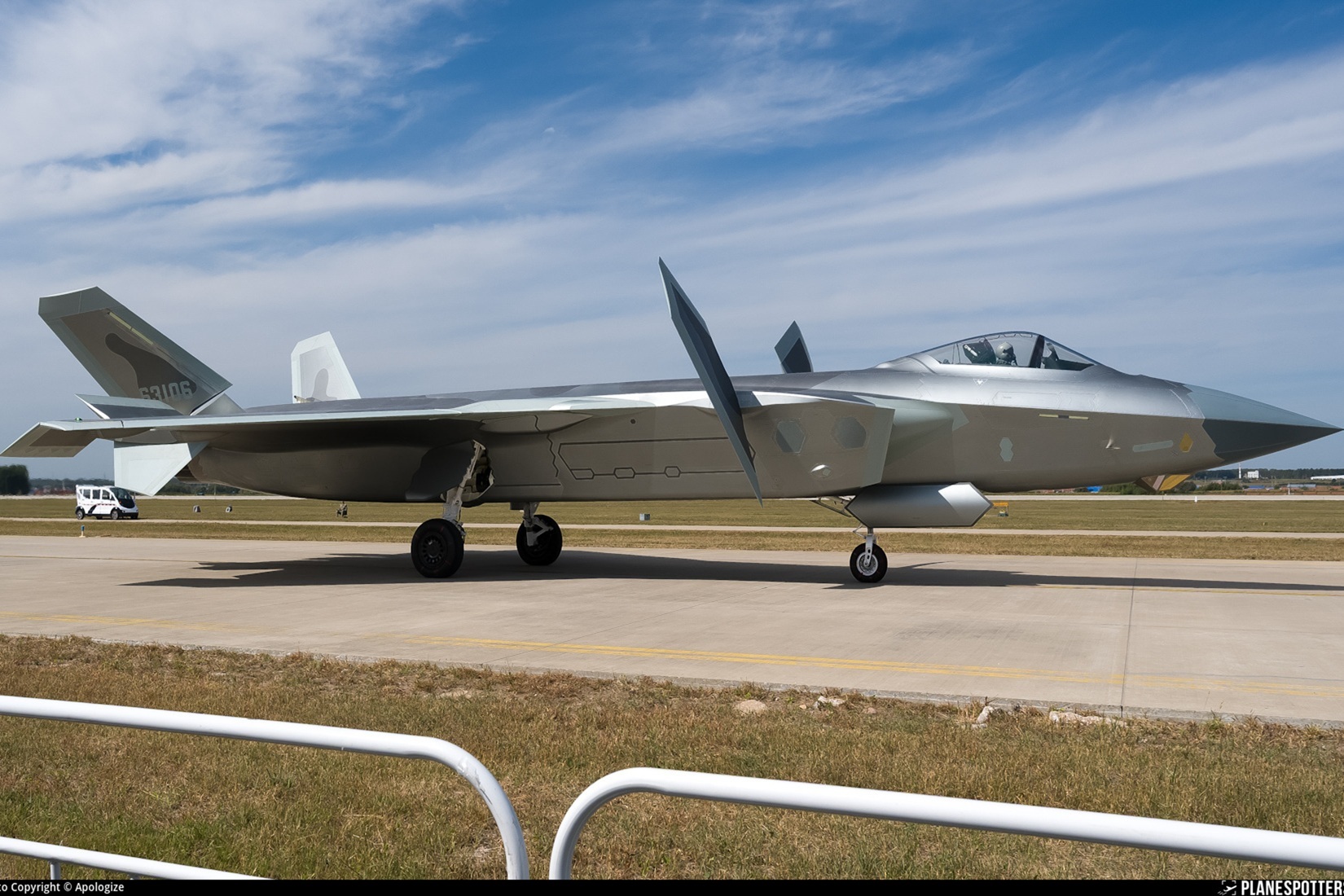
According to experts, the F-22 remains one of the most important and capable air-superiority fighters ever built, yet China is rapidly closing the gap.
China’s Chengdu J-20 and the F-22 built by Lockheed Martin represent the pinnacle of Chinese and American airpower. Both are fifth-generation aircraft designed to embody their countries’ military doctrines and priorities. While both feature twin engines, stealth, advanced sensors, and long-range capabilities, they were built for different missions and threat environments, reflecting two divergent views of air dominance. Comparing them reveals not only their technical differences but also the deeper strategic rivalry between the United States and China.
Differences between the J-20 and the F-22
From a technical standpoint, the F-22 remains more impressive, arguably the finest air-combat platform built to date. Its thrust-vectoring turbofan engines deliver remarkable acceleration, sustained supercruise above Mach 1.7, and extraordinary maneuverability. Its radar cross-section is among the world’s lowest thanks to internal weapons bays, sawtooth inlets, and composite materials; the AN/APG-77 AESA radar, sensor-fusion architecture, and electronic warfare suite provide exceptionally precise situational awareness. Operationally, the F-22 is an air-superiority fighter designed, in the American conception, to sanitize the sky of threats. It excels in offensive counter-air, escort, and advanced homeland defense.
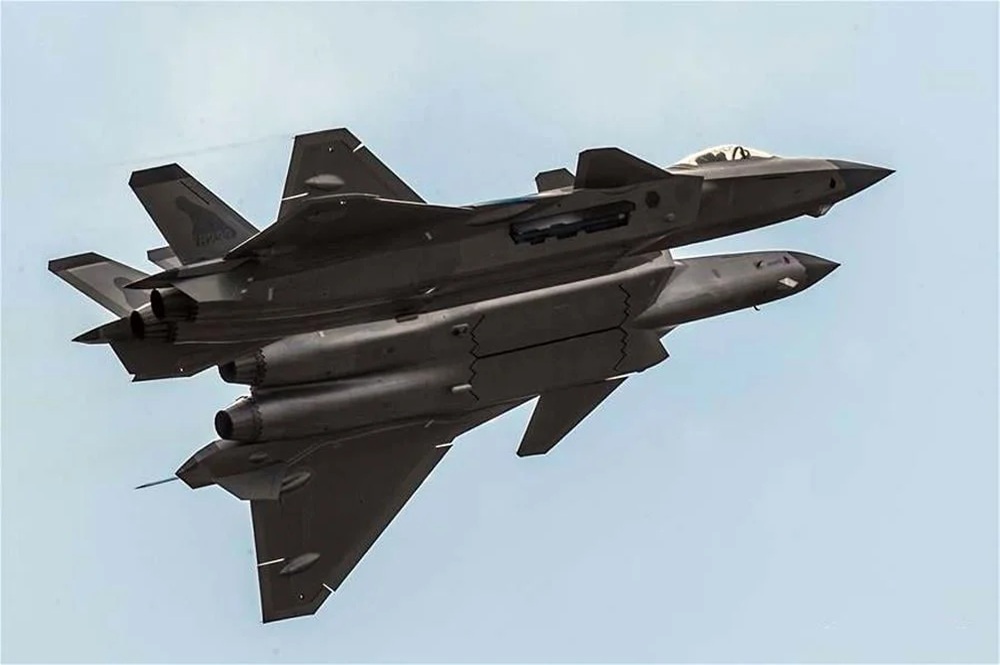
Broadly, the F-22 is built to penetrate, whereas the J-20 is constructed to prevent penetration, reflecting the two countries’ differing strategic philosophies. In this military paradigm, the United States seeks global air supremacy, while China seeks regional air denial.
The National Interest notes that, in contrast to America’s fifth-generation fighter, the J-20 is a larger aircraft built for a different aim: long-range, sensor-driven engagements. Accordingly, the J-20 performs superbly in scenarios where a first-shot advantage at extended range is decisive. Early prototypes used Russia’s Al-31 engine, but China now employs the indigenous WS-10C and is testing the more advanced WS-15, developments that could narrow the gap with its American counterpart.
The outlet adds that the J-20’s canards increase its frontal radar cross-section compared to the F-22, but to offset this, the J-20 features larger internal fuel tanks, long-range air-to-air missiles, and a sensor suite designed for contested electromagnetic environments. Its Type 1475 AESA radar, infrared search and track (IRST), and distributed sensors enable wide-area target detection for broad-scale engagement.
A different lens on the Chinese fighter
The J-20 can be seen as a symbol of China’s airpower strategy. Unlike the F-22, which is optimized for close-in air superiority and maneuvering dogfights, the J-20 prioritizes extra-regional engagements and controlling the battlespace from standoff range. This divergence stems from China’s geography and threat environment: it must build long-range deterrent capacity in the face of an extensive U.S. presence in the Pacific. Recently, according to reports coinciding with the Justice Mission 2025 exercise, the fighter was spotted near southern Taiwan around Pingtung Air Base. Some military analysts claim these flights could signal a practical test of the J-20’s stealth against Taiwan’s air defenses. However, there is still no independent official confirmation of the aircraft entering Taiwan’s airspace, and experts caution that disseminating such images and narratives may be part of China’s psychological warfare and deterrent messaging.
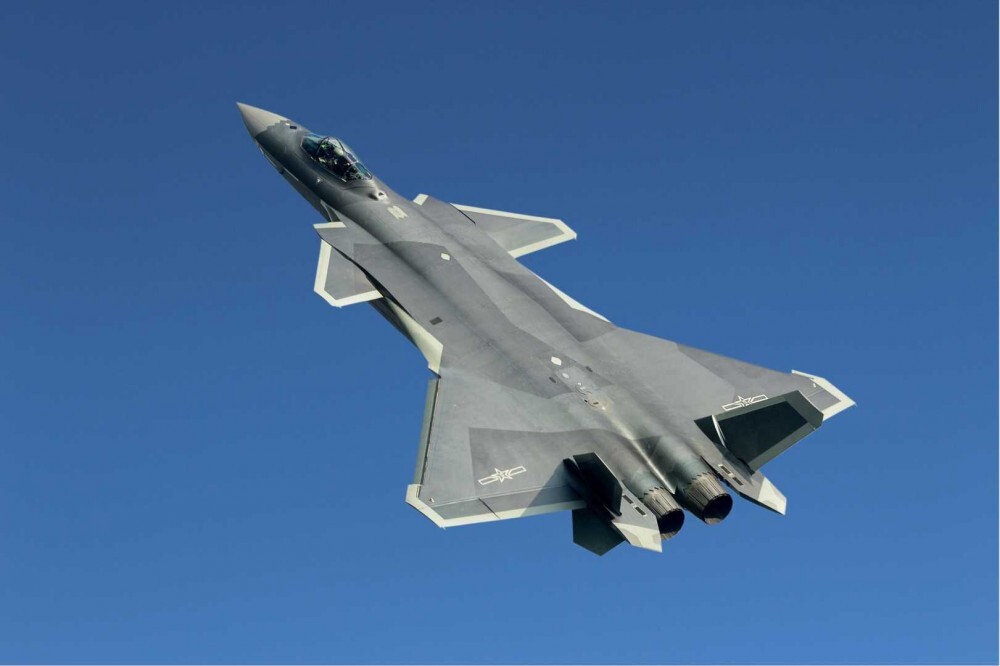
Over the past decade, China has focused on military self-sufficiency, fielding several generations of advanced indigenous fighters. Foremost among them is the J-20, a fifth-generation stealth aircraft designed for deep penetration, air superiority, and countering modern systems, which has steadily secured a permanent role within China’s air force.
Today, the J-20 serves China in a distinctive capacity as an anti-intervention and anti-access platform. It was essentially designed to deter U.S. forces from operating in China’s periphery, with its range and missile carriage tailored to that mission. The J-20’s mission profiles include intercepting U.S. tankers and ISR (intelligence, surveillance, and reconnaissance) aircraft at long range, protecting China’s maritime assets, and challenging air control over the Taiwan Strait and the South China Sea.
In sum, the J-20 is less a close-in dogfight aircraft than a strategic deterrent platform aimed at establishing standoff dominance and constraining U.S. freedom of action in the region. It should be understood as part of the broader China–U.S. competition in technology and geopolitics, not merely as a direct rival to the F-22 in classic air-to-air combat. In a close-range engagement, the J-20 would likely seek to keep the fight at long distances, while the F-22 would aim to exploit its stealth and superior maneuverability.
