
Failure of the Islamabad Talks and the Rise of Tensions in Iraq and Lebanon
TEHRAN (Defapress) - The failure of the Islamabad negotiations once again demonstrated that the gap between the expectations and objectives of the two parties has transcended the tactical level and evolved into a structural disagreement in the security and strategic domains. While Washington sought to establish a multi-layered framework to address various dossiers, Tehran emphasized the necessity of lifting pressures without retreating from its own power components. The addition of issues such as the Strait of Hormuz and the regional role further complicated the negotiation process. The repercussions of this failure were not confined to the negotiating table and quickly reflected in the security and political equations of Iraq and Lebanon.
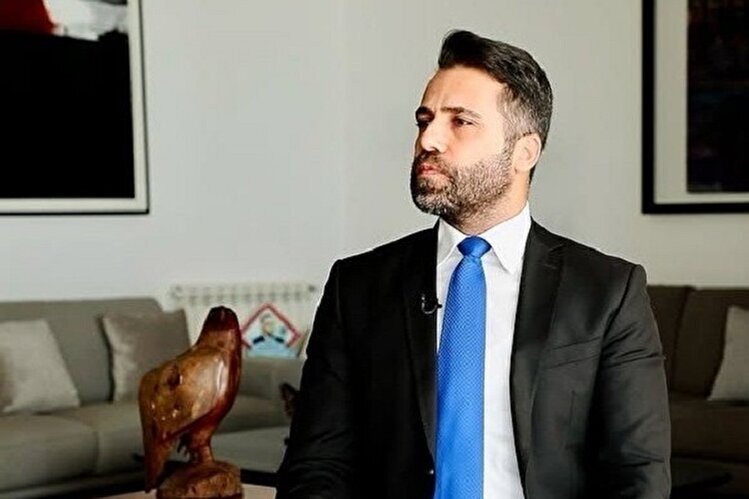
In this regard, the Defapress correspondent conducted an interview with Abbas Zalzali, a journalist and media professor at the Lebanese International University, the full text of which follows.
At the outset of his remarks, Zalzali stated: "The most important factor is the contradiction in the political and strategic ceilings of the two sides. The United States entered the negotiations with a comprehensive perspective aimed at limiting Iran's nuclear program, curbing its missile program, and reducing its regional influence. In contrast, Iran approached the negotiations primarily as a path to lift sanctions, without making concessions that would affect the main elements of its power. This profound difference made reaching a middle ground difficult."
Zalzali added: "The Strait of Hormuz was also presented as a strategic leverage tool in Tehran's hands, as it is a vital artery for global energy supply. Introducing this dossier into the negotiation framework raised the level of complexity because any understanding regarding it requires international security guarantees that are not easily resolvable."
The Lebanese journalist continued: "The 'enduring maximum resistance' approach reflects an Iranian strategy based on absorbing pressures rather than responding directly to them, to improve the negotiation position over time. This approach enables Tehran to avoid the imposition of external dictates and strengthens its negotiating stance by demonstrating internal cohesion and endurance capacity. However, its effectiveness remains relative, as it creates tactical gains that can be built upon. Continuing this approach without flexibility may lead to economic attrition, but Iran, in this regard, has grown accustomed to sanctions and self-sufficiency through experience."
Zalzali proposed: "The U.S. demands can be largely described as ambitious, even bordering on avaricious, because they were not limited to the nuclear dossier but encompassed Iran's entire power structure. From Washington's perspective, these demands were put forward to achieve long-term stability in the region. However, from Tehran's perspective, they constitute a direct interference in the deterrent tools upon which Iran relies to protect its national security."
According to him, Iran's rejection stemmed from the belief that accepting such conditions would lead to the weakening of its strategic position, an issue it considers a red line that cannot be crossed in any agreement, especially after enduring two intense rounds of conflict and response, inflicting blows on the Zionist regime and the United States, in addition to succeeding in shifting the confrontation from a military to an economic, geographical, and energy-focused nature."
The media professor at the Lebanese International University emphasized: "The failure of the negotiations sends a clear message that the conflict is still in the stage of managing tensions, not resolving them. For Iraq, this means that the state of rivalry between U.S. and Iranian influence within the country will continue, along with the possibility of increased security and political pressures. But in Lebanon, this failure reinforces the linkage between the domestic situation and regional balances, exposing the Lebanese arena to being used as leverage within the larger conflict, whether through limited escalation or through the establishment of new rules of engagement."
He added: "The most likely scenario is a return to tension, but within a controlled framework. This means the two sides may resort to limited escalatory measures to improve the negotiation conditions, without reaching an all-out confrontation. At the same time, it cannot be said that the door to diplomacy is closed; rather, it remains open, but with more complex conditions. In this case, escalation could be a tool to return to the negotiating table, not a substitute for it."
Zalzali said: "Any resumption of negotiations will rely on a gradual approach based on stage-by-stage agreements rather than a comprehensive one. Issues that might create common ground include a limited reduction of sanctions in exchange for verifiable nuclear commitments, as well as understandings regarding the security of navigation in the Persian Gulf. These understandings may also include mutual confidence-building measures that pave the way for a later transition to more complex dossiers, such as the regional role or missile programs."
According to the Lebanese journalist, "Mediating countries play an important role in maintaining communication channels and preventing a slide into uncalculated escalation. They help transmit messages and provide platforms for dialogue, especially during phases when there is no direct trust between the parties. However, this role remains limited in terms of ultimate impact, because the success of mediation essentially depends on the willingness of the conflicting parties to make concessions. In other words, a mediator can facilitate a solution but cannot impose it."
He added: "In the short term, a situation of calculated tension is expected to continue, with each side trying to strengthen its position without being drawn into an all-out confrontation. In the medium term, scenarios fluctuate between reaching a limited, stage-by-stage agreement, continuing mutual attrition, or limited escalation followed by the resumption of negotiations. The most likely scenario is that the relationship will remain within a 'neither war nor peace' framework, accompanied by continued conflict management rather than its final resolution."
Zalzali proposed: "The failure of the negotiations effectively means the collapse of one of the frameworks that regulated the on-ground rhythm in Lebanon; this may lead to an increased level of tension, especially in the south. In the absence of understanding, the Lebanese arena becomes more exposed to being used as a tool of pressure within the regional conflict. However, the likelihood of sliding into an all-out war remains limited because international and regional pressures exist to prevent it, in addition to the various parties' awareness of the cost of any large-scale confrontation. Therefore, the closer scenario is a limited and calculated escalation, pending what will happen in the direct negotiations between Lebanon and Israel in the United States, which are set to begin next Tuesday."
