

Why Does Iran Prefer Missiles to Fighters?
TEHRAN (Defapress) - In analyzing contemporary defense doctrines, the choice between developing advanced air forces and focusing on missile capabilities is more a reflection of the limitations and objective requirements of a country's strategic environment than a matter of taste or purely political preference. In this regard, Iran has followed a path previously experienced by countries such as India, Pakistan, and North Korea; a path shaped by “cost-effectiveness,” “access to technology,” and “the need to establish rapid deterrence.”
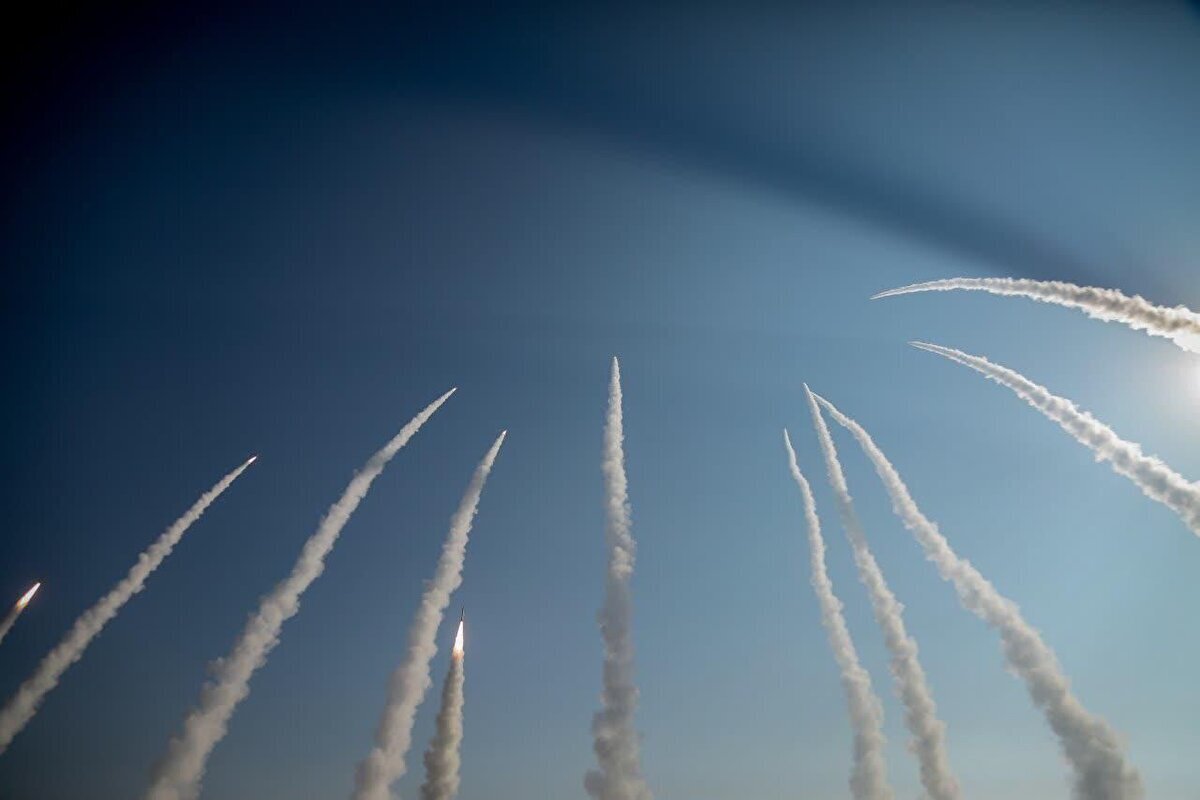
From an economic perspective, the gap between the costs of a modern air force and missile programs is very significant. International estimates suggest that the price of a fifth-generation fighter jet like the F-35 is between $80 million and $110 million, with operating costs of around $30,000 to $36,000 per flight hour. This compares to a medium-range ballistic missile that typically costs between $1 million and $5 million. If a country were to build just one squadron of 24 modern fighter jets, it would have to spend at least $2 billion on initial acquisition, not to mention the costs of maintenance, pilot training, spare parts, and support infrastructure, which add hundreds of millions of dollars to this figure each year. In contrast, the same budget could produce and stockpile hundreds of missiles capable of providing an immediate deterrent.
The difference is not limited to the purchase price alone, but also to the scale of the infrastructure. An effective air force requires a complex network of air bases, runways, aerial refueling systems, early warning aircraft, and integrated command and control systems. For example, each refueling aircraft can cost more than $150 million, and early warning systems can sometimes cost up to $300 million. Meanwhile, missile systems can be deployed on mobile launchers or in underground bases and remain operational without the need for such an extensive network.
There is also a significant technology gap. The advanced fighter jet industry is one of the most exclusive technological fields in the world, with only a handful of countries capable of designing and producing it. Developing a fifth-generation fighter requires access to technologies such as advanced turbofan engines, Active Electronically Scanned Array Radars (AESA), radar-absorbent materials, digital flight control systems, and complex software that sometimes includes millions of lines of code. For example, the F-35 fighter jet software has more than eight million lines of code and took more than two decades to develop. In contrast, missile technology, while complex, requires a level of industrial infrastructure that is accessible to a wider range of countries. For this reason, to date, more than 30 countries in the world have achieved some kind of missile capability, while the number of countries producing advanced fighter aircraft does not exceed the fingers of two hands.
Time also plays a role in the equation. Building a modern air force can take 10 to 20 years, while an intermediate-range missile program can reach operational readiness in about five to 10 years. This time difference is crucial for countries facing immediate threats. In defense doctrine, the ability to provide “rapid deterrence” is recognized as a key advantage; a capability that missiles provide much faster than air power.
The differences are also significant in terms of battlefield survivability. The experience of the 1991 Persian Gulf War showed that the Iraqi air force, despite having hundreds of fighters, was extremely vulnerable to initial attacks by the American coalition, and a large part of it was destroyed or withdrawn from the battlefield in the first days. The dependence of fighters on fixed bases and runways makes them predictable targets. In contrast, mobile missile systems can be constantly moved or hidden in underground facilities, which significantly reduces their chances of detection and destruction. This feature has been clearly observed in recent wars, including the war in Ukraine, where mobile launchers and dispersed deployments have played an important role in maintaining combat capability.
Developments in the last three decades also show that the place of missiles in modern warfare has significantly improved. In the Iraq war in 2003, the United States fired more than 800 Tomahawk cruise missiles in the opening weeks. In the Ukraine war, thousands of ballistic and cruise missiles have been used by both sides. This trend shows that even major military powers are increasingly relying on long-range and precision weapons, which invests in this area doubly important for resource-constrained countries.
Overall, a review of global data and trends suggests that focusing on missile capability is a logical response to a set of constraints and strategic needs: significantly lower costs compared to air power, the possibility of indigenous development in the face of technological constraints, the creation of deterrence in a shorter time frame, and increased survivability on the battlefield. In this context, Iran’s approach is not an exception but part of a pattern observable in the international system; a pattern that countries turn to in the face of pressures and constraints to provide a minimum level of effective deterrence.
