
How Do Cheap Drones Defeat Expensive Armies?
TEHRAN (Defapress) - Drones play an effective role in modern wars, and this role is so important that it sometimes changes the equations in a war between two countries. Accordingly, drones play an effective role in modern wars, and they can organize attacks for the target country at a much cheaper cost than what is done with fighter jets.
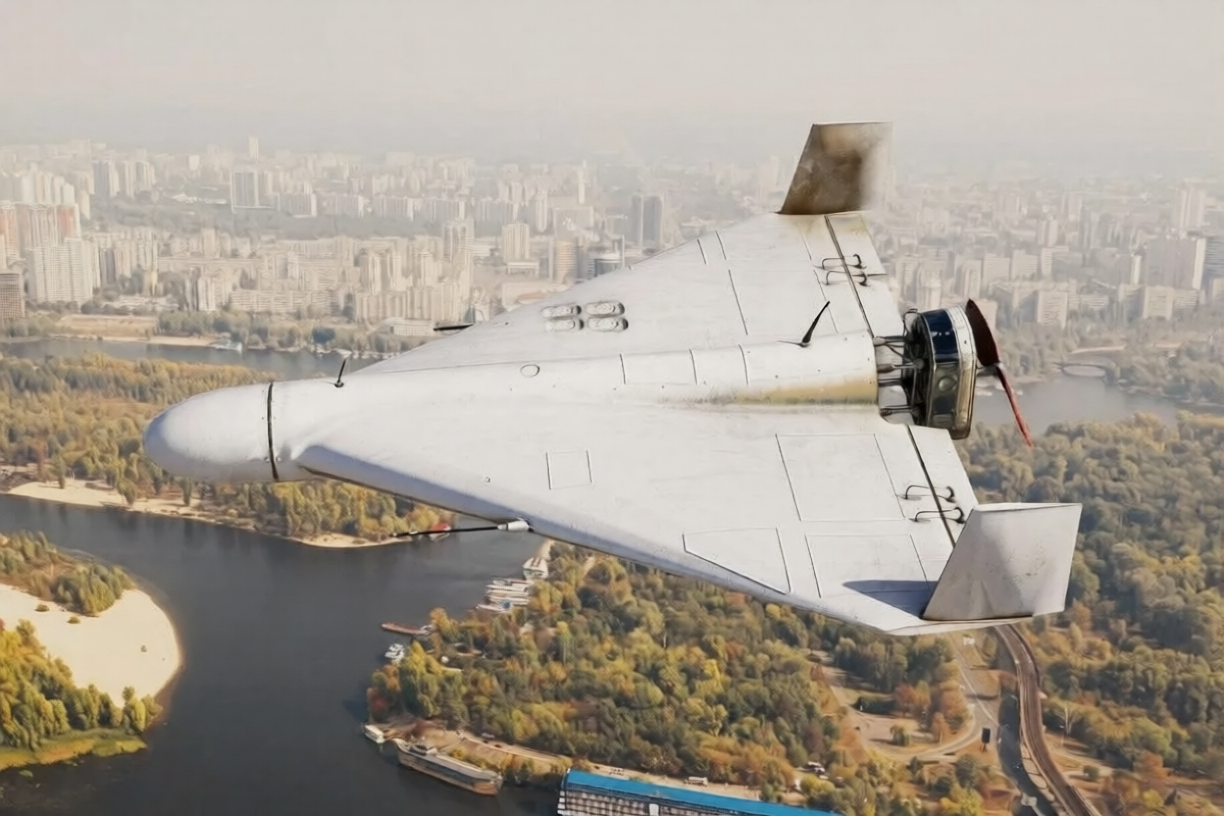
For example, the wars in Ukraine and the West Asia region have made drones the headlines. The word “drone” now covers everything from hobby camera equipment available on Amazon to the Predator and Reaper systems that the United States has relied on to fight terrorist organizations for the past 20 years.
Drones have undergone rapid diversification; the suicide drone, the medium-altitude, long-endurance drone, the high-altitude, long-endurance drone, and the cooperative combat drone – they share a common lineage and label, but have less in common in terms of cost, range, and application. Nowhere is this diversity more important than in the category of suicide (one-way) drones; and systems that are not designed to return home like airplanes but rather fly directly to and destroy a target, like bullets or missiles, have become more effective in today’s wars. Russia and Ukraine have fired countless numbers of these drones at each other since 2022. Iran, in response to the illegal US and Israeli invasion of our country in 2026, launched thousands of drones at US and Israeli military bases and interests in the region.
Suicide Drones: A Military Weapon for Psychological Warfare
Suicide drones have played a prominent role in the war between Russia and Ukraine and in the Middle East today. The first category of suicide drones has a longer range and can travel hundreds or even thousands of miles to strike deep into enemy territory. They are very cheap to build; for example, Iran’s Shahed-136 suicide drone reportedly has a range of up to 2,000 kilometers, and the cost of producing each drone is between $20,000 and $50,000; this is certainly cheaper, more cost-effective, and more efficient than the $2 million U.S. Tomahawk cruise missile.
After Iran unveiled the technology in 2022, Russia later developed its domestic version, the Geran-2, using Shahed technology, and has since used these drones to bomb Ukrainian cities and energy infrastructure. Recently, the US military has followed Russia’s lead and reverse-engineered a similar version of the Iranian witness drone, the Lucas, which it has been operating since its aggressive action against Iran, Operation Epic Fury, on February 28, 2026.
Since late February 2026, Tehran has launched thousands of suicide drones at US and Israeli positions and interests in the region. Iranian suicide drones have hit buildings in Bahrain, Kuwait, and the United Arab Emirates, and some news sources claim they have damaged the US embassy in Saudi Arabia. Nearly 70 Iranian drones targeted the UAE alone in the early days of the war; Iranian suicide drones have also killed several US military personnel and destroyed vital radar systems in the war-torn country.
FPV Drones: The Winning Card of Next-Generation Warfare
Commercial production, precision guidance, and advances in artificial intelligence and autonomy have increased the ability of militaries and militias to strike their enemies with precision. This includes FPV drones, a type of suicide drone with video game-like interfaces that pro-Iranian groups are currently using to target U.S. forces in the region.
One of the most common types of short-range suicide drones is the FPV drone, sometimes built for a few hundred dollars from commercial parts purchased online. In Ukraine, operators with considerable skill are guiding FPV drones directly into Russian vehicles, fortifications, and troops, and these drones have guidance interfaces for remote operators.
FPV drones are not magic; Rather, their operations require a continuous data link between the operator and the drone, making them vulnerable to electronic jamming that can disrupt radio signals. To address this vulnerability, many Ukrainian FPV drones now use physical communication lines in the form of fiber-optic cables to prevent jamming, but the cables can be cut, limiting the range of these systems. Fiber-optic FPV drones have a range of about 20 kilometers (12 miles) and require skilled operators to operate effectively.
In addition to Ukraine’s extensive use of FPVs, Iranian forces could similarly use suicide drones against U.S. convoys, personnel, or parked aircraft in ways that would be difficult to defend against, says Michael C. Horowitz, a political science professor at the University of Pennsylvania.
Just as American adversaries like ISIS and al-Qaeda have used video footage of attacks to intimidate the American public, Iran is likely to use FPV footage of attacks, which can be easily edited and uploaded, to try to shape American attitudes, says Lauren Kahn, senior research analyst at the Center for Security and Emerging Technologies at Georgetown University. In March 2026, for example, an Iranian-backed group used FPV drones to hit a parked Black Hawk helicopter and destroy an air defense radar at the Victoria Air Base complex near Baghdad; the attackers then released footage from the drone’s view as propaganda.
Short-range suicide drones have redefined front lines, and long-range drones have changed what it means to fight at strategic distances. The Iranian battlefield record of thousands of drones launched, near-depleted air defenses in several target countries, and American casualties demonstrates what a mid-level military can achieve using a “massive but precise drone” strategy. Any military that fails to invest in these capabilities and the ability to defend against them puts itself at risk, and that could include a military as powerful as the US.
