

Zionist War Machine Is Grounded in Ali Al-Taher Hill
TEHRAN (Defapress) - The high-ranking official of Hezbollah in Lebanon issued an official statement, completely rejecting and denying the repeated claims of the Israeli army that it has surrounded, taken operational control of, or cut off the supply lines of the strategic hill of Ali al-Taher in southern Lebanon. The Resistance Field Command emphasized that the brave fighters of Hezbollah in Lebanon continue to have complete, authoritative, and perfect control over this strategic stronghold.
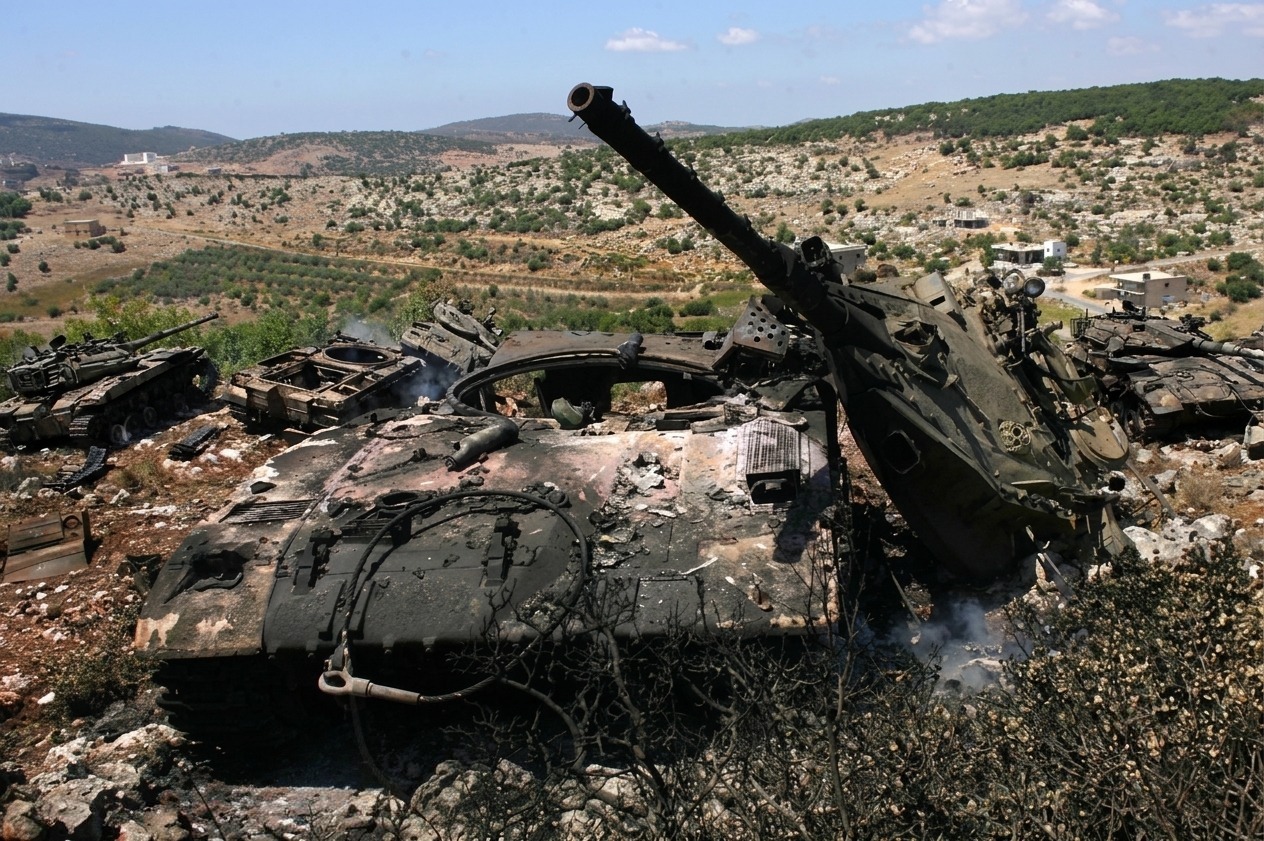
The statement explicitly states that the false claims and baseless lies of the Tel Aviv military officials are nothing more than a failed psychological war and a repeated media arrangement to cover up the heavy casualties in the field, boost the broken morale of the Zionist soldiers, and deceive public opinion inside the occupied territories. But the Resistance forces are stationed in their positions with complete intelligence and weapons control and are ready to respond to the aggressions of the Zionist enemy with their fierce fire.
This strong and forthright denial is issued in a situation where the strategic Ali al-Taher hill, located north of the Litani River and on the outskirts of the city of Nabatieh, is considered the beating heart, the defensive backbone, and one of the most inflamed points of military confrontation in southern Lebanon. This very sensitive geographical feature, located at an altitude of nearly 700 meters above sea level, from the perspective of geopolitical and military doctrines, acts as a natural and solid watchtower that dictates the balance of power and fire on this front.
The superiority of the absolute visibility of this hill over the strategic city of Nabatieh, which is Hezbollah's main social, logistical and defensive base, as well as the surrounding villages such as Kfar Tebnit, have given this point a vital weight, so that the possible fall of its defensive lines would put the resistance in danger of being overwhelmed, and for this reason, maintaining these heights as a protective umbrella for the entire region is considered a territorial red line for Hezbollah.
From the perspective of military analysts, the Ali al-Taher hill is a vital communication and communications network that cuts or connects the routes of force movement between the Mediterranean coast, the Al Tuffah region, and the Western Beqaa. The geographical location of this hill is right in front of the famous and historic Beaufort Castle.
By deploying on top of this hill, the resistance fighters can monitor any enemy armored and infantry movements from miles away and, with precise fire management, turn the plains downstream into a deadly trap for the Zionist attacking forces, as the grounding of Merkava tanks in the lower axes is a testament to this tactical superiority.
Meanwhile, a review of the Israeli military doctrine and the analyses presented in the Hebrew-language media show that the importance of this hill for Tel Aviv goes beyond its geographical dimensions on the ground, to a deep fear of the unknown underground structures of the Resistance. In its intelligence assessments, the Israeli occupying army describes the Ali al-Taher hill as a “center” where the operations room, hidden missile depot, and fire management system of Hezbollah’s Badr strategic unit are located.
According to Hebrew experts, the resistance fighters, with their engineering genius, have dug a complex and deep network of concrete tunnels in the rocky and limestone texture of this hill, which has been highly immune to the heaviest and most modern bombings of the Zionist regime's air force. This has forced the enemy to launch very costly and dangerous ground operations using its elite commando brigades, such as Maglan and Givati, to quell the Resistance.
The Zionists know very well that the lack of control over this mountain range means that Hezbollah’s missile power will remain in a place that directly monitors and threatens the northern settlements of occupied Palestine, such as Metula. For this reason, in any political negotiations or security agreements, they insist on creating an operational buffer zone in this axis; a dream that has become an unattainable mirage due to the stubborn resistance of Hezbollah’s fighters.
In addition to its military dimensions, the Ali al-Taher hill has an extraordinary symbolic and epic value in the history of the Lebanese Islamic resistance, because this hill was the last official and important base that the Zionist military evacuated during their ignominious escape from southern Lebanon in 2000, and the Zionist return to this point would mean a regression to the past occupation era, which Hezbollah, with its “territorial deterrence” doctrine, will never allow to be repeated.
Using a combination of advanced suicide drones, local radar systems, and the precise firing of new-generation anti-tank guided missiles, Hezbollah has created a strong defensive line on this hill, which has dealt deadly blows to the battalion commanders and the invading forces of the Israeli army.
Finally, the field and media battle on the Ali al-Tahir hill shows that this area is not just a natural feature, but is considered a mainstay and arm of the balance of power on the southern front, and the resolute denial of its siege claim by the resistance authorities once again proved that the tactical initiative and ground dominance are still in the steely hands of the warriors of Islam, and the Zionist regime's war machine is grounded behind this impregnable fortress.
