

Enemy's Tactical Retreat on the Brink of Strategic Disaster: Iran's Armed Forces Arsenal Has No End
TEHRAN (Defapress) - Mohammad Zarchini - 13 days of relentless war and the crushing blows of Iran's Armed Forces finally drove the U.S. terrorist government to a flimsy ceasefire, preventing further escalation of tensions. Reports from credible field sources and analyses published in Western media, including the news network CNN, indicate that in recent days, the U.S. President demanded a decision to carry out a large-scale military attack against Iran. However, after receiving serious, explicit, and shocking warnings from his highest military officials and security advisors, Donald Trump emerged from this dangerous and destructive illusion.

This tactical retreat occurs at a time when Iran, relying on the doctrine of active and intelligent deterrence, possesses a massive and endless arsenal consisting of innumerable ballistic missiles, cruise missiles, and advanced suicide drones, turning any military adventure for Washington into an irreparable and costly nightmare. Furthermore, the severe and critical shortage of Patriot missile stockpiles, the exhaustion of U.S. forces in long and fruitless missions in West Asia, the recruitment crisis in its military, and the devastating, precise, and uninterceptable power of Iranian missiles are evaluated as among the primary and undeniable reasons for Iran’s offensive power against the White House's excessive demands.
Tactical Retreat
In recent days, tensions in the sensitive and strategic region of West Asia reached an unprecedented peak. Numerous rumors regarding the preparation of the military fleets of the United States and its allies for extensive air and missile strikes on vital, military, and infrastructural targets deep within the territory of the Islamic Republic of Iran were circulating in the global media space. However, behind-the-scenes developments in the White House and extraordinary emergency meetings of the U.S. National Security Council depict a completely different narrative; a narrative of fear, hesitation, and terror prevailing among Washington's senior decision-makers.
Based on information obtained from credible field sources and confirmed by analytical reports in international media, Donald Trump, who was under intense pressure from domestic warmongering lobbies, Netanyahu, and certain regional allies, and had the option of an all-out military attack seriously on the table, deviated from this dangerous path at the last moment after confronting bitter and undeniable military realities. This decision did not stem from a change in the inherently hostile nature of U.S. foreign policy, but was rather the direct result of understanding the reality that any direct military clash with Iran would have consequences far beyond a limited and controlled war. It could rapidly escalate into an all-out regional war with irreparable human, financial, and political losses for the interests and bases of the United States.
Over recent years, through smart, continuous, and strategic investment in indigenous defense capabilities, particularly in the fields of missiles, drones, and electronic warfare, the Islamic Republic of Iran has fundamentally altered military equations. No strategic calculator in the Pentagon or Washington think tanks can ignore the devastating consequences of such an action or downplay its significance.
Explicit and Shocking Warnings from U.S. Generals
In an analytical report regarding the offensive capabilities of the Armed Forces of the Islamic Republic of Iran and Donald Trump’s reconsideration of an all-out war with Iran, CNN states that newly released, unprecedented details have revealed shocking particulars of closed-door, confidential meetings in the White House, revealing the true extent of American fear of Iran. According to this report, U.S. Vice President JD Vance and General Dan Caine, Chairman of the U.S. Joint Chiefs of Staff, explicitly and without concealment shared their deep and serious concerns regarding the escalation of military conflict with Iran during a highly sensitive meeting on Friday with Donald Trump.
CNN further adds that following nearly two weeks of continuous, limited airstrikes, U.S. military operations against Iran have been placed on a complete hold. Specifically, General Dan Caine warned Trump and high-ranking military commanders in this meeting that although the U.S. military could execute the available options and achieve initial technical and tactical successes, the strategic, operational, and political consequences of such an action would be extremely heavy, long-lasting, and dangerous. One of the central and key focal points of these warnings was the critical and catastrophic state of strategic U.S. ammunition and weapons stockpiles.
Emphasizing this issue, CNN reports that key U.S. stockpiles, particularly air defense interceptor missiles, have been significantly depleted, and continuing attacks against Iran would place an unbearable and irreparable strain on these remaining reserves, endangering the security of the U.S. homeland and its bases. The report also quotes White House Communications Director Steven Cheung as stating that Trump has always emphasized his preference for a diplomatic solution. Meanwhile, informed sources revealed that even after seriously reviewing the option of a major attack, Trump privately and secretly ordered his negotiators to continue talks. This apparent contradiction demonstrates the U.S. President’s intense mental struggle with the reality of military operational constraints and a firm reluctance to entangle U.S. ground forces in a new, bloody quagmire in the West Asia region.
The Enemy's Endless Air Defense Nightmare
One of the primary and strongest reasons that terrified Trump's military advisors and prevented the issuance of a large-scale attack order is the unprecedented quantitative and qualitative scale of the Islamic Republic of Iran's missile and drone arsenal. Today, Iran not only possesses thousands of ballistic missiles of various ranges (short, medium, and long-range), including the "Ghadr," "Emad," "Sejjil," "Kheibar Shekan," and "Haj Qasem" series, but has also completely disrupted the enemy's defense calculations through the development of a new generation of hypersonic missiles such as "Fattah" and "Fattah 2," as well as advanced cruise missiles featuring high maneuverability in the terminal phase and interception-evasion capabilities.
In addition to missiles, Iran's drone fleet, comprising suicide drones of the "Shahed" series (such as Shahed 136 and 131), reconnaissance-combat drones like "Mohajer-6" and "Kaman-22," and more advanced drones like "Shahed-191" capable of conducting coordinated, complex, and saturating swarm attacks, acts as a strategic and deterrent strike force. Iran’s military doctrine is designed around mass, simultaneous firing from multiple axes. This means that in the event of any serious threat, hundreds of missiles and drones would be launched simultaneously from diverse geographical points, including underground missile cities and secret bases, along varied and unpredictable flight paths toward predetermined targets.
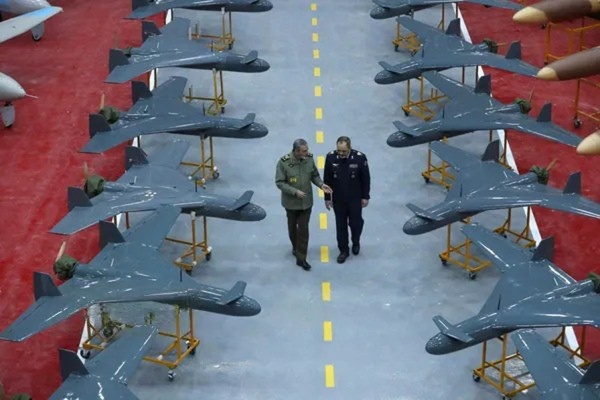
This tactic, which has been proven in past operations and shocked the enemy, confronts any air defense system, even the most advanced Western systems such as "Patriot," "THAAD," and "Aegis", with a "saturation challenge." When the number of incoming projectiles exceeds the defense systems' simultaneous interception capacity and engagement channels, penetration approaches nearly one hundred percent. This is precisely the point that brought Pentagon calculators to the definitive conclusion that attacking Iran would carry a cost far exceeding any potential achievement, rendering failure inevitable.
Collapse of the U.S. Defense Shield in the Region
General Dan Caine's warning regarding ammunition stockpiles was a direct and overt reference to the critical and alarming state of Patriot missile systems, which form the backbone of air defense for U.S. forces and several of their regional allies. Patriot interceptor missiles, particularly the advanced PAC-2 and PAC-3 models, are not only extremely expensive (ranging between 3 and 4 million dollars per unit), but their manufacturing process is time-consuming and complex. The production capacity of manufacturing plants in the United States, such as Raytheon, is by no means capable of rapidly replenishing losses resulting from an extensive, multi-day conflict with Iran. In recent months, the excessive and continuous consumption of these missiles in various regional conflicts and in defense of the Zionist regime's targets has severely reduced the strategic reserves of the United States Armed Forces to dangerous levels.
Independent military sources and defense analysts confirm that Patriot missile stockpiles at vital U.S. bases in the West Asia region, including Al Udeid Air Base in Qatar, Al Dhafra in the United Arab Emirates, and bases located in Saudi Arabia (Prince Sultan) and Kuwait (Ahmad al-Jaber, Camp Arifjan, and Camp Buehring), have reached alarming levels. Should Iran decide to launch successive, coordinated waves of its ballistic and cruise missiles, these systems would fire all their interceptor missiles within the first few hours of conflict, effectively becoming defenseless and paralyzed. This deep defense gap communicated a clear and decisive message to Trump and his advisors: vital U.S. bases in the region stand exposed to complete destruction and devastation, with no guarantee of protecting U.S. forces, fighter jets, and expensive equipment against Iran's missile wrath.
Exhaustion of the U.S. Terrorist Military Personnel
In addition to weapons shortages and the defense crisis, the human element served as a powerful and decisive deterrent against Trump's adventures. Over the past two decades, the U.S. terrorist military has been entangled in attritional, fruitless, and costly wars in Afghanistan, Iraq, and Syria. U.S. soldiers stationed in the West Asia region are currently grappling with serious mental, psychological, and physical challenges resulting from prolonged deployments, distance from their families, and the absence of a clear, defensible strategic objective. Domestic public opinion polls in the United States consistently show by wide margins that American society is fiercely opposed to entering a new war in the West Asia region. The American public, still bearing the economic, social, and psychological scars of past wars, has no desire to witness the return of coffins of American soldiers from a region that poses no direct threat to their vital interests.
U.S. generals are well aware that any airstrike on Iran would likely require extensive ground operations to ensure results and prevent counterstrikes, which is precisely the nightmare the U.S. terrorist military seeks to avoid. Iran's ground forces, utilizing the Basij force, elite special units of the Islamic Revolutionary Guard Corps Ground Forces, the Army of the Islamic Republic of Iran, and an extensive, deep network of allied forces in the region, are prepared to crush any invading force in an asymmetric, attritional, and all-out war.
Trump, who labels himself a so-called "President of Peace" (a notion that sounds like a joke even in American circles, making him a subject of ridicule among American stand-up comedians) and has repeatedly emphasized exiting endless wars, cannot accept the risk of becoming entangled in a new quagmire that could completely destroy his political, economic, and historical prospects. The recruitment crisis in the U.S. military has redoubled this anxiety.
Devastating Power of Iranian Missiles: Precise and Smart Targeting of Vital Bases
The devastating capability of Iranian missiles is not limited merely to their numbers and quantity; rather, the precision, destructive power, intelligence, and reliability of these weapons represent the primary concern and nightmare for American strategists. Iranian ballistic missiles are capable of targeting the most vital and sensitive U.S. military infrastructure in the region with pinpoint accuracy and minimal margin of error. These targets include air base runways, command and control centers, ammunition and fuel depots, advanced radars, as well as aircraft carriers and warships in the Persian Gulf and the Sea of Oman. Iranian naval cruise missiles and anti-ship ballistic missiles (such as the Khalij Fars and Hormuz series) also pose a serious, existential threat to U.S. Navy surface vessels, forcing them to remain hundreds of kilometers away from the coasts, effectively reducing the operational effectiveness of their fighter aircraft.
Simulated scenarios in Western military think tanks show that a coordinated and planned Iranian missile strike could paralyze and destroy U.S. air operations across several key bases simultaneously in less than 30 minutes. The destruction of flight runways would leave expensive American fighter jets stranded on the ground, effectively neutralizing the air superiority that the U.S. military, with its thousands of aircraft, has always relied upon. Furthermore, Iranian hypersonic missiles, traveling at speeds exceeding Mach 5 and capable of maneuvering in the terminal phase of flight, bypass practically any existing defense system, reducing reaction times to near zero. This level of capability provides Iran with the assurance that any initiator of conflict will receive an initial blow of devastating and irreparable severity, which constitutes the very essence and principle of "active deterrence."
In this regard, The Guardian states: During periods of heightened tension in West Asia, Iran has managed to strengthen its ability to target U.S. bases and vital installations in the region. This has been achieved through a combination of technical advancements in its missile program, the utilization of satellite imagery, and the adoption of military tactics inspired by Russia's experience in the Ukraine war.
The newspaper adds: Recent Iranian attacks demonstrate an increased level of precision and destructive power, an issue that simultaneously exposed potential vulnerabilities in U.S. air defense systems deployed in the region.
Regional and Global Reactions
Trump's advisors also reminded him that an attack on Iran would not remain a mere bilateral and limited conflict, but would engulf the entire West Asia region in the flames of a pervasive and unprecedented war. Iran possesses unmatched strategic depth in the region, and an extensive network of resistance forces in Lebanon, Syria, Iraq, Yemen, and the African continent stands ready to launch heavy, simultaneous attacks against U.S. interests, its bases, and the Zionist regime across the entire region should Iranian territory be attacked. This expansion of conflict would not only severely disrupt global energy security on a historical scale, driving oil prices to unprecedented levels, but would also hit the fragile U.S. economy, currently struggling with high inflation and massive national debt, with a fresh shock. European countries, unwilling to repeat past catastrophic mistakes, have privately and diplomatically warned Washington to refrain from any provocative actions that could lead to further instability. The diplomatic isolation of the United States in international forums in the event of launching an illegal and aggressive war against Iran would escalate dramatically, leaving Washington in complete political and moral isolation.
The Definitive End of the Illusion of Military Attack
Ultimately, field reports and media analyses, including the recent high-profile revelation by CNN, pull back the curtain on an undeniable and historic reality: the Islamic Republic of Iran, relying on indigenous power, firm faith, and matchless military and defense capabilities, has attained a level of active and sustainable deterrence that has fundamentally and irreversibly altered White House calculations.
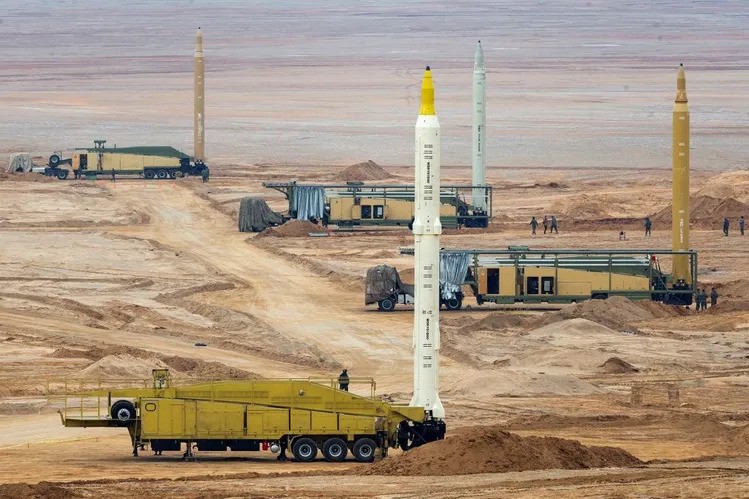
The terrorist U.S. President and his advisors have realized full well that confronting Iran is not a confrontation with a weak, dependent conventional army; rather, it is a confrontation with an integrated, intelligent, offensive defense network based on indigenous knowledge that has concealed countless missiles and drones in its safe, underground arsenals, ready to launch in a fraction of a second.
A senior Pentagon official stated in this regard: U.S. missile stockpiles have been severely depleted due to ongoing conflict with the Islamic Republic of Iran, and the United States currently does not possess a sufficient number of missiles to enter another all-out war against Tehran.
The shortage of "Patriot" stockpiles, the exhaustion of U.S. forces, the internal crisis within its military, and the devastating, precise capability of Iranian missiles form a solid triangle of deterrence. Crossing it for any U.S. president would signify accepting an all-out strategic defeat and the end of his political life. Iran has once again proven in practice that it does not bargain over its national security and territorial integrity with any power, and anyone who attempts to speak to the Iranian nation in the language of force and threats will receive a crushing, devastating, and regret-inducing response from the Armed Forces of the Islamic Republic of Iran.
Trump's retreat from a major attack is the direct and logical outcome of the fear of confronting a power that Iran has forged through its forces and by relying on Almighty God, and will continue to forge in the future should conflicts intensify. This chapter of confrontation demonstrated to the world once more that the era of superpower bullying has come to an end, and the region's new equations can only be drawn and accepted through respect for the power, will, and legitimacy of the Iranian nation.
