
Cold and Rainy Gaza Awaits Progress in Ceasefire Talks
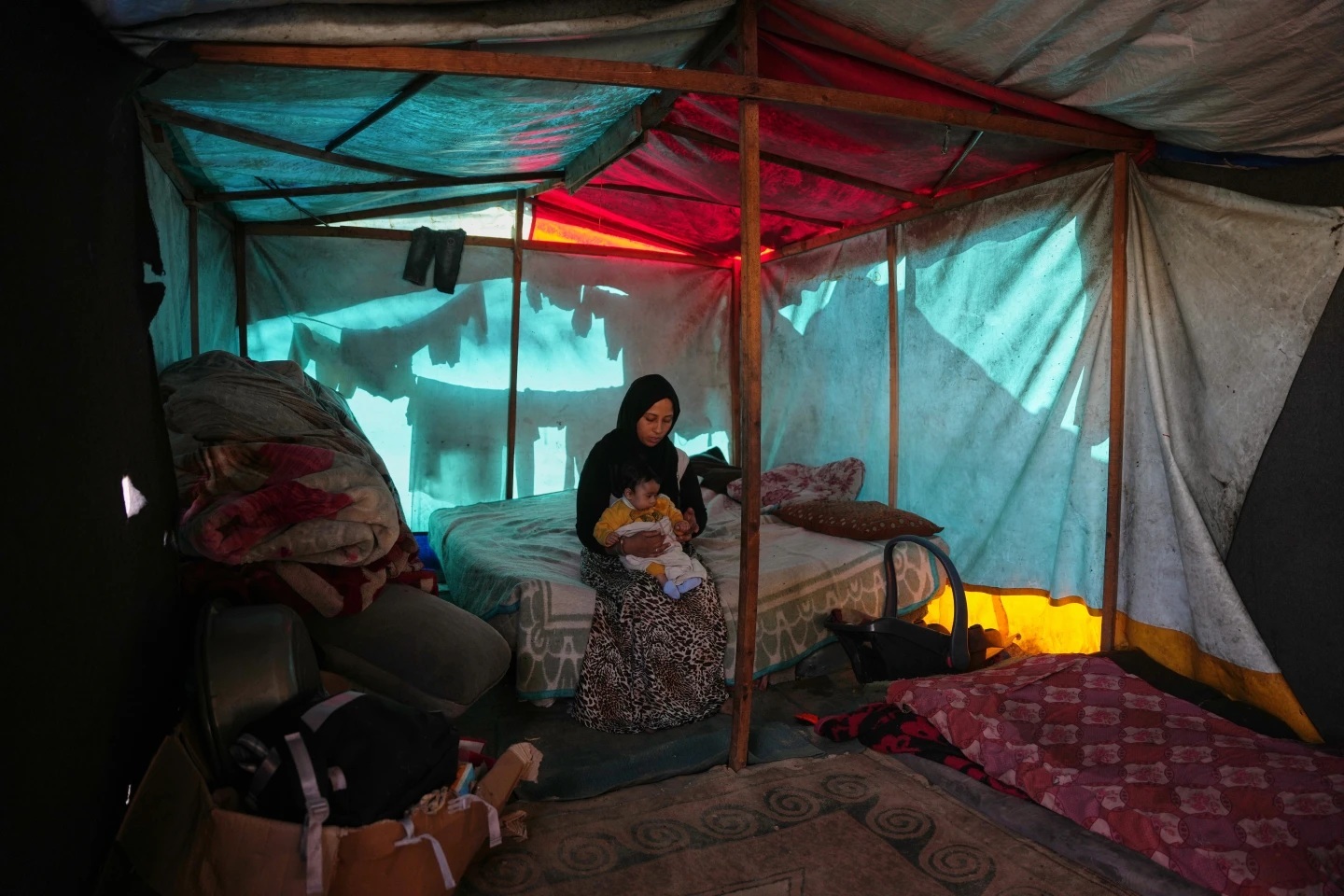
TEHRAN (Defapress) - As children play barefoot on the cold sand, thousands of displaced Gazans prepare their dilapidated tents for another round of winter rain on Saturday. Many families in the center of Deir al-Balah have lived in tents for almost the entire duration of Israel’s genocide.
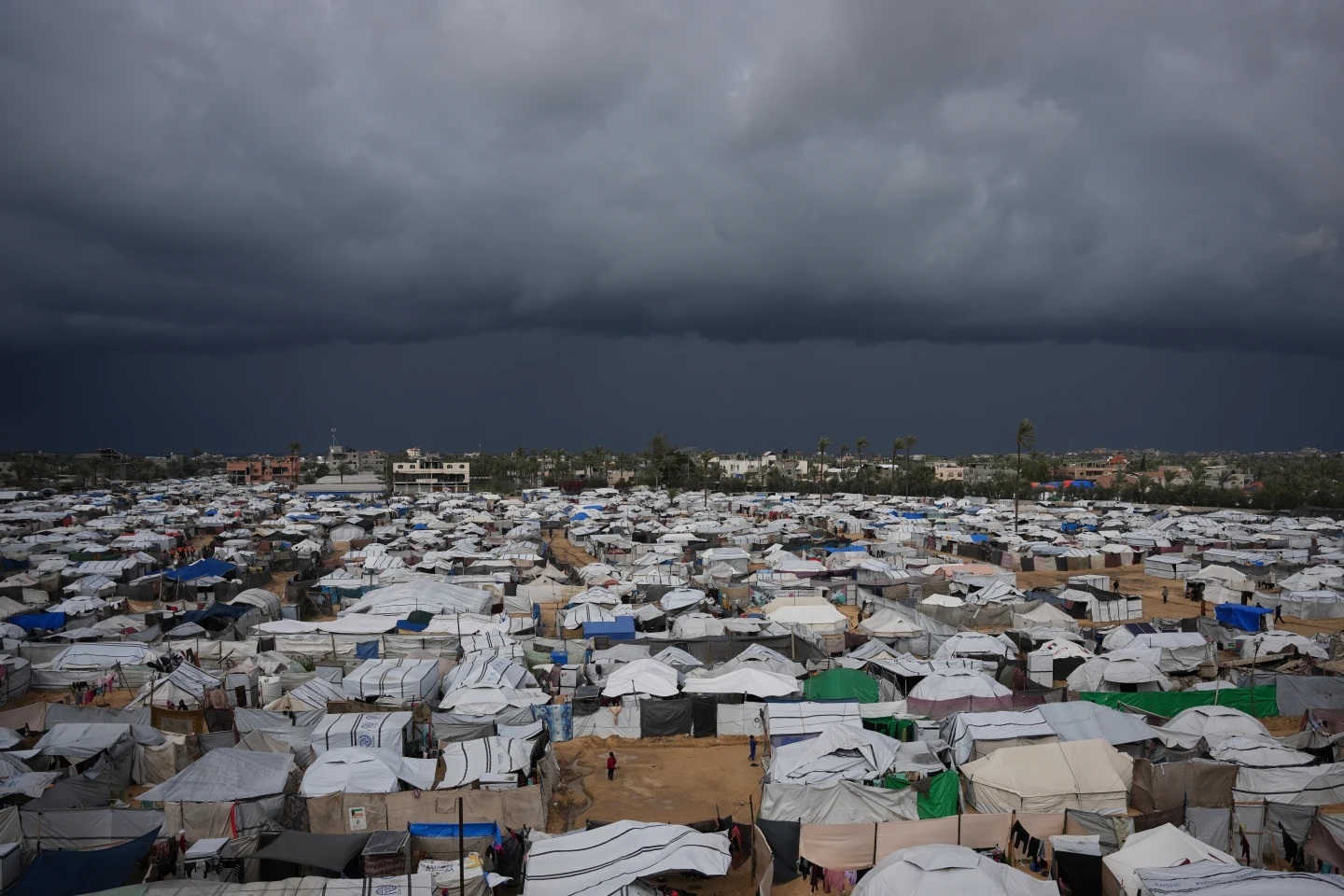
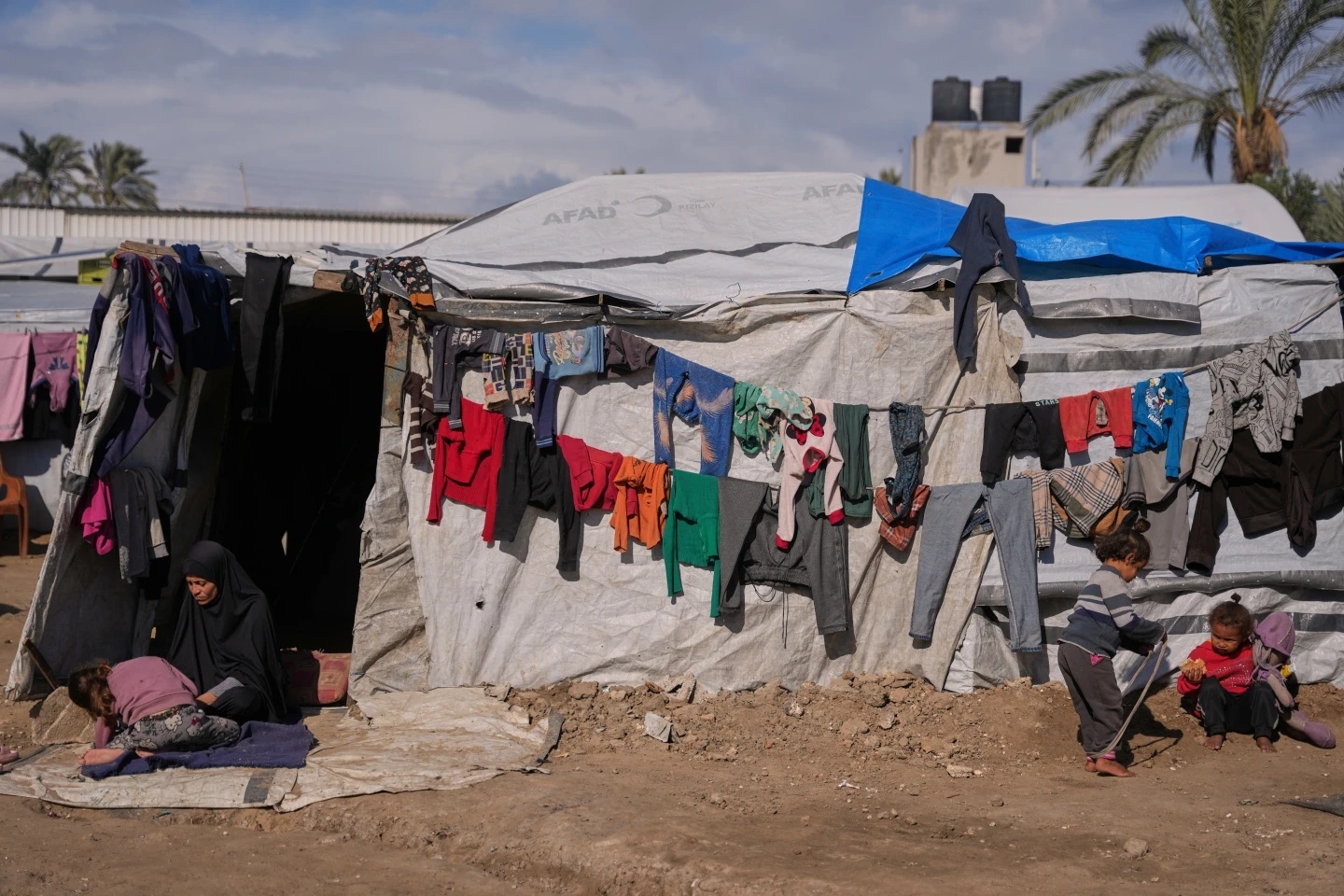
Fathers daily prop up crumbling tents with pieces of wood and inspect the torn edges of the tarpaulins. The inside of the tents is dark, with light coming in only through small holes. Meanwhile, mothers hang clothes on poles or ropes to dry in the wind, battling the constant humidity.
“We have been living in this tent for two years. Every time it rains and the tent collapses on us, we try to rebuild it with pieces of wood,” says Shaima Wadi, a mother of four displaced children from Jabalia. “With these high prices and no income, we can hardly afford clothes or mattresses for the children.”
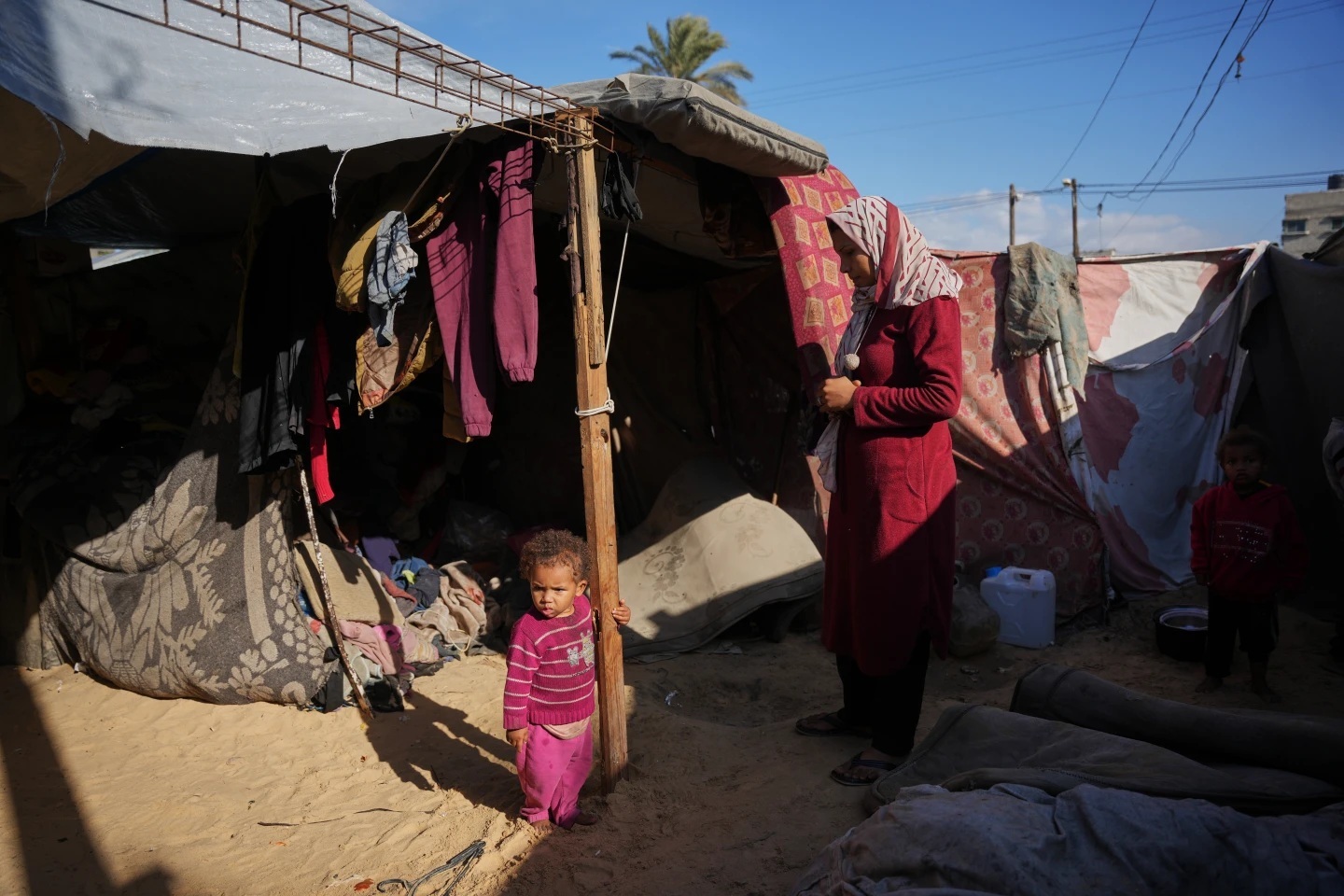
The Gaza Health Ministry has announced that dozens of people, including a two-week-old baby, have died from frostbite or from collapsed houses damaged by the war. Aid agencies have called for more shelter and humanitarian aid to reach the area. Aid workers have also warned that people should not stay in damaged buildings. But with the devastation widespread, there are few places left to escape the rain.
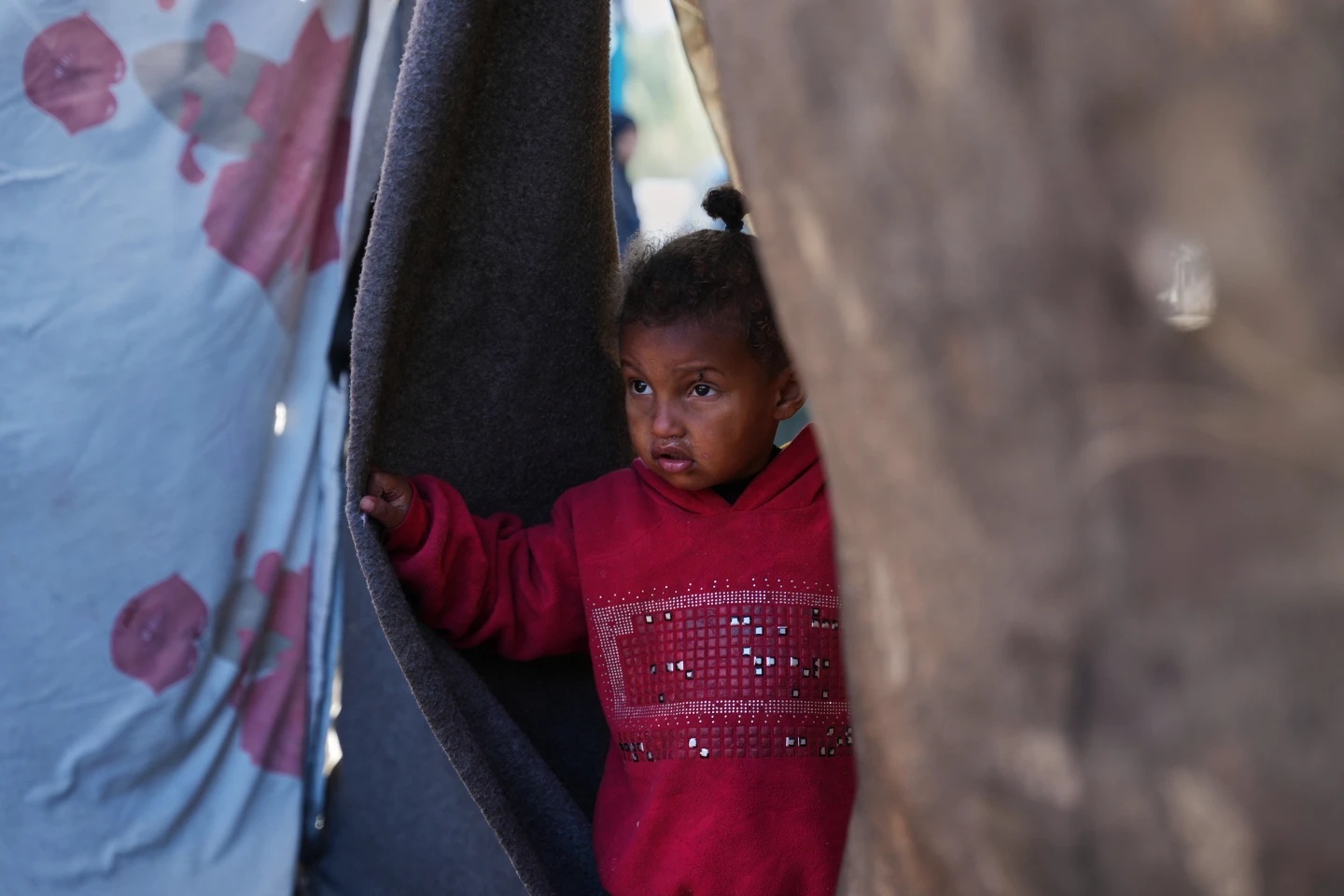
“I collect nylon, cardboard, and plastic from the streets to keep my family warm. They have no proper clothing. Everything is frozen, the humidity is high and water is seeping in from everywhere. I don’t know what to do,” said Ahmed Wadi, another Gaza resident.
Across the square, Benjamin Netanyahu is expected to travel to Washington in the coming days to meet with negotiators on the second phase of the ceasefire that began on October 10. Although the agreement has largely held, progress has been slow overall.
On the other hand, the challenges of the next phase of the Gaza ceasefire include the deployment of an international peacekeeping force, the formation of a technocratic institution to govern Gaza, the disarmament of Hamas, and the withdrawal of most Israeli occupation forces from the territory. Both sides, Israel and Hamas, have accused each other of violating the ceasefire.
According to Gaza's Health Ministry, 414 Palestinians have been killed and more than 1,000 wounded since the ceasefire went into effect on October 10. The bodies of 679 people have also been pulled from the rubble. The total number of victims of the war has reached more than 71,000.
On the other hand, Israeli Defense Minister Israel Katz said in a statement on Saturday that military operations are continuing in a city in the occupied West Bank. The military operation began a day after police said a Palestinian attacker drove a car into a man and then stabbed a young woman to death in northern Israel. Israeli officials said on Friday that the attacker was shot in Afula, wounded, and then taken to the hospital.
The Zionist regime usually raids West Bank towns after resistance operations and demolishes the homes of Palestinian fighters’ families. The “Israeli” regime says this helps identify military infrastructure and prevent future attacks.
This is while human rights organizations describe such actions as “collective punishment.” Meanwhile, Associated Press images show Israeli bulldozers entering the city and soldiers patrolling.
