
Iran's Revenge Document: From Closing the Strait of Hormuz to the Collapse of the Israeli Power Grid and the Burning of American Capital in the Persian Gulf
TEHRAN (Defapress) - Concurrent with the escalation of "Donald Trump," the President of the United States' war rhetoric regarding targeting Iran's energy facilities, the Central Headquarters of Khatam al-Anbiya (PBUH), as the highest military authority in the country, has officially announced that any aggression against energy infrastructure will be met with a response that is "harsher, more devastating, and beyond imagination." Based on field and media observations, Iran's response plan is no longer merely a defensive threat; rather, it is a precise roadmap for "setting fire to the heart of Western energy and its regional allies" in the event of an all-out war.
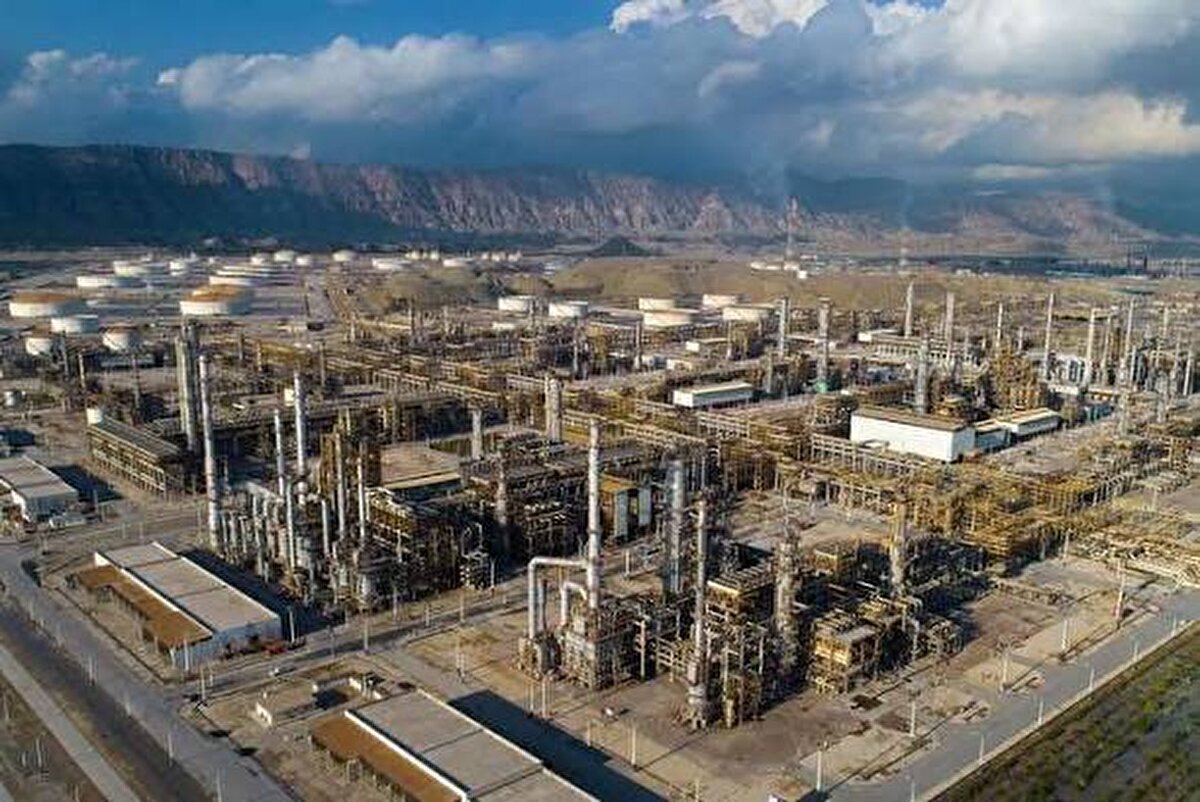
1. First Strategic Weapon: Paralyzing the Global Economy
Iran's first and most ready step is the complete closure of the Strait of Hormuz. Contrary to the current situation where "smart control" is applied to traffic, following the first attack on Iran's energy facilities, this strategic waterway will be completely blocked and will not be opened to any vessel, including American and allied oil tankers, until the damaged facilities are rebuilt. This action means the removal of 20% of the world's oil and one-third of global LNG from trade, delivering a shock to markets greater than the oil crisis of the 1970s.
2. The Axis of Resistance: Fire in America's Backyard
In this scenario, Iran will not act alone. The Axis of Resistance, including Yemen's Ansar Allah, Lebanon's Hezbollah, and the Islamic Resistance in Iraq, will enter the "heavy fire" phase. The primary target is American energy facilities in the neighborhood. Based on available intelligence, the list of targets includes the following:
a. The Riyadh Refinery (Saudi Arabia): A symbolic target that fuels American forces in the region.
b. The Ras Laffan Complex (Qatar): The world's most important LNG facility, to which Europe's dependence has become vital since the Ukraine war.
c. The Al-Ghawar and Ras Al-Khair oil fields (Saudi Arabia): The vital oil jugular vein dependent on American capital and technology.
3. Collapse of Israel's Electricity and Water Grid (Doctrine of Simultaneous Destruction)
While Israel is considered America's war partner, Iran's response to it will be "comprehensive and unlimited"; Iran's strategic targeting in the occupied territories goes beyond conventional missile attacks. Military experts believe that simultaneously with America's initial attack, Iran will target the main power plants of the Zionist regime (including Orot Rabin, Dorad, and Eshkol) with a swarm of ballistic missiles and drones. In this scenario, not only will Israel's power grid completely fail, but the regime's vital desalination facilities will also be destroyed, creating an unprecedented humanitarian crisis.
4. Cyber Confrontation: Erasing the American Digital Footprint
The hidden front of the war is cyberspace. Iranian-affiliated hackers, who have so far demonstrated their capability through Distributed Denial of Service (DDoS) and ransomware attacks, will target critical American infrastructure and finance in the initial phase of the response. The main goal is to "create chaos in the Pentagon's logistics and communications network." Groups like Handalah, which have previously infiltrated American companies, will play a pivotal role in this operation to delete data and disrupt the US power grid and transportation network.
5. The "American Capital, Legitimate Target" Strategy (Tehran's Tactical Innovation)
Iran's tactical innovation in this war is targeting American assets in the form of private companies in third countries. Unlike previous wars, Iran has announced that it will attack any company in the region with American shareholders (such as companies affiliated with BlackRock, Goldman Sachs, or General Electric) as legitimate military targets. This strategy draws American investors to the front lines of the war, and while imposing heavy financial costs on Washington, it confronts the anti-Iran coalition with the fear of bankruptcy.
Miscalculation is one of the problems American statesmen face. If the United States thinks it can bring Iran to its knees by hitting a few oil facilities, it is gravely mistaken. Iran's response document shows that the Islamic Republic, with a comprehensive view of asymmetric warfare, has taken the global economy and American interests across the region in its hands.
From closing the Strait of Hormuz, which will send oil prices sky-high, to the complete destruction of the infrastructure of Arab allies and Israel, the scenario is drawn in such a way that "the cost of war for Washington will be greater than any benefit." Under such circumstances, the region enters an unprecedented phase of instability, which, according to analysts, could shatter the spell of "peace at the price of oil" forever.
