
Pakistan Plays the Role of a Mailbox
TEHRAN (Defapress) - Recent developments in Tehran-Washington relations, particularly in the shadow of war and the subsequent establishment of a temporary ceasefire, have sparked extensive debates about a shift in the balance of power in the region and the world. Some analysts believe that signs can be seen of America's retreat in the face of Iran's conditions and a gradual transition of the international system from unipolarity to multipolarity, a process that could have significant consequences for regional security, energy routes, and the future of the West Asian security order.
The role of regional countries regarding these developments is also noteworthy. Some countries have tried to prevent escalation through mediation and providing a platform for dialogue, while others, with caution and concern over the security and economic consequences of the conflict, have avoided direct involvement. In contrast, currents close to the Axis of Resistance also evaluate the recent developments within the framework of strengthening Iran's regional position.
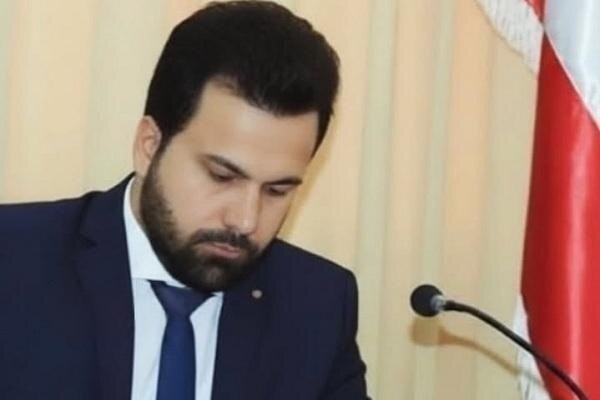
In this regard, the Defapress correspondent has interviewed Mohammad Fayyad Mushik, an international law expert from Lebanon, the full text of which follows.
Mushik began his remarks by saying: The regional countries regarding this conflict were divided into three main axes. The mediation axis includes Oman and Pakistan; Muscat (before the recent war began) and Islamabad played the role of a trusted "mailbox" (except in the current war), where efforts focused on removing obstacles and bringing viewpoints closer, providing a technical environment for negotiation away from media hype.
He added: In contrast, the cautious waiting axis includes Saudi Arabia, the UAE, and some other regional countries. These countries found themselves in a situation where there are many American military bases on their soil, and their national security and energy routes were exposed to American aggression against a sovereign country in West Asia. At the same time, their interests lie in de-escalation to ensure the continuation of economic development projects, including Vision 2030, and striving to avoid being drawn into a direct confrontation.
According to Mushik, the third axis is the support axis: the fronts of the Axis of Resistance that openly stood beside Tehran and believed that any victory for Iran would mean strengthening their position in regional capitals and a step towards achieving lost justice against the Zionist entity.
This Lebanese expert continued: By following the leaks of information about Washington accepting ten Iranian conditions, we can say that we are facing a decisive victory for the Islamic Republic of Iran, and as a result, this war has led to a geopolitical shift that has shaken the status quo that America had established over decades. This means that the maximum pressure policy that Washington was pursuing has failed catastrophically for US interests and its strategic presence in the region. Also, looking at the balance of power, signs can be seen of the retreat of unipolar world management and the emergence of global multipolarity.
He stated: The two-week ceasefire in this context is considered a short period to ensure goodwill and gauge the atmosphere, and it may be a prelude to a broader and more sustainable agreement.
Mushik added: From Iran's perspective, agreeing to a temporary ceasefire with its own conditions is considered a tactical victory without abandoning fundamental principles, and at the regional level, it is also considered a kind of victory by concession.
According to him, regarding the security of the Persian Gulf and energy routes, the Strait of Hormuz is like an economic nuclear bomb that Tehran used well during this war, because it benefited from its geopolitical position overlooking the world's most vital energy artery. The recent war had two dimensions: military and economic (oil and gas). Therefore, it can be said there is no benefit for the Persian Gulf countries in entering a war against the Islamic Republic; rather, strategically, understanding brings them more benefit. The tanker war, the security of facilities, and price stability showed that these issues are subject to the index of peace, while the index of war plunges the world into a dark tunnel with consequences for all countries of the world.
This Lebanese expert stated: After this war, regional governments will realize that betting on America is a losing bet, because America used bases in regional countries only for Israel's interests. But regarding the nations, their natural orientation is towards authentic resistance.
According to Mushik, if war starts again, it will be more severe than what happened in recent days, and new parties that no one knows about now may enter it.
He continued: In the future of the Western Asia security system, flexible coalitions will form, and many countries have concluded that building indigenous defensive capabilities, as Iran has done, is better than remaining under the American umbrella. In this, Iran, Russia, and China will play prominent roles. For example, the Shahed 136 drone is one example of Iran's military industries that many countries have copied, led by the United States.
Mohammad Fayyad Mushik emphasized in conclusion: In the corridors of international politics, victories are not measured by decisive blows, but by the ability to resist. And that is something the Islamic Republic of Iran, backed by the resistant Iranian nation, has mastered. Today, the scene of Iran-US negotiations in Pakistan is at the forefront of events, while increasing leaks indicate flexibility in the American position regarding Iran's conditions. What the negotiations within the framework of the ceasefire agreement will lead to will show that Iran, relying on the power it demonstrated in attacks on American bases and the usurping entity, has imposed political realism on the United States. The theory of power that America employed collided with the solidity of the Iranian wall in terms of military and political power and the steadfastness of the heroic nation; the same path that Imam Khomeini founded, Imam Khamenei developed, and now continues under the leadership of Imam Seyyed Mojtaba Khamenei.
Link copied
Your comment
