
How Did the Young Pilots of the Iranian Army Air Force Become the Nightmare of the American Terrorist Army?
TEHRAN (Defapress) - The Air Force of the Islamic Republic of Iran Army is one of the main components of the power of the Islamic Republic of Iran's Armed Forces, playing a crucial role in defending Iran's territorial integrity. Possessing hundreds of aircraft, this force has been able to appear powerfully on battlefields in accordance with Iran's military doctrine.
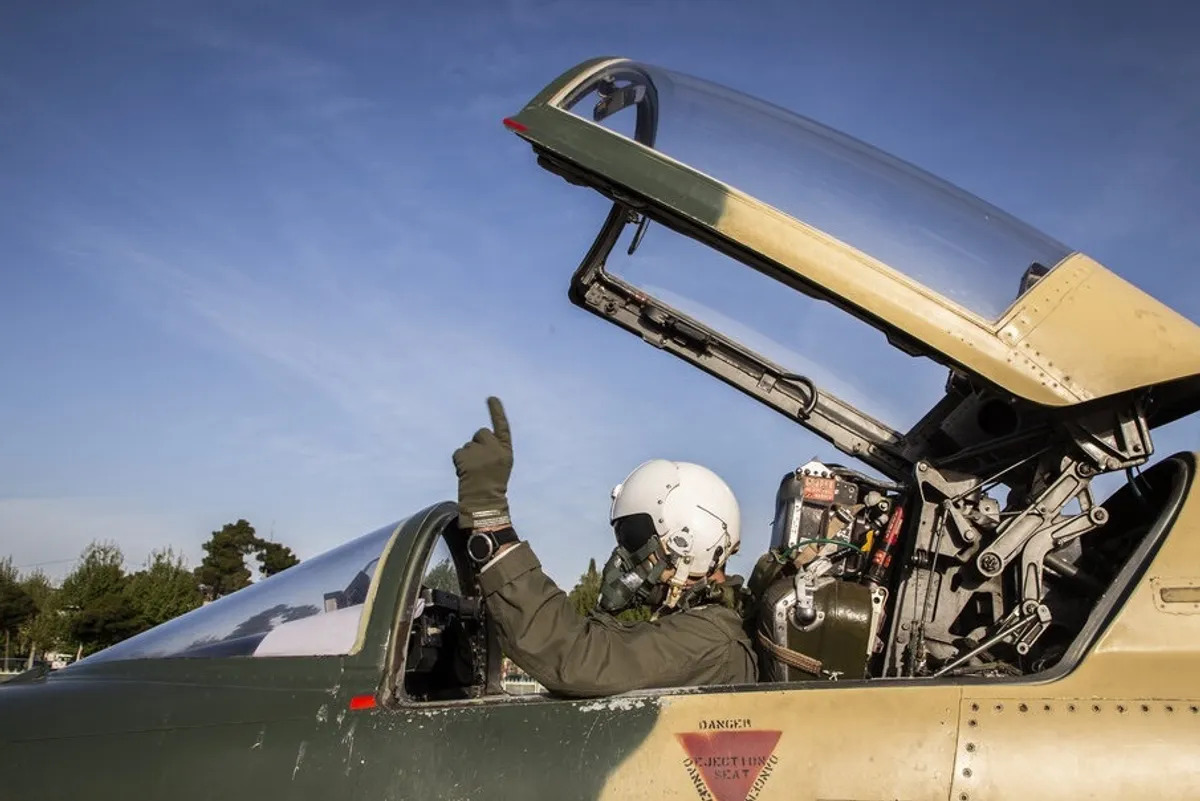
Although Western media have for years described the Air Force of the Islamic Republic of Iran Army as a "retired fleet," the operation of IRIAF F-5 fighter jets in bombing the U.S. Camp Buehring in Kuwait upended all conventional paradigms of modern military science. This historic victory by Iran's Air Force has raised fundamental questions about the definition of air superiority in the 21st century.
While U.S. officials had previously attempted to downplay the damage caused by Iran's airstrikes, newly released documents and reports from NBC News paint a different and far more fragile picture of the heavily armed U.S. military. According to this report, not only were the damages to U.S. bases in the Persian Gulf region far greater than publicly acknowledged, but the execution of one of these strikes has sent shockwaves through military circles.
Contrary to the prevailing notion in Western circles, despite four decades of sanctions, the Air Force of the Islamic Republic of Iran Army has not only managed to maintain its fleet through indigenous knowledge and reverse engineering but has also significantly upgraded its systems. Military analyses indicate that by implementing a strategy of extending weapon lifespans through self-sufficiency and domestic production, Iran has succeeded in transforming fighters like the F-5, retired in many countries, into launch platforms for smart bombs and missiles.
According to published reports, the Islamic Republic of Iran, through reverse engineering and a clandestine parts supply chain, has successfully maintained a significant number of its fighter jets. This comes despite Western experts predicting that the IRIAF would lose its operational capability within a maximum of two years after the victory of the Revolution. Furthermore, simultaneously maintaining engines and weaponry under sanctions is an achievement few air forces in the world have been able to realize.
The Pentagon is well aware in its analyses that hardware is worthless without human software, a fact that transformed the Iranian fighter jet attack on the U.S. base in Kuwait from a simple strike into a military marvel. In truth, it was the skill, courage, and initiative of the young pilot of the Islamic Republic of Iran Army Air Force that completely surprised the enemy. In fact, the U.S. base attacked by Iran serves as a vital logistical artery for U.S. Central Command. Ethan Levins, an independent American journalist, referencing NBC's confirmation of the news, emphasized that this retired jet bombed the newest and largest army in the world.
According to information from some U.S. officials and individuals aware of the extent of the damage, Iran's attacks on Camp Buehring targeted warehouses, aircraft hangars, command headquarters, satellite communication infrastructure, runways, and advanced radar systems. Additionally, dozens of aircraft were damaged, with initial estimates for repair costs reaching billions of dollars.
But the question arises: How did the pilots of the Islamic Republic of Iran Army Air Force achieve this astounding feat? During the early days of the Third Imposed War, following the incident at the Minoab Martyrs' School, IRIAF pilots immediately and voluntarily decided to carry out this flight. The mission involved two F-5 fighter jets, one single-seat and one dual-seat. In the dual-seat aircraft, the instructor pilot sat in the front cockpit, with the student and second crew member (co-pilot) in the rear. In the single-seat aircraft, which was the number two jet, the instructor pilot, who was also the mission commander and team leader, was present to manage the operation optimally.
The two F-5 fighter jets flew from southwestern Iran and struck the U.S. Camp Bohring. The flight altitude was 500 feet, each foot being approximately 30 centimeters, meaning roughly 150 meters above ground level, an extremely low altitude with very challenging flight conditions. Each time a bomb was released, given that the bombs were old and their destructive effects far greater, the resulting fire was immense, and shrapnel was thrown upward, such that pilots even stated the bomb fire rose above the aircraft's level, indicating just how low the altitude was to evade radar detection. The jets were equipped with eight bombs total, four per aircraft. All eight bombs were successfully released, causing severe destruction and hitting several aircraft and military assets. This incident subsequently led the enemy's F-15s, which had engaged in pursuit operations, to be mistaken by Kuwaiti air defense for hostile aircraft and engaged, resulting in three American fighters being shot down and some of their pilots being wounded. This was one of the blessings of the IRIAF fighters' operation.
After the operation, the Iranian fighters returned. Due to an emergency situation arising for one aircraft, pilot fatigue, and low fuel, they intended to land at Abadan Airport. However, they managed to reach a base located in the southwest and landed there. The jets flew so low over Abadan that the city's residents noticed their passage. Beyond this operation, IRIAF F-5s also carried out several other successful missions, including successfully striking the positions of Komoleh separatists in northern Iraq, separatists whom Trump had acknowledged were armed by the United States.
Defense Security Media called this event one of the rarest military developments in contemporary America's out-of-area wars: a manned aircraft bombed a major U.S. base despite a dense air defense shield built precisely to prevent such an infiltration.
Analyses indicate that the unknown Iranian pilots, by anticipating blind spots in Patriot radar and short-range systems, succeeded in completing their operation between the moment of radar detection and the moment of impact. As U.S. automated air defense systems were busy prioritizing between ballistic and drone threats, these pilots exploited a fleeting moment to bypass the greatest weakness of modern technology, inflexibility in the face of unforeseen scenarios. The strategic importance of the U.S. Camp Bohring in Kuwait, located near Camp Arifjan and with access to Shuaiba Port, has turned the strike by Iran's Air Force into a supra-structural threat. Analysts also believe this attack disrupted not only infrastructure but also the regional operational speed of the U.S. Army.
The successful attack by a fifty-year-old Iranian F-5 jet on a U.S. base equipped with some of the most powerful air defense systems has become a strategic warning for Washington. U.S. military officials now face the bitter reality that expensive, integrated defense systems are no longer immune to surprise attacks by the Islamic Republic of Iran's Armed Forces. The image of an aging F-5 fighter breaching the Patriot shield will resonate not only in West Asia but throughout America's global deterrence calculations for years to come.
Despite decades of arms embargoes, the Air Force of the Islamic Republic of Iran Army has not only failed to deteriorate but has instead become a workshop of tactical creativity and indigenous engineering for proud Iranian youth. Indeed, the young pilots of this force, relying on their faith, rigorous training, and belief in the formula "We can," have proven that victory belongs to those who make the most skillful use of what they possess.
