
Japanese Prime Minister's Account of the Severe Pressure of the Strait of Hormuz on the Asia-Pacific
TEHRAN (Defapress) - The disruption in the global supply of oil and liquefied gas following the closure of the Strait of Hormuz has had a widespread impact on the Asia-Pacific region and has aroused serious concern among the governments of this region. The Japanese Prime Minister has announced that this situation has "enormous" consequences for the countries in this region and requires immediate and coordinated action.
This crisis began on March 29, at the same time as the brutal attacks of the United States and the Zionist regime on Iran. Following these developments, Iran practically redefined the control of maritime traffic in this vital passage and placed the shipping route under supervision and new rules.
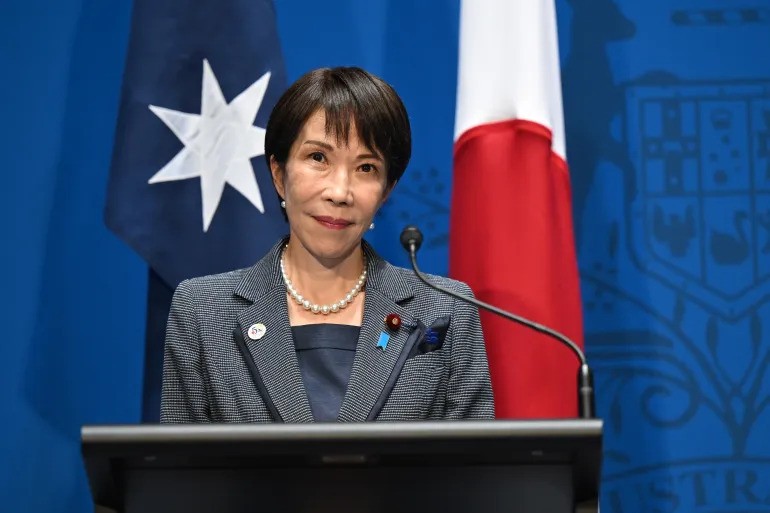
In such circumstances, Japanese Prime Minister Sanae Takaichi stressed the need for close cooperation between the two countries to deal with the crisis on Monday during his three-day visit to Australia. He announced that the effective blockage of the Strait of Hormuz has put heavy pressure on the Indo-Pacific region and that Japan and Australia must urgently increase their coordination.
About a fifth of the world's oil and natural gas supply needs to pass through the Strait of Hormuz, and according to data from the International Energy Agency, nearly 80 percent of these shipments are sent to Asian countries, which has doubled the severity of the crisis's impact on the East Asian region.
Australia, which supplies about a third of Japan's energy needs and is the largest exporter of liquefied natural gas to the country, plays a key role in ensuring a stable energy supply for Tokyo. The Australian Prime Minister also expressed similar concerns, announcing that his country was deeply concerned about disruptions in the supply of liquid fuels and petroleum products.
As concerns about energy security grow, military cooperation between the two countries has also been strengthened. Statements on economic, defense, and mineral cooperation were issued on the first day of Takaichi’s visit. Australia also announced that it would provide up to A$1.3 billion in support for vital mineral projects with Japan, a move that could secure Japan’s access to resources such as gallium, nickel, graphite, rare earths, and fluorite.
The Japanese government has stressed that a stable supply of these materials is vital for key industries such as semiconductors, electric vehicle batteries, and weapons systems. In addition, the two countries, which are close allies of the United States, have increased their military cooperation in recent years in response to the changing security environment in the region, particularly China’s growing influence.
In a continuation of this trend, a deal worth A$10 billion was signed last month under which Japan will provide the Australian Navy with Mogami-class stealth warships, a move that marks the deepening of military ties between the two countries amid regional tensions.
