
KN-09 Rocket Launcher, An Effective System for Extending the Range of Artillery Fire
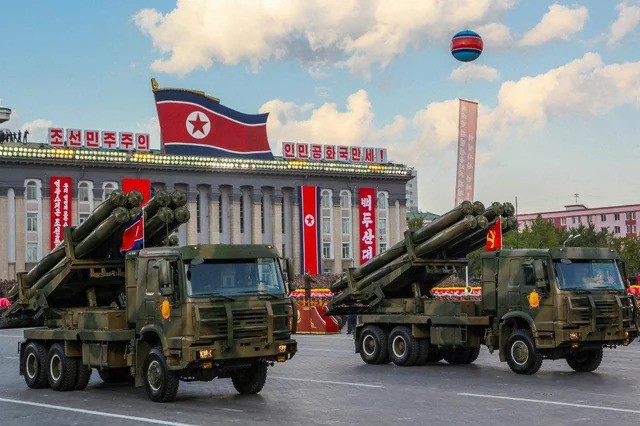
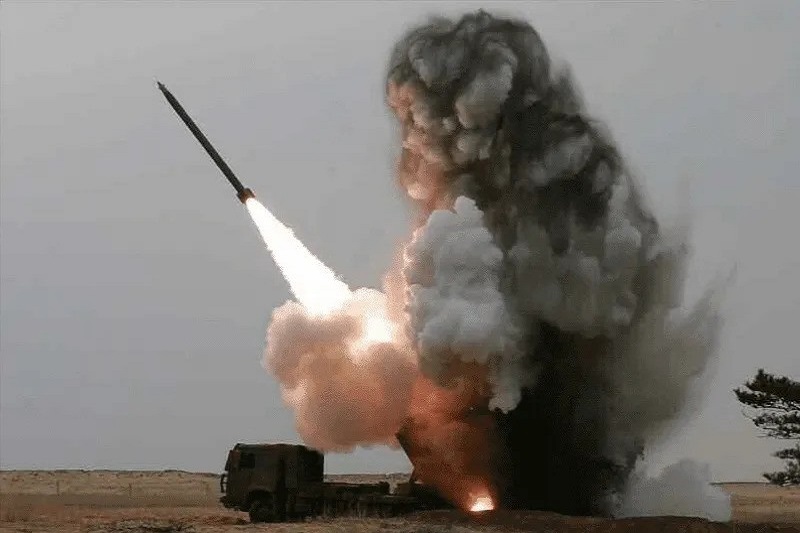
TEHRAN (Defapress) - North Korea is one of the world's leading manufacturers of artillery rocket launchers. It is a major player in the KN-series. Tests of the KN-09 system likely began in 2013, when South Korean media reported that a 300mm rocket had been fired into the Sea of Japan. Several other tests of the system were conducted in February, March, and June 2014; the last known successful test was in March 2016. The KN-09 has a range of 200km. The system was officially unveiled in October 2015 during a military parade and was seen again at the Day of the Sun parade in February 2017.
Technical specifications of the KN-09
The rocket launcher is mounted on a truck chassis (trunk-mounted). The system has eight rockets that are stored and transported in two pods of four. The caliber of the rockets is 300 mm. All eight rockets can be fired in a period of 50 to 60 seconds. The time required to reload the system is estimated to be between 45 and 60 minutes.
The origin of the technology and the source of North Korea's access to this technology are also unclear. Some analyses indicate that the K-N-09 was developed based on the Russian BM-30 Smerch system or the Chinese A-100 system.
It is also possible that the system was designed and manufactured indigenously, inspired by older North Korean 240 mm versions. The KN-09 represents a significant improvement over older generations of North Korean multiple launch rocket systems (MLRSs), such as the M1985/1991 models with ranges of 40 to 60 kilometers. The system’s 190-kilometer range is significantly greater than its predecessors and even greater than similar Russian and Chinese systems. This increased range puts more targets in South Korea and US bases in the region, including the entire Seoul area, within range of North Korean artillery fire.
US military assets within range of the KN-09
If the system’s satellite-guided capability is operational, it could put US military assets at risk in the early stages of a conflict. Overall, however, the limited deployment of the KN-09 system does not significantly alter the strategic balance on the Korean Peninsula and does not pose a new threat to US assets not previously within range of other North Korean systems.
South Korea estimates that the system’s 300mm rockets have a range of 180–200km and a warhead weighing 190kg, a range significantly greater than the KPA’s previous longest-range MRL, the 240mm M1985/M1991, which had a range of 60–65km; while the previous system’s range was enough to threaten Seoul, the KN-09’s range could cover half of South Korea; These include the Gyeryongdae military complex in South Chungcheong Province, the city of Daejeon, and the main US bases in Korea, such as Pyeongtaek and Osan Air Base, which are located 97 km south of Seoul.
The system's 300 mm rockets are likely (without knowing the exact specifications of the KN-09 and simply comparing calibers) to be about three times more powerful than the 122 mm rockets of the BM-21 system; it has also been reported that there are also warheads for these rockets that can be used to lay mines and penetrate underground positions, and the system may also use some kind of guidance system. South Korea believed that the KN-09 could enter operational service by the end of 2016.
According to a military document reported by foreign media, North Korea appears to have completed the development and deployment of 300mm multiple rocket launcher systems equipped with image guidance and GPS systems, capable of hitting targets such as Daejeon, home to the South Korean Army, Navy, and Air Force Joint Headquarters. The potential precision guidance of these rockets could potentially allow the system to be used to target important military targets, such as South Korean airports and air bases.
