
Secret Letter From Martyrs Sinwar, Deif, and Issa to Sayyed Hassan Nasrallah
TEHRAN (Defapress) - The Israeli newspaper Ma'ariv reported on Friday (May 15) the discovery of a secret 16-page document signed by Yahya Sinwar (commander of Hamas), Mohammed Deif (commander-in-chief of the al-Qassam Brigades), and Marwan Issa (Deif's successor), and sent to Sayyed Hassan Nasrallah, the late Secretary General of Hezbollah, on the morning of October 7th, 2023. The document, discovered in one of Hamas’s underground headquarters in Gaza, reveals for the first time the strategic vision and deeper goals of the planners of the Al-Aqsa Storm.
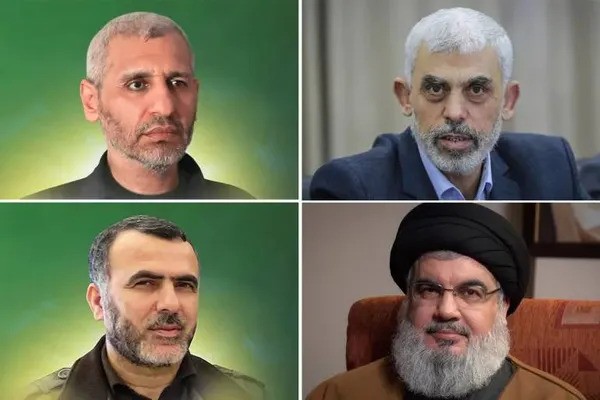
The letter begins with the following sentences: “As you read these words of ours, thousands of fighters from the Kataib Al-Qassam Brigades have set out to attack the targets of the criminal Zionist occupiers.”
In this letter, senior Hamas commanders emphasized to Sayyed Hassan Nasrallah that “the cost of hesitation will be very heavy and unbearable, and even two or three days of concentrated missile bombardment and drone strikes on Israel’s vital arteries would be enough to paralyze the air force and the Iron Dome system.”
The most interesting part of the letter is the strategic analysis of the planners of the operation’s plan. The document warns that the Israeli cabinet, in its meeting on August 22, 2023, has concluded that instead of engaging in a full-scale regional war, it should attack each front (Gaza, the West Bank, Jerusalem, Lebanon, Syria, and Iran) separately. The authors of the letter believed that this “strategy of division” was the greatest danger facing the Axis of Resistance, and that “Al-Aqsa Storm” was designed to thwart this plan.
Another noteworthy point is the emphasis on using the “element of complete surprise.” In their letter, Hamas commanders apologized to Sayyed Hassan Nasrallah that even close friends were not aware of the details of the operation, because “keeping it secret from Israel’s advanced espionage was the greatest challenge.”
The document also contains an important point about the political goals of the operation. The letter states that one of the key goals of Al-Aqsa Storm was “to stop the ongoing normalization process between Saudi Arabia and the Zionist regime.” According to the authors, this process of normalization was considered “a prelude to the collapse of many Arab and Islamic regimes and to the limitation of the opportunities of the Resistance Axis.” In contrast, the planners of the Al-Aqsa Storm believed that the Al-Aqsa Storm could bring about “the greatest historical transformation in the Islamic world” and reduce sectarian divisions.
The published document shows that the planners of the Al-Aqsa Storm had planned their operation with a full understanding of Israel’s “strategy of division” (separating the Gaza, Lebanon, Syria, and Iran fronts from each other). Although almost all of the signatories of this letter (Mohammed Deif, Yahya Sinwar, Marwan Issa) and its addressee (Sayyed Hassan Nasrallah) have been martyred today, the “strategy of unity of fronts” outlined in this document was partially realized in the field, and the Lebanese, Yemeni, and Iraqi fronts took action in coordination with Gaza, largely defeating the enemy’s strategy of “division.”
