
Right to Enrichment or an Excuse for Securitization?
TEHRAN (Defapress) - From the very beginning, Iran’s nuclear file was not simply a technical issue related to non-proliferation concerns. If the issue were only a concern about producing nuclear weapons, naturally, Iran’s extensive cooperation with the Agency, the continuous presence of inspectors, the implementation of safeguards obligations, and even agreements such as JCPOA could have reduced a significant part of the concerns. However, the reality is that even after the JCPOA agreement and the most stringent level of nuclear inspections on Iran, the rhetoric of threats against Tehran did not stop.
This shows that a significant part of the behavior of the United States and some Western countries has not been based on technical realities, but rather on a “securitization process.” A process in which a normal or manageable issue is presented as a major threat to international security to provide the basis for political, economic, and even security pressure.
In this framework, Iran is defined as a “problematic” actor in the eyes of the West not only because of its nuclear activity, but also because of its foreign policy, strategic independence, and regional position. From this perspective, nuclear technology is only a tool or excuse to impose restrictions on a country that is unwilling to integrate into the desired American order in the West Asian region.
One of the most important points overlooked in this discussion is the issue of the “right to enrich.” Contrary to the image sometimes presented by the Western media, the principle of peaceful use of nuclear energy is not only not prohibited, but is also recognized in the Treaty on the Non-Proliferation of Nuclear Weapons. Article 4 of the treaty explicitly states:
“Nothing in this treaty shall be interpreted as affecting the inalienable right of all States Parties to develop research, production, and use of nuclear energy for peaceful purposes without discrimination.”
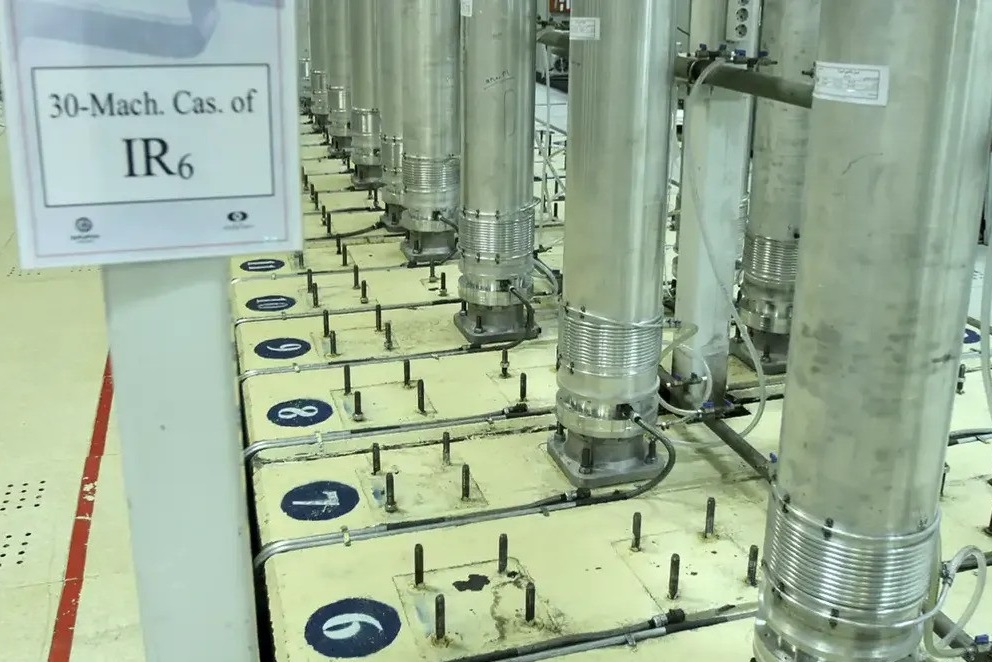
Based on this principle, NPT member states have the right to research, produce, and use nuclear energy, including enrichment, within the framework of peaceful activities; therefore, the US opposition to the principle of Iranian enrichment is rooted in political and strategic considerations rather than having a legal basis.
In fact, the West looks at the nuclear issue with a kind of double standard. Some countries are not even members of the NPT, but have nuclear arsenals and do not face the same pressures as Iran. In contrast, Iran, which is a member of the treaty and is under the most stringent international supervision, is constantly facing sanctions, threats, and political pressure. This contradiction has led many analysts to believe that the main problem for the West is not nuclear technology itself; it is preventing Iran from becoming an independent scientific, technological, and geopolitical power.
On the other hand, the constant portrayal of Iran as a “nuclear threat” has several functions for the United States and its allies. First, this portrayal allows Washington to justify its security and military presence in the region. Second, it provides the necessary basis for maintaining regional coalitions against Iran. Third, it legitimizes economic pressure and sanctions in the eyes of global public opinion.
In such an environment, even the statements of international officials are sometimes influenced by the political atmosphere. Although the Director General of the Agency has repeatedly stated that there is no evidence of an active military program in Iran, at the same time, Western countries are trying to maintain an atmosphere of distrust by highlighting some ambiguities or technical differences. This is while in many similar cases, technical differences are usually resolved through negotiation and cooperation, not through maximum pressure and sanctions.
Another important point is that the West uses “probability” as a basis for pressure. That is, even when there is no definitive evidence that Iran is moving towards a nuclear weapon, the proposition is still made that “Iran may move towards a bomb in the future.” This very possibility has become a tool for legitimizing political pressure. In fact, Iran is not under pressure because of what it has done, but because of what the West claims it may do one day.
Finally, it must be said that today, more than ever, the Iranian nuclear case has become a field of political and strategic confrontation. The main issue is no longer simply the centrifuge or the enrichment percentage; rather, it is the debate over Iran’s place in the regional and international order. As long as the West sees Iran as an independent actor outside its preferred framework, even the most transparent nuclear cooperation is unlikely to lead to a complete end to the threat rhetoric. Therefore, the Iranian nuclear issue should be seen not just as a technical issue, but as part of a larger competition for power, influence, and political order in the contemporary world.
