
Boko Haram Strengthened by Assassination of ISIS Number Two in Nigeria
TEHRAN (Defapress) - The joint US-Nigerian special forces operation that killed ISIS’s number two, Abu Bilal al-Minuki, is a significant development, but it also reveals a more sinister reality. Analysts warn that the security crisis in the Lake Chad region is not only not contained by the assassination, but is also being reshaped in a more complex way, and in the short term, is likely to lead to a wave of retaliatory attacks and bloody power struggles between terrorist groups.
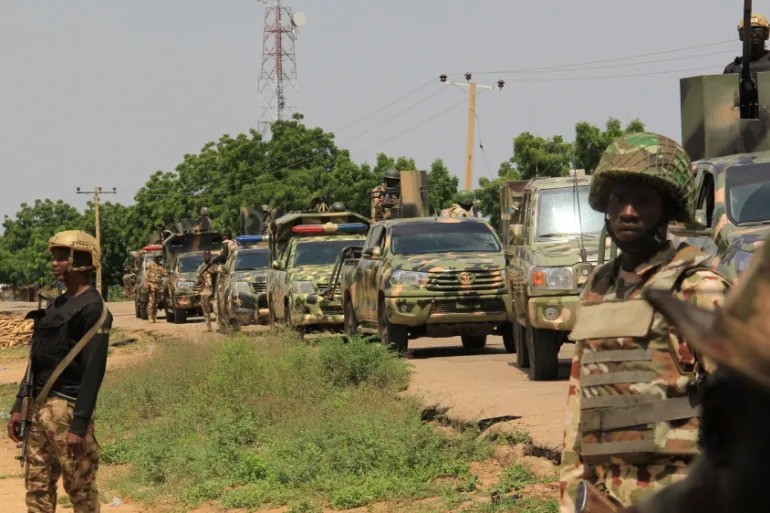
Al-Minuki, a Nigerian national from Borno state, was operating from a base near Lake Chad, a region that has become one of the most active militant hotbeds in the world, and the focus on it has transformed the security dynamics of the region. His choice of northeastern Nigeria as his base of operations clearly shows that the ISWAP and its long-time rival, Boko Haram, are once again regaining strength and expanding their reach.
The key point, analysts say, is the unintended synergy between regional armies and Boko Haram. In recent years, the intense focus of security forces on suppressing the ISWAP due to the group’s advanced drones has created a unique breathing space for Boko Haram to regroup in the media silence.
“While regional forces were busy repelling the advanced drone threats of ISIS, Boko Haram took full advantage of this decentralization to rebuild its organization,” Nimi Princewill, a security expert on the Sahel region, told Al Jazeera. This situation has allowed both terrorist groups to regain their combat capabilities and plan new attacks, demonstrating their high resilience to military tactics.”
The sustainability of militant groups in the region is not based solely on ideology, but on a highly profitable “economy of violence.” For this reason, control of the Lake Chad islands is not merely a military asset; these areas serve as a gateway for smuggling, extortion, illegal taxation, and resource extraction.
On the other hand, high poverty rates, high unemployment, and the despair of the local youth have created an endless source of recruitment. The situation is exacerbated when government rehabilitation programs fail and former militants, lacking a clear life perspective, return to the cycle of violence; to the extent that, according to research, ISIS defectors are joining the military wing of Boko Haram in Borno to escape execution by their own group.
Moreover, the geographical environment of the Sahel and Lake Chad has become a haven for terrorists. The long, abandoned borders allow the free movement of jihadist elements and weapons from crisis areas such as Mali into Nigeria. At the same time, joint efforts by the four countries of Nigeria, Cameroon, Chad, and Niger to coordinate military operations are constantly hampered by logistical bureaucracies, conflicting command structures, and uneven distribution of resources.
Meanwhile, indigenous people, suffering from distrust of the state and the weakness of traditional structures, resort to informal networks for their survival, which inadvertently provide corridors of concealment and movement for terrorist groups and trap civilians in a cycle of displacement and forced recruitment.
The depth of this governance and humanitarian disaster goes beyond military estimates; The region is home to 2.9 million internally displaced people, 2.3 million of whom are in Nigeria alone, according to the UN Office for the Coordination of Humanitarian Affairs. The violence has led to the closure of 1,827 schools across the Lake Chad Basin, while humanitarian agencies received only 19 percent of their funding in 2025.
Nigerian political analyst Chris Ogunmodede believes the resurgence of these groups is due to the Nigerian government’s structural inability to establish a legitimate presence, sustainable service delivery, and administrative authority in remote areas, which has left space for terrorists to operate with relative impunity.
Therefore, the removal of Abu Bilal Al-Minuki will have a temporary effect on the ISIS command structure, as intelligence reports from recent weeks and the increase in small-scale attacks and border ambushes have shown that, despite the organizational disintegration, their operational capacity has not decreased.
With the 2027 general elections in Nigeria approaching, security experts warn that these terrorist groups are likely to intensify their operations to dictate their political and military influence on Nigerian society and government. For this reason, these attacks are likely to cross the traditional borders of Lake Chad and spread to safer areas.
Accordingly, it should be said that until the governance vacuum, abject poverty, and the crisis of support budgets in this region are eradicated, the strategy of eliminating the leaders of terrorist groups will only lead to the emergence of more radical leaders in a ready-made environment.
