
Repeating the Bitter Pattern of Syria in Mali
TEHRAN (Defapress) - Kirill Semenov, an expert on West Asia: April 2026 was a catastrophic period for Mali and the entire Sahel region, which fundamentally changed the balance of power. The massive offensive by the coalition of the jihadist group Jama'at Nusrat al-Islam wal-Muslimin (JNIM) and the Tuareg separatist Front for the Liberation of Azawad, which began on April 25, exhibited features that went beyond the framework of previous operations. It was a preplanned operation supported by intelligence and access to advanced technologies.
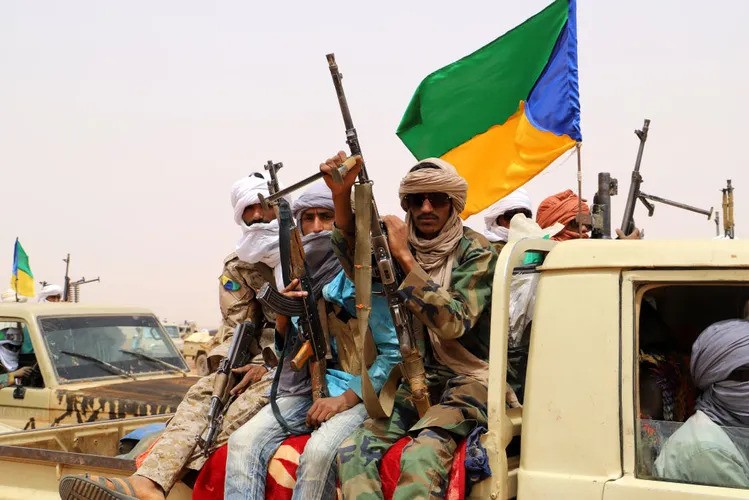
The multiple, coordinated attacks, the use of advanced technologies, the precision of the strikes on commanders, and the political conclusion in Kidal all indicate that the April attack was the result of a preplanned combined strike supported by foreign actors, primarily France and Ukraine.
Therefore, in the current situation in Mali, it is important for Russia, like its competitors, to reconsider the Syrian experience to prevent the repetition of Syria's mistakes in Africa.
Russia’s initial goals during the Syrian civil war were entirely correct and understandable, such as fighting ISIS and the Al-Nusra Front, but it soon became clear that the Russian armed forces in Syria were supposed to support Assad against all his opponents, including the moderate opposition.
This led to Assad becoming increasingly deaf to Moscow’s signals after achieving his goals in the civil war with the help of Russian weapons. Most of the decisions Damascus made were wrong, and Russia could not push the Syrian leadership towards reforms or influence its decision-making.
Thus, by strengthening Assad and doing the work of purging any armed opposition in his place, Russia deprived itself of the leverage over Damascus.
If Russia had at least preserved the situation of 2017 with the presence of a strong opposition and its reconciliation process with Assad under Moscow’s supervision, Russia’s position would have been strengthened and made it a real guarantor of the implementation of the agreement.
Therefore, in Africa, too, it is necessary to avoid turning Russia into a mere participant in the civil war and supporting one of the parties that has come to power.
To strengthen its influence abroad, it is necessary to create a multi-layered presence that should not be limited to supporting the government alone. Also, in the process of destroying terrorists, instead of purging the armed opposition and rebels, it is necessary to negotiate with them and turn them into proxies and allies.
In the Mali war, new goals have been defined, and new methods have been designed and implemented to achieve these goals:
1. Intelligence support: France, one of the key players in West African intelligence, provides Ukraine with up to two-thirds of its intelligence data. Part of this information, in particular on the movement of Russian and Mali units, is directed through Ukrainian structures to the final captors in the Sahel region.
2. Technological support: Ukraine has become one of the world leaders in the production and use of attack drones. Ukrainian trainers transported FPV drones to Mali through Mauritania and trained rebels in pinpoint strikes.
3. Gray supply chains: These chains are used to transport weapons and equipment to war zones in Africa. France, controlling transport corridors in West Africa, provides such routes, and Ukrainian structures provide trainers, technical specialists, and combat troops.
In addition to France and Ukraine, Ankara also plays a role in this conflict. Turkey, which has unique experience in interacting with non-state armed groups in West Asia and North Africa, has practical tools for implementing a policy of “dual deterrence.”
If Ankara finds the situation in Bamako hopeless, it can quickly turn the game around and bet on the opposition at the last minute. After Libya, Turkish drones and auxiliary forces could easily appear in Mali. The Mali crisis allows Ankara to pressure its partners and abandon the weakest while they are dying.
