
Eastern Balance and New Security Architecture in Eurasia
TEHRAN (Defapress) - While the dust of the negotiations between Donald Trump and Xi Jinping has not yet cleared from Beijing, the Kremlin announced that Russian President Vladimir Putin will travel to the Chinese capital from May 20 to May 22. This trip, which will take place just a few days after the US President departs from China, is a "strategic follow-up" to assess the results of those negotiations and consolidate Russia's position in the new global equations.
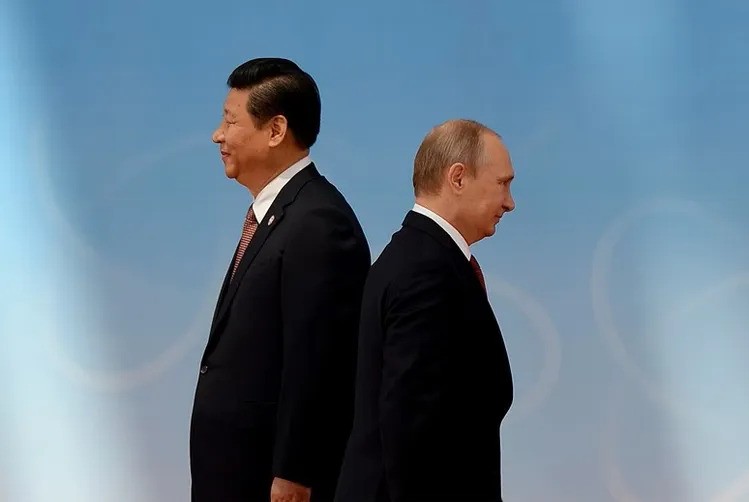
According to analysts, the undeclared alliance between Beijing and Moscow acts as a lever to create a balance against Washington's transatlantic hegemony.
The main focus of Putin's trip is to assess the details of the secret negotiations between Trump and Xi. The Kremlin is deeply concerned about the scenario of Beijing using Russia as a bargaining chip to obtain trade or economic concessions from the White House. The upcoming trip is an attempt to “buy security” from Beijing, to ensure that no deals against Moscow’s interests are made behind closed doors.
In 2022, Xi Jinping and Putin coined the phrase “friendship without limits” to describe their relationship. Putin now intends to give practical confirmation to this slogan during this trip. Russia sees China as a “vital partner” for its economic and diplomatic survival in the face of a corrosive war in Ukraine and unprecedented Western sanctions.
On the other hand, the statistics speak to the strategic dependence of the two countries on each other: Beijing-Moscow bilateral trade reached an unprecedented $240 billion in 2023. More than 90 percent of settlements are made in national currencies (yuan and ruble), and China, as the main buyer of Russian oil and gas, is the country’s economic lifeline. To maintain this vital artery, Putin needs regular meetings and renewal of long-term commitments.
However, the convergence between Putin and Xi goes beyond fleeting economic interests and pursues two major strategic goals:
1- Creating a multipolar world: Both Putin and Xi are staunch supporters of an order in which the United States is no longer the only undisputed superpower. They seek to replace the “liberal-American” order with a model of “Eastern balance of power.”
2- Strengthening rival institutions: Beijing and Moscow seek to strengthen institutions such as “BRICS” and “Shanghai Cooperation Organization” as a replacement for Western institutions such as “G7”, “NATO”, etc. It is expected that practical plans for expanding these institutions and accepting new members will be finalized during this trip.
The famous political theorist Kenneth Waltz believes that the international system is in chaos and that governments are balancing for survival. Putin’s visit to China is a concrete example of this theory.
While the United States seeks to contain China in Asia and weaken Russia in Europe, Putin and Xi have realized that competing with each other at this historical juncture would be a complete loss for both. Therefore, they have tacitly agreed to put aside their differences and form a united front against Washington. Even challenges such as China’s influence in Central Asia, a traditional sphere of influence for Russia, have been sidelined in order to preserve the larger alliance.
While NATO expands its borders eastward and the United States is at a standstill due to the regional war with Iran and the blockade of the Strait of Hormuz by Iranian armed forces, Russia and China are trying to draw up a “new security architecture in Eurasia” – an architecture in which there is no mention of American rules.
Putin’s upcoming trip to China is not just a ceremonial visit, but an operation to “stabilize the Eastern Front” in response to the West’s moves. While Europe is at war and West Asia is in crisis, the two Eastern giants are closing ranks to redraw the map of the world. Putin is heading to Beijing not as an ordinary guest, but as the “Chief of the Eastern Alliance” to redefine the red lines of cooperation. The developments of this trip will determine not only the fate of Ukraine but also the power equations in the whole of Eurasia for the next decade.
