
Government-Sponsored Jewish Extremists March in Jerusalem with Slogans of “Death to Arabs”
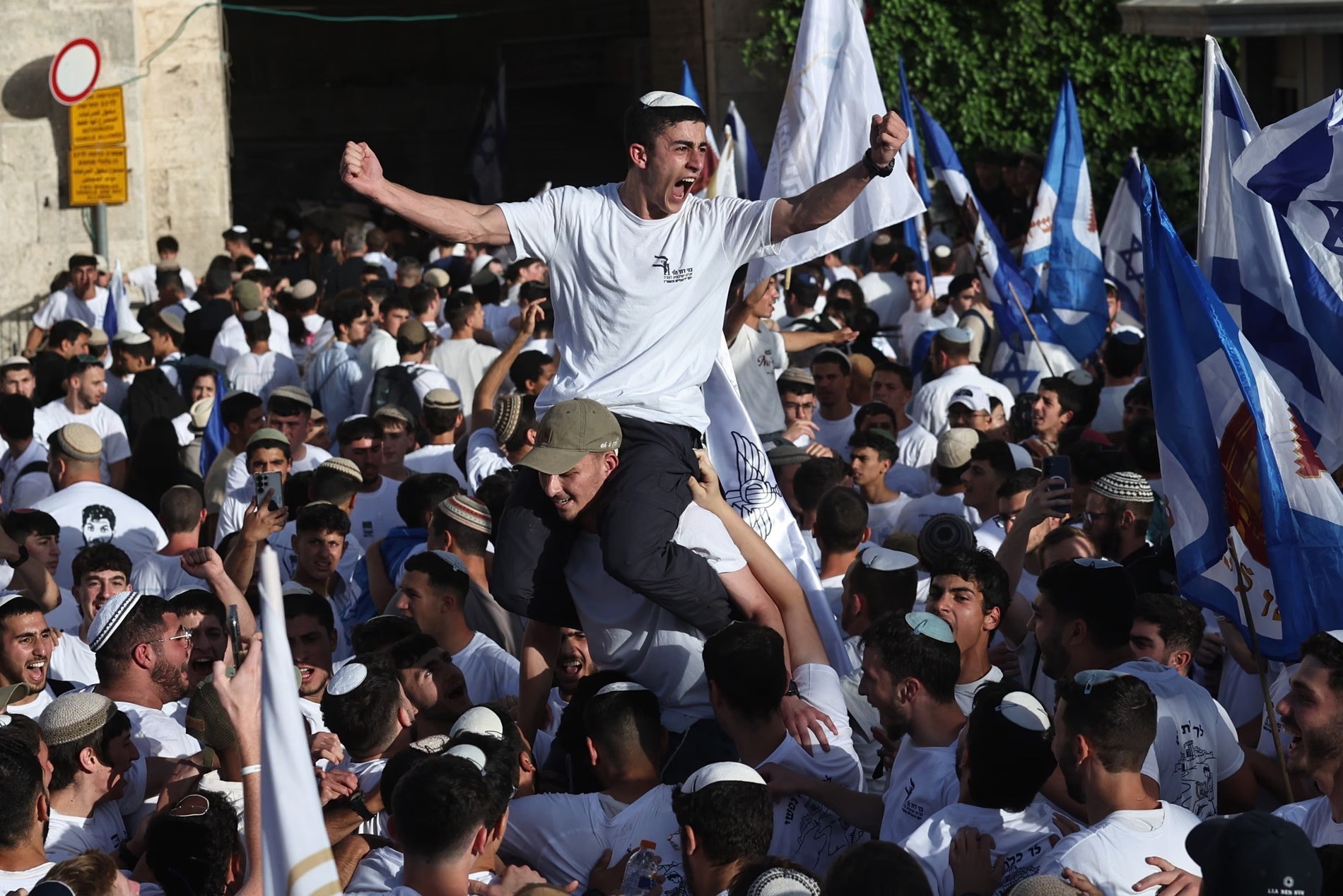
TEHRAN (Defapress) - The annual Jewish extremists’ march in occupied East Jerusalem has been marred by clashes and tensions, with racist slogans against Palestinians, sporadic clashes, and the provocative act of the Israeli Minister of National Security raising a flag in the Al-Aqsa Mosque compound. The government-sponsored event, which commemorates the anniversary of the occupation and annexation of the eastern part of the city, has become increasingly violent in recent years, and this year it has again provoked widespread anger with slogans such as “Death to Arabs,” “May your villages burn,” and “Gaza is a graveyard.”
The climax of the march came when Itamar Ben-Giver, the hardline Minister of National Security of the Zionist regime, danced and danced with his supporters in the Al-Aqsa Mosque compound, acknowledging the occupation of the Al-Aqsa Mosque and waving the flag of the occupying regime. This action is part of his public campaign to eliminate the 59-year-old legal and historical status (status quo) of this place, according to which non-Muslims are prohibited from praying in this holy site.
Before the official start of this government parade, a large part of the Palestinian merchants and residents in the Muslim quarter of the Old City closed their shops and took refuge in their homes, fearing the brutality of the extremists. However, the radical and right-wing Jewish groups clashed with a number of the remaining Palestinian residents upon their arrival. These clashes were finally temporarily ended with the extensive intervention of the Zionist regime's security forces.
The large and controversial march was not a spontaneous event; it was a large, organized operation, funded directly by the Jerusalem municipality and Israeli government ministries. Participants were bused to the Temple Mount from all over the occupied territories, as well as Jewish settlements in the occupied West Bank. In addition to Ben-Gvir, Israel’s hardline Finance Minister Bezalel Smotrich was also among the marchers on Thursday.
After the near-empty Old City of Palestinian residents, much of the tension was between state-backed nationalists and members of a Jewish anti-war and peace group called Standing Together, whose members had taken to the streets to protect Palestinian citizens from right-wing political violence.
Suf Patishi, one of the organizers of the vigil, said that this year a record 400 volunteers, wearing purple vests (the organization’s symbolic color), took to the streets on this dangerous day. “We wanted to cover every inch of the city to make sure that we prevent attacks on Palestinians. Yes, it is dangerous for us, but the danger is nothing compared to the danger that threatens the Palestinians who live here.”
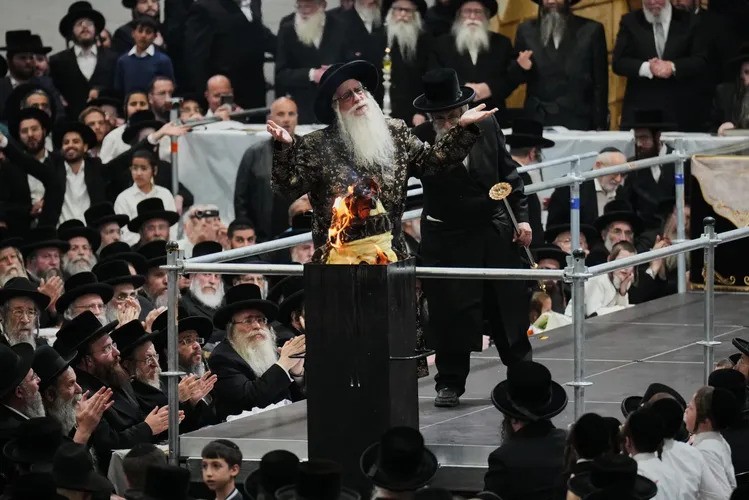
Notably, some Orthodox Jews were among the protective circle. A Haredi man with a long gray beard and a traditional gold robe who identified himself as “David” and came from the northern occupied territories, explained his motivation: “I am disgusted by the violent behavior of people in my community. I am a man of faith and religion, and they are committing these crimes in the name of our religion. I felt I had to do something to show the opposite. Their behavior is a desecration of the name of God.”
This unprecedented volume of far-right extremism in this year’s parade has activated social and political faults within Israel more than ever before and has practically fueled a deep internal divide. The reckless and systematic entry of extremists into Palestinian neighborhoods with the support of cabinet ministers has sounded the alarm for other layers of society and led to an unprecedented field confrontation, a situation in which Jewish civil and peace groups were forced to intervene directly and form a human shield to confront this wave of extremism and block the extremists’ path.
This confrontation in occupied Jerusalem showed that the border of tensions is no longer limited to Palestinians and occupiers, and the city has become a battleground between two opposing internal currents that are pushing the future of this region towards an uncontrollable identity and security crisis.
