
IRGC “Blinding” Operation: Advanced US Radars in the Region Failed
TEHRAN (Defapress) - Mohammad Zarchini - The war in the West Asia region between Iran and the United States has entered a new phase, and technology has the first and last word in this battle.
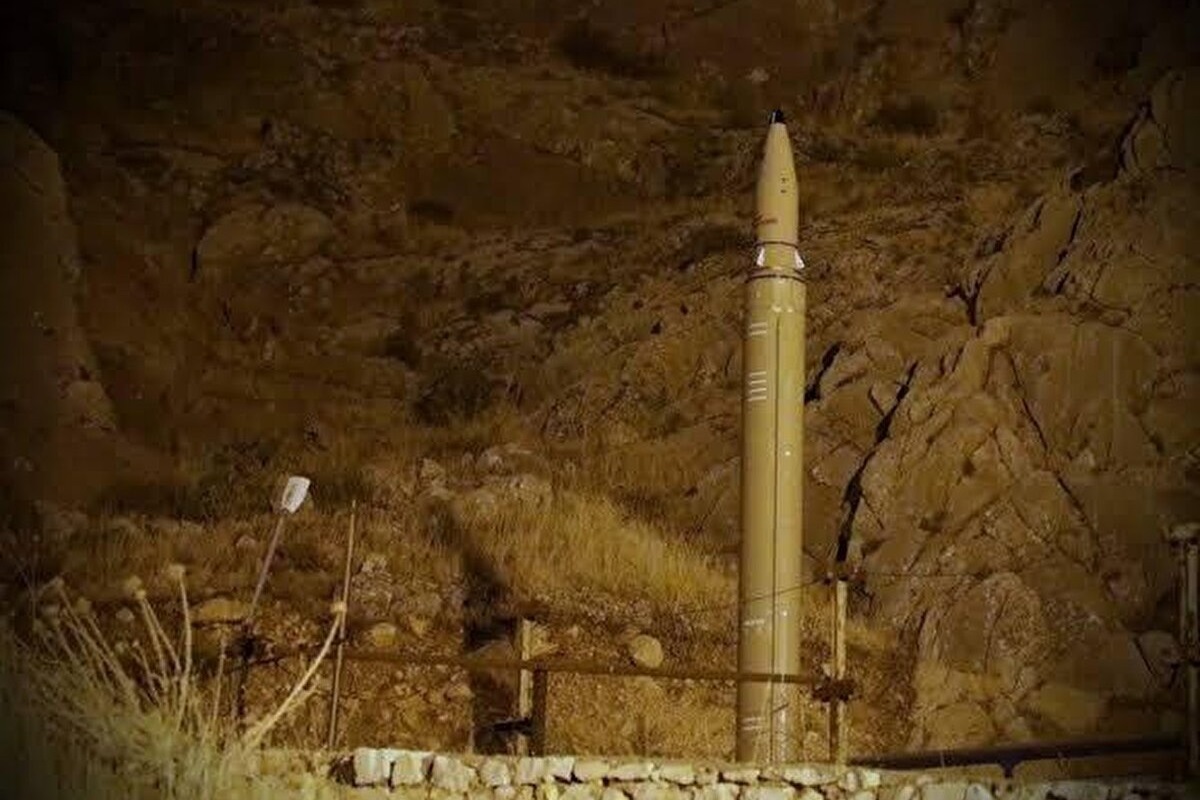
The United States attacked Iran under pretenses, and Iran retaliated with heavy blows to US strategic installations. These attacks, which were carried out in recent weeks and coincided with the launch of the operation known as “Operation Epic Fury” by US forces, were not limited to counter-attacks on the ground, but were designed with a broader goal, namely “blinding” the integrated US defense and intelligence network in the region.
Targeting advanced communication networks and radars
A review of satellite imagery and credible international reports published in recent days shows that Iran has targeted at least 11 US military bases in various countries, including Bahrain, Kuwait, the United Arab Emirates, Saudi Arabia, Oman, and Jordan. The important point in these attacks was the careful selection of targets; instead of focusing on barracks or residential areas, the IRGC’s combat engineering focused on communication infrastructure (SATCOM) and radar antennas.
The New York Times, one of the most reputable American publications, says in this regard: Confirmed images show that an Iranian suicide drone succeeded in destroying the protective dome (radome) of a vital radar at the US Navy headquarters in Bahrain (home to the Fifth Fleet). At least one other radome was also completely destroyed in this attack. Military experts believe that the destruction of these domes, which protect sensitive ballistic missile tracking equipment from weather conditions, is a technical and tactical blow to America’s combat capability.
“Desert Eye” was disabled; a major setback for America’s strategic defense
One of the most important achievements of the Iranian armed forces in this electronic and cyber war was the destruction of advanced and strategic American radars. Media sources reported that Iran had succeeded in destroying seven advanced radar systems that formed the main part of the warning and defense network of the American regions.
Among these targets, the FPS-132 radar, known as “Desert Eye,” which was stationed at Al-Udeid Air Base in Qatar, is of particular importance. The radar, which is considered an over-the-horizon (OTH) radar, served as one of the most critical US missile detection and early warning sensors in the Persian Gulf region, capable of intercepting ballistic targets thousands of kilometers away. The destruction of this system has effectively created a huge hole in the US air defense detection layers.
In addition, reports indicate serious damage or complete destruction of the AN/TPY-2 radar systems. These radars, known as the beating heart of the THAAD defense system, were located at bases such as Prince Sultan in Saudi Arabia and Al Dhafra in the UAE. In an interview with CNN, military expert N.R. Jenzen-Jones said: "The failure of even one of these radars is a heavy and operational blow that will take time and money to replace."
The blindness tactic and the collapse of the US kill chain
Military analysts around the world have described Iran’s strategy in this battle as “electronic and physical blinding.” The main goal of this strategy is to cut off the US military’s kill chain, which relies on the instantaneous transmission of radar data to missile launchers and fighter jets.
A former senior military official explained to the CNA think tank that the success of the US heavy air campaign in the early days was not due to air superiority or stealth alone, but rather a combination of aggressive electronic warfare and hardware attacks carried out by Iran on US bases. The US needed superiority in the electromagnetic spectrum to carry out its operations, but Iranian attacks on communication networks and radars deprived it of this advantage. In contrast, the IRGC has succeeded in saturating US defense systems by employing asymmetric tactics and extensive use of low-cost drones and precision-guided ballistic missiles.
Pentagon reports, as reported in media outlets such as The New Republic, indicate a sharp decline in the US stockpile of expensive interceptor missiles, with US military officials admitting in closed-door congressional hearings that the surveillance drones, despite their low price, have created unforeseen challenges for defense systems.
The failure of at least 7 advanced radar systems and damage to 11 US logistics and communication bases in the region indicate the success of the “blinding” strategy designed by Iranian commanders. The US, which relies heavily on advanced radar technologies and command networks to exert its power in West Asia, has lost a significant part of this strategic advantage in recent weeks.
Despite the continuation of US airstrikes on various facilities in Iranian territory, it seems that the first phase of the battle for control of the region’s skies has been accompanied by serious disruption of US reconnaissance and command systems, and Iran has once again proven that, by relying on indigenous capabilities and smart tactics, it can challenge the balance of power in regional equations; the armed forces of the Islamic Republic of Iran were able to dictate their power to the American Zionist enemy in an unequal battle, and this has been done well not in words but in practice.
