
Goodbye to the Heavy Logistics Industry in World War III
TEHRAN (Defapress) - The public release of NATO’s new strategic plan for a possible confrontation with Russia in the event of Moscow’s attack on the Baltic states is more than a simple staff exercise; it signals a fundamental revolution in modern warfare and the structure of global military power. Although at first glance, the development of such documents by mid-ranking officers in the US and Russian military academies is a common practice, and hundreds of similar plans are written annually, the public release of a traditionally secret plan sends a clear message to an experienced adversary with four years of intensive combat experience: the West understands the transformation of war tactics well and is preparing itself for a new era of conflict.
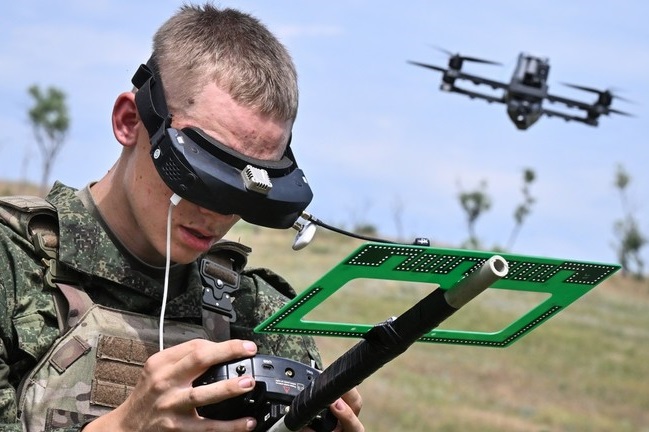
This apparent shift stems from a profound crisis facing classical military science, where old-fashioned methods of warfare have become obsolete, and tank penetrations, deep armored sieges, and long-duration artillery barrages have become far more dangerous and even suicidal tactics than they were a decade ago, due to the saturation of the battlefield with drones, artificial intelligence, and advanced reconnaissance tools.
Such a development is reminiscent of profound historical transformations. Just as the advent of rifled and machine guns made compact formations and infantry column attacks obsolete, today the emergence of remotely piloted systems and robotics is redefining battle tactics.
Tanks, which were the decisive tool of ground warfare until a few years ago, now face deadly challenges even in reaching their firing positions, as the corridors and front lines are constantly covered by drones such as “ambush drones” that land on the ground, camouflage themselves, and only take off to destroy the target after the order to attack is given.
In this new paradigm, traditional military concepts are changing. Past predictions that special forces and elite units would decline in importance against large traditional armies are now being realized in reverse. The armies of the future will likely consist not of millions of foot soldiers, but of small, highly trained groups of elite forces operating in support of a vast and gigantic network of autonomous machines, robotic platforms, and artificial intelligence.
If this trend were to materialize, large traditional armies and columns of heavy armor would become obsolete for delivering strategic blows to the enemy, and strategic damage would no longer require the vast defense industrial complexes of the 20th century. Much of modern warfare equipment could be produced cheaply, nimbly, and rapidly replaceable; so much so that even today it would be possible to assemble efficient drones in a simple garage, although their more advanced electronics would be no different from the technologies used in smartphones and consumer electronics.
This redefinition would also radically transform the economic and logistical structure of warfare. Drones would be piloted by small teams or autonomous systems, and would be extremely cheap compared to the industrial machinery of traditional warfare. This would greatly reduce the crushing logistical burden that once weighed on armies; Meanwhile, traditional artillery and expensive precision weapons themselves are now highly vulnerable to drones and anti-aircraft systems.
The changing means of warfare have also changed the concept of strategic objectives. Why attack enemy tanks when it is possible to disable a country’s power grid and paralyze all its military and operational systems? Although the main power plants will be heavily protected, it is practically impossible to defend the thousands of kilometers of high-voltage cables in the power transmission networks.
Thus, the general contours of a possible non-nuclear world war are revealed: a battle that will be fought not by the march of millions of armies or the crossing of armored columns across borders, but by simultaneous, proxy, and scattered regional confrontations by smaller allies of the great powers. While the major players remain safe behind the umbrella of their nuclear deterrent and avoid direct confrontation, the battlefields of the future will be a complex network of dozens of smaller regional battles, interconnected by drones, satellites, artificial intelligence, and mutual political interests.
