

Ankara's Fears and Hopes in PKK Disarmament Deal
TEHRAN (Defapress) - On August 10th, the Turkish Parliament passed the "Law on Strengthening National Solidarity and Social Integration," marking a turning point in Turkey’s domestic politics that could also influence the trajectory of its foreign policy.
The document was approved with broad parliamentary support. In the voting process, 468 deputies voted in favor, 86 voted against, and 12 abstained. A week later, Turkish President Recep Tayyip Erdoğan officially promulgated the law to the relevant state institutions.
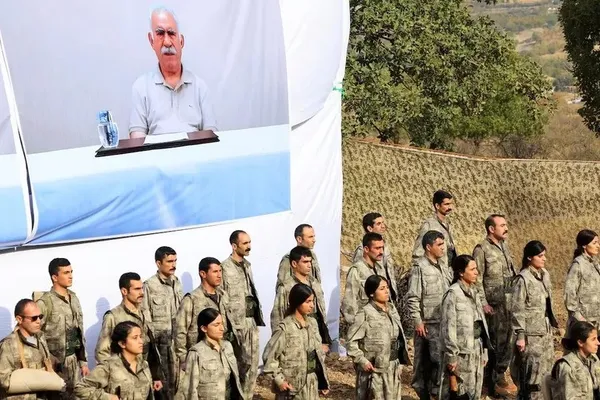
The law aims to bring an end to the armed confrontation with the Kurdistan Workers' Party (PKK) and provides a legal framework for the disarmament of its members and their return to peaceful life. This initiative holds particular significance because, for the first time in four decades of conflict, a negotiation process involving the PKK has been initiated with the Turkish Parliament at its center. This signals a shift in both the nature of the conflict and the approaches to its resolution.
After Devlet Bahçeli, leader of the Nationalist Movement Party (MHP), proposed in 2024 that imprisoned PKK leader Abdullah Öcalan be offered an end to the armed conflict in exchange for amnesty and the right to political activity, contacts rapidly expanded between Turkish intelligence and Öcalan, who has been detained on İmralı Island since 1999. However, prior to the passage of this framework law, both sides lacked a unified basis for advancing negotiations. Furthermore, an interconnected set of internal and external factors had slowed the progress of these talks.
Erdoğan had long hesitated to take this step due to sensitive domestic political conditions. He sought to prevent the negotiation process with the PKK from negatively impacting his fragile public support, particularly among nationalistic voters. At the same time, the president hoped to derive concrete political gains from the initiative, specifically, securing Kurdish support to pass constitutional reforms and alter presidential election rules, thereby enabling him to retain power.
However, following the NATO Summit in Ankara and former President Trump’s support for Erdoğan, his confidence to advance negotiations grew. Amending his previous stance, which held that no amnesty law would be passed until the complete disarmament of the PKK, he permitted Parliament to pass the "framework law." Nonetheless, he made its implementation conditional upon strict oversight by intelligence agencies to guarantee a definitive PKK withdrawal from armed struggle.
In addition to regional and international conditions, including the outcomes of the NATO Summit, the potential repercussions of a regional war involving Iran, and Ankara’s concerns over Israel’s rapprochement with the Kurds and the potential formation of political-military alliances between them, Erdoğan leveraged a set of domestic political factors to push this agenda forward. Three key factors were paramount for him:
First, the approaching presidential election scheduled for the summer of 2028; Erdoğan has less than 18 months to reach political agreements or present constitutional reforms before the election campaign begins. Second, the intensifying succession rivalry within his camp, which has coincided with recent rumors regarding his deteriorating health. Third, the necessity of reaching a mutual understanding with Öcalan regarding the progress of the disarmament process, an understanding that likely includes Öcalan’s commitment to supporting constitutional amendments and Erdoğan’s candidacy in the upcoming election.
Under current Turkish law, the National Intelligence Organization (MİT) is required to prepare regular reports evaluating the status of the PKK and its compliance with commitments to halt armed activity and dismantle its administrative structure. These reports are submitted to the National Security Council (MGK), chaired by the president. Upon approval by the council, the provisions stipulated in the law are applied to evaluate the cases of PKK members, excluding those involved in homicides or serving life sentences.
Eligible individuals will have their files reviewed considering deferred prosecutions, ongoing investigations, and sentence executions. The government has emphasized that this is not a general amnesty, but rather a conditional pardon. This could potentially allow approximately 3,500 to 3,600 prisoners and around 2,000 insurgents stationed in mountainous regions to return to their families and resume normal lives. The law excludes those accused of premeditated murder, as well as high-ranking organizational leaders, who will likely need to seek asylum in Iraq or Europe.
The pro-government Turkish Hürriyet reported the establishment of a four-party coordination mechanism involving Ankara, Baghdad, Erbil, and Sulaymaniyah. Turkish intelligence will oversee the entire process. Under this agreement, PKK members will hand over their weapons to authorities in Erbil, Sulaymaniyah, or the central government in Baghdad. These weapons will be officially cataloged in inventory lists, with the data archived by Turkish intelligence. Around 7,000 to 8,000 PKK members located outside Turkey (primarily in Iraq and Syria) are expected to lay down their arms and return to the country. This process is anticipated to coincide with an announcement of the dissolution of the Syrian Democratic Forces (SDF).
The PKK's European activities rely on a community base of 70,000 to 80,000 people, including organizational leadership. It is expected that once the law enters into force, some will immediately depart for Turkey. In the Sinjar and Makhmour regions of Iraqi Kurdistan, 2,200 individuals stationed in Sinjar are expected to join the Iraqi army. Additionally, the return of 8,000 citizens, including families who previously fled southeastern Turkey and currently reside in the Makhmour camp, is anticipated. Similarly, monitoring will begin for the evacuation of PKK camps and shelters in the Haftanin and Gara regions of Iraqi Kurdistan.
Although the disarmament process holds strategic importance for Ankara as the foundation for ending four decades of conflict, Erdoğan is attempting to keep all aspects of it under his strict control. The passed legislation offers no significant political or democratic concessions to either the Kurds or the Turkish state, raising concerns among the opposition regarding its execution. Nevertheless, the opposition was forced to support the document because it promises an end to violence, an objective that is politically difficult to oppose.
The president’s specific role is evident in three key aspects of this process. First, there is no independent third party to monitor the implementation of mutual obligations. Turkish state institutions act simultaneously as arbitrators and decision-makers, granting the president virtually unlimited authority to suspend or terminate the process under the pretext of obligations being breached by the opposing side, even without convincing evidence. Second, Turkish intelligence services maintain complete control over Öcalan, monitoring his meetings and correspondence to prevent any attempts at political maneuvering. Third, the political rights and privileges granted to the Kurds remain within a limited framework determined by Erdoğan’s own agenda. This enhances his bargaining power to exert pressure on Öcalan and the pro-Kurdish DEM Party to secure the necessary parliamentary support for early elections or constitutional changes.
Meanwhile, Ömer Çelik, spokesman for the ruling Justice and Development Party (AKP), stated that the concepts of a "terror-free Turkey" and a "terror-free region" are intrinsically linked and cannot be separated. According to him, the passage of the framework law was a response to imperialist and Zionist hegemonic plans, and its implications will extend into Iraq, Syria, and Iran. These statements reflect the main strategic directions of Turkey's emerging policy on the Kurdish issue. In light of developments in neighboring countries, Ankara has reassessed its security and geopolitical approaches, striving to reduce the foreign policy burden that this issue has imposed over the past forty years while expanding its room for maneuver within the regional balance of power.
A primary goal for Ankara in pursuing this agreement is to prevent the growth of Israeli influence among Kurdish groups. Turkey intends to absorb the PKK and its armed affiliates in Syria and Iraq, converting them into instruments for its own policy in those countries in exchange for a package of domestic political rights for Kurds in Turkey.
Nonetheless, the Turkish-Kurdish settlement process faces a series of internal and external obstacles. The ramifications of the Syrian conflict must be factored in. Turkey's desire to integrate the Syrian Democratic Forces into the Syrian army pushes the PKK to expand its presence in the region and support the "Revolutionary Youth Movement" in northern and eastern Syria. The party views instability as a strategic resource to bolster its security and political leverage; thus, its complete disarmament in the near future appears unlikely.
Furthermore, potential public dissatisfaction and internal strife remain possible within Turkey, particularly among Turkish nationalists and Kurdish groups. Although opposition protests have been limited so far, attempts to codify Kurdish rights into the constitution could provoke protests in certain regions of Turkey, leading to domestic instability.
Additionally, the lack of a clear vision regarding the strategic goals of the process has led to the formation of a social movement opposed to these trends. Opposition support remains conditional and strictly limited to security matters. As the process moves toward more sensitive issues, such as Öcalan's personal status, the opposition is likely to attack the process, especially as elections draw closer.
Finally, the disarmament agreement process lacks sufficient transparency. The content of the agreement and its expected outcomes remain ambiguous, generating differing interpretations, exaggerated expectations, and the risk of unforeseen consequences.
The primary options for resolving the decades-long conflict between Ankara and the PKK boil down to three possible scenarios:
In the first scenario, a partial and precise implementation of the plan leads to a rift within the PKK; one faction may refuse to disarm while another obeys Öcalan’s directives. In response, Erdoğan would likely enforce those sections of the law granting pardons to a limited number of imprisoned PKK members in Turkey, while conditioning further progress on Öcalan’s backing in the upcoming elections and the approval of constitutional reforms.
The second scenario revolves around a stall in the plan's execution. The opposition poses a significant barrier to advancing this agreement and may succeed in preventing it from coming to fruition. In such a case, Erdoğan would likely attempt once more to court Kurdish voters and secure Öcalan’s endorsement ahead of elections, hoping to resume the process after strengthening his position.
Under the third scenario, a complete failure of the process is anticipated. Although the probability of this outcome is low, it cannot be ruled out. If public discontent escalates and the PKK refuses to renounce armed struggle, a resumption of intense military clashes becomes likely. The tense atmosphere across West Asia, amplified by the regional conflict involving Iran, could tempt both the PKK and Ankara to fish in troubled waters, rekindling full-scale armed conflict.
Ultimately, by entering into the PKK disarmament and reconciliation scheme, Erdoğan has unsheathed a double-edged sword, one that could either guarantee his continued hold on power or permanently ruin his reputation and the standing of the AKP in Turkish public opinion for the foreseeable future.
