
Return of Mohsen Namjoo and the Strengthening of Iran's National Unity
TEHRAN (Defapress) - The sudden and unexpected return of Mohsen Namjoo, the prominent Iranian singer, composer, and instrumentalist, after nearly two decades of living abroad, has become one of the most significant and controversial recent political-cultural developments.
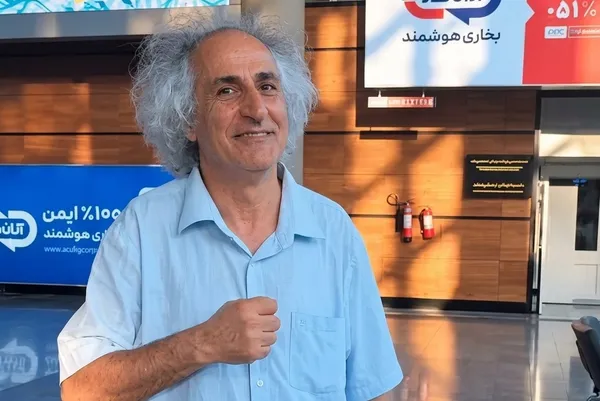
Occurring alongside his growing inclination to distance himself from diaspora opposition groups and the announcement of an "openness and welcoming" policy by the Ministry of Culture and Islamic Guidance, Namjoo’s decision has sparked a wave of conflicting reactions among diaspora political activists, the artistic community, and the media, exposing a remarkable collapse and rift within the monarchist front and opposition groups.
In late August 2026, Mohsen Namjoo announced through video messages and the cancellation of all his international tours and concerts in cities such as Toronto, New York, and Washington that he had returned to Iran to live alongside his family without prior public notice.
He emphasized that he prefers to spend the rest of his life in his homeland and made this decision without coordinating with political movements to prevent any obstacles to his return.
This event comes even though Namjoo was sentenced in absentia to five years in prison by a court in Tehran in 2009 on charges of insulting sacred values; nevertheless, his entry into the country occurred without arrest, signaling the implementation of new approaches within the government institutions overseeing cultural affairs.
Since the late 1990s, Mohsen Namjoo has developed a unique and influential style by altering traditional Iranian musical structures. His music falls into the category of fusion and avant-garde art, characterized primarily by blending Eastern and Western instrumentation.
He juxtaposed improvisation on traditional Iranian instruments like the setar and divan alongside basslines, acoustic guitar, electric guitar, and blues and rock rhythms. Furthermore, by breaking traditional conventions in vocal trills and techniques, Namjoo incorporated blues, scatting, colloquial tones, rap, and recitation into his works, while simultaneously combining classical Persian poetry with modern literature and folk lyrics. This emerging style turned Namjoo into one of the most innovative figures in contemporary Iranian music.
The primary groundwork for Namjoo's return to the country lies in his outspoken and fierce political stances in recent months. Adopting explicit positions regarding the Gaza war and regional developments, Namjoo strongly condemned Israel's military crimes and attacks against the people of Gaza.
Moreover, with rising military threats against Iran, he firmly rejected any intervention, sanctions, or potential U.S. and Israeli military attacks on Iranian territory across several video statements. Attacking monarchist warmongering factions in a sharp tone, he emphasized that those who rejoice in the shadow of war over Iran possess neither honor nor political sense, as the damage of any foreign aggression falls directly upon the people and the homeland.
The return of Mohsen Namjoo to Tehran as an artist once regarded as a symbol of the overseas dissident community dealt a heavy blow to the monarchist front, laying bare the extreme decay and political disintegration of this movement more than ever. This move invalidated the monarchists' illusory analyses regarding Iran's total isolation and the impossibility of artists' existence, accelerating the rapid attrition of forces within the opposition core.
Monarchist organizations and affiliated media, incapable of digesting this behavior due to intellectual paralysis and analytical stagnation, responded with verbal assault, fierce verbal attacks, and vulgar accusations; a passive reaction that illustrated deep confusion, media irrelevance, and a complete lack of any formulated strategy within this movement.
Additionally, Namjoo's explicit exposures of the corrupt, non-democratic, and warmongering structures of monarchist organizations acted as a political earthquake that disrupted their fragile stability, leading to a deep organizational collapse, a fracture among their supporter base, and a deepening of the decline of these divergent factions.
Concurrently with these developments, the Minister of Culture and Islamic Guidance announced the government's new approach toward overseas cultural and artistic figures in official statements. Emphasizing that the homeland's arms are open to all Iranians who stood by the country and its people during critical times and against foreign threats, the Minister declared that the ministry's policy is focused on openness, easing conditions, and removing obstacles for the return of artists.
