
White House Conspiracy Against the Iraqi Resistance
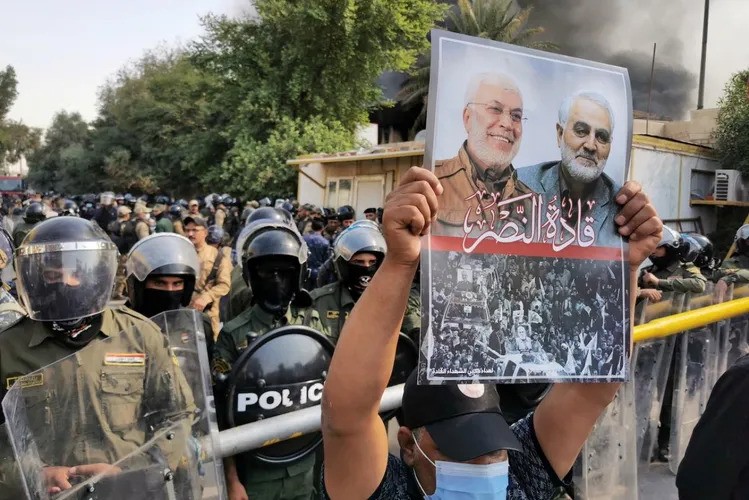
TEHRAN (Defapress) - Abbas Sarhan, a journalist and political analyst, notes that discussions regarding the disarmament of the Popular Mobilization Forces (PMF) resurface whenever US and international pressure on Baghdad intensifies regarding the state's monopoly on weapons and ending the presence of these groups. However, a striking paradox lies in the fact that the very nations leading these pressures have themselves imposed severe restrictions on Iraq for decades, preventing it from acquiring defense capabilities proportional to the surrounding threats.
From the UN sanctions and arms embargo imposed following the 1991 war against Iraq, to the post-2003 era, where every Iraqi arms deal required complex US approvals and reviews, and culminating in repeated delays in delivering F-16 fighters and advanced equipment even at the height of the war against the ISIS terrorist group, the Iraqi Army has consistently fought with an incomplete arsenal. Meanwhile, armed groups found alternative avenues to secure weapons and financial resources.
This gap in the state's official defense capability was a primary factor leading broad segments of Iraqis, since the establishment of the PMF in 2014, to view it as a parallel security guarantee, especially at a time when the official army's capacity to protect the nation had been diminished.
Today, when Washington and its allies demand a state monopoly on arms, Iraqis have every right to ask: how can a strong state capable of legitimately monopolizing weapons be built when its ability to acquire those weapons is fundamentally restricted? Demanding the disarmament of groups without addressing this structural void is akin to asking a defenseless person to discard their walking stick in the face of a fully armed adversary.
This issue extends beyond military limitations to a form of overt political guardianship exercised by certain Gulf Arab states, particularly Saudi Arabia, over Iraq's internal affairs. Through repeated statements by officials and biased media outlets, these countries interfere in the finest details of Iraqi politics, from government formation to the file of armed groups, as if viewing themselves as a power above Iraqi sovereignty, dictating internal choices rather than engaging Baghdad as a fully sovereign state. This pattern of intervention deserves condemnation just as much as any other foreign guardianship, and it cannot be justified under the guise of concern for Iraq's stability.
Yet, the paradox runs even deeper. The very countries that invoke the principle of "state monopoly on weapons" to demand the disarmament of the PMF, an official institution affiliated with the Iraqi government, have themselves supported, funded, and armed non-state militias across various Arab nations. Some of these groups played direct roles in overthrowing legitimate governments or collapsing state structures.
In Syria, Qatar and Saudi Arabia financially backed opposition armed groups like Ahrar al-Sham and Jaysh al-Islam, while Washington supported the Syrian Democratic Forces (SDF) with money and arms. In Libya, the UAE armed Haftar's forces with drones against the internationally recognized government. In Sudan, UN reports highlighted UAE support for the Rapid Support Forces (RSF), a group that ignited a war devastating the Sudanese state. In Yemen, Gulf support was split among various factions, from the Southern Transitional Council to other groups, deepening divisions and collapsing central state authority.
Why then does the monopoly on weapons become a sacred principle when Iraq is concerned, yet these same nations actively fund and support the proliferation of arms outside state frameworks elsewhere?
Any serious dialogue about the future of weapons in Iraq can only be fair if it begins by acknowledging this contradiction. The first step must be a genuine effort to empower the Iraqi state to become the sole entity capable of protecting its citizens, only then can others be asked to step aside from that role.
