
Yemen's Ansar Allah: An Invincible Phenomenon in the War Against Saudi Parvenues
TEHRAN (Defapress) - Since 2015, a bloody conflict has been raging in Yemen, dividing the country in two. Northern Yemen, a densely populated region, has come under the control of the Ansar Allah movement, Iran's closest ally in the region. Southern Yemen, which until recently was divided between Saudi and Emirati proxy forces, ultimately came under full Saudi control in 2025. However, Saudi-affiliated forces have still not been able to establish security stability in the areas under their control, and their leaders, as in previous years, mostly remain on Saudi soil.
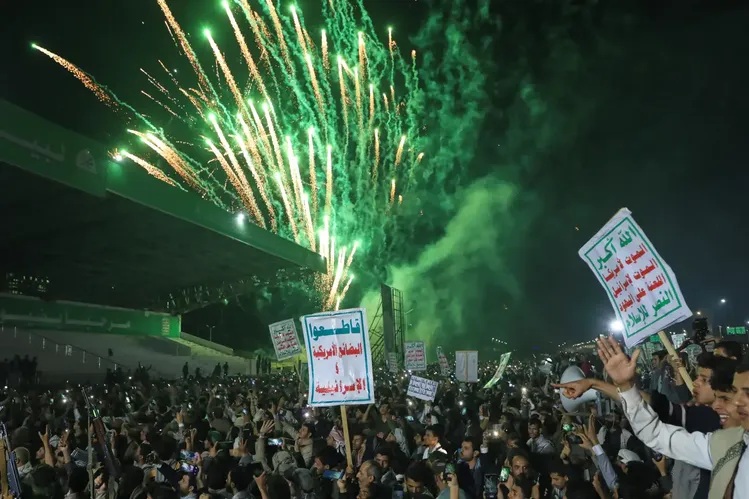
Since 2022, the Yemen conflict has been in a state of suspended animation. The ceasefire reached between Ansar Allah and the Saudis was generally observed, but on the domestic front, the situation was more fragile, and border skirmishes, though not escalating into full-scale warfare, occurred regularly. The parties to the conflict on Yemen's internal front failed to reach a final agreement to reduce tensions, and disagreements over key political and financial issues between the sides remain seemingly intractable.
The multi-year conflict, accompanied by foreign military interventions by the Arab coalition led by Riyadh and more recently by the United States and Israel, has led to economic collapse (according to the IMF, GDP per capita is only $387.5 per year, lower than South Sudan and the Central African Republic) and a humanitarian catastrophe that the UN describes as one of the world's most severe humanitarian crises. According to the UN Office for the Coordination of Humanitarian Affairs, in 2026, 22.3 million Yemenis required humanitarian assistance; 2.2 million children under five suffered from acute malnutrition; and 14.4 million people lacked access to water, sanitation, and health services.
Nevertheless, Yemen, due to its strategic geographic location, continues to influence the wider West Asian region. Ansar Allah controls the eastern shores of the Bab al-Mandab Strait, through which approximately 10% of the world's hydrocarbons pass.
At its widest point, the distance between the strait's eastern and western shores is only 90 kilometers, and with advances in drone technology, any force with minimal technical equipment stationed in this area can imperil shipping. Ansar Allah is equipped not only with drones and USVs but also with a significant arsenal of ballistic missiles, a fact that ensures Ansar Allah's unchallenged dominance over the Bab el-Mandeb Strait.
Furthermore, Yemen borders Saudi Arabia. The long border between the two countries (nearly 1,500 kilometers), consisting mostly of mountainous and desert terrain, facilitates the infiltration of illegal migrants, smuggling of goods, and, if necessary, sabotage groups or drones.
This summer, important events occurred that signaled a potential escalation of tensions in Yemen. On July 4, the fiercest clashes in recent years took place between the warring parties in the strategic governorate of Al-Hudaydah. On July 13, Saudi proxy forces attacked Sanaa International Airport to prevent the landing of an Iranian aircraft returning an Ansar Allah delegation from Tehran. The following day, Mohammed al-Bukhaiti, a leader of the Ansar Allah movement, told Al Jazeera that Saudi Arabia was responsible for the incident and threatened to blockade the Saudi regime. On July 20, Ansar Allah officially announced the start of a naval blockade against Saudi Arabia, followed by multiple attacks on Saudi oil and transport infrastructure.
The escalation of the conflict between Saudi proxies and Yemen's Ansar Allah takes place within the framework of the military tensions in Iran's regional war. Ansar Allah's objectives are entirely clear. One of the primary goals is to further weaken, or, ideally, eliminate, the United States from the region. To achieve this, America's local allies must first be weakened. Therefore, Ansar Allah's blocking of the Bab el-Mandeb and attacks on oil infrastructure should be interpreted as another warning to Riyadh that betting on Washington's dead horse will have highly negative consequences.
What are the consequences of the blockade for Saudi Arabia? Despite Riyadh's efforts in recent years to diversify revenues, oil and petroleum product exports still provide more than half of Saudi treasury income. Previously, the bulk of these exports were shipped via the Strait of Hormuz. After Iran's Armed Forces blocked the Strait of Hormuz, the Saudis attempted to redirect at least a portion of their oil exports using the East-West Pipeline (with a maximum capacity of 7 million barrels per day) to the western coasts. But if Ansar Allah effectively closes the Bab al-Mandab to the Saudis, no viable option for maintaining exports will remain. There is insufficient logistical infrastructure to transport such volumes via the Suez Canal or the SUMED pipeline (Egypt). Moreover, two-thirds of Saudi oil is sold to Asia-Pacific countries, and transporting it via the longer route around Africa, with Suez Canal transit fees, would drive prices to uncompetitive levels.
There is no doubt that Ansar Allah can easily and effectively block the strait; their naval blockade of Israeli-linked ships in 2024 was highly effective and brought the port of Eilat to the brink of bankruptcy. Moreover, today, with modern technological advancements, the northern part of the Red Sea waters also falls within the range of Ansar Allah's weaponry. Thus, the current situation exposes Riyadh to the loss of a substantial portion of its revenues.
Under these circumstances, the Saudis have adopted a cautious policy. On the one hand, they seem to avoid escalation: on August 2, Mohammed bin Salman, in a phone call, urged Donald Trump to "prioritize dialogue" in resolving differences with Iran. On the other hand, they have conspicuously refrained from severing ties with the United States and have even symbolically reinforced them. For example, on July 22, Riyadh and Washington signed a bilateral nuclear cooperation agreement that, according to the U.S. Department of Energy, would be "valid for decades." In response to Ansar Allah's blockade of the Bab al-Mandab, Riyadh formed a symbolic coalition on July 30 to protect shipping in the Red Sea and the Gulf of Aden. A week later, on August 7, the leaders of Saudi Arabia, Turkey, and Pakistan signed a trilateral defense agreement in Mecca. The effectiveness of these measures is questionable, and it is evident that they will not help reopen the Bab al-Mandab in the near future.
In analyzing the situation in the Red Sea and the Gulf of Aden, several decisive factors must be considered:
1. The Saudis and their allies are incapable of defeating Ansar Allah or achieving any significant results militarily, and in the future, Saudi Arabia does not appear likely to gain military superiority over Ansar Allah.
Ansar Allah fully controls the most populous regions of Yemen, has millions of militant supporters, and the movement's principled stance against Israel, the United States, and Washington's regional allies enjoys the overwhelming support of the Yemeni population. Ansar Allah's military capability is also impressive: a vast arsenal of diverse and advanced weaponry and approximately 200,000 fighters (plus several tens of thousands of mobilized reserves), a large portion of whom are well-trained and battle-hardened. Moreover, the territories under Ansar Allah's control are predominantly mountainous, which virtually rules out the risk of foreign ground intervention. Ansar Allah's internal opponents, even with Saudi support, are weak and riddled with internal divisions, unable to defeat Ansar Allah. Inflicting significant damage or seriously limiting Ansar Allah's ability to control the Bab al-Mandab through airstrikes alone is also nearly impossible.
2. Ansar Allah is an independent political actor, and contrary to some misconceptions, it is by no means dependent upon or a proxy of Iran or any other country. It is true that Ansar Allah's doctrine largely aligns with the philosophy formulated by Imam Khomeini and that their slogans echo those of the Iranian Revolution; it is also true that Sanaa and Tehran share common enemies (the U.S. and Israel), and in recent years they have coordinated their actions. However, Ansar Allah, since its formation in the early 2000s, has consistently prioritized Yemen's national interests and relied on its own capabilities. This approach persisted even after they received substantial support from Tehran starting in the mid-2010s.
3. Ansar Allah is a pragmatic political movement. Although many of their actions may appear ideological at first glance, in practice, they always act on political logic. For example, Ansar Allah's conduct toward Saudi Arabia is largely guided by pragmatic considerations. The current regional situation offers them a unique opportunity to pressure Riyadh to achieve a final settlement that includes international recognition (at least at the Arab level) and an improvement in the dire economic conditions in the areas they control. For Ansar Allah, the Saudis have been the primary military enemy since 2009, when they participated in former Yemeni dictator Ali Abdullah Saleh's anti-Ansar Allah campaign. They are also well aware of the historical hostility many Yemenis harbor toward their northern neighbor.
The historically cool relations between the predominantly sedentary society of the southern Arabian Peninsula and the nomadic tribes of the peninsula's central deserts have been exacerbated by several factors: some Yemenis view Saudis as nouveau riche upstarts; many others—millions—experienced discrimination while working as migrant laborers in Saudi Arabia; many recall the annexation of the "originally Yemeni" provinces of Asir, Jizan, and Najran; and many Yemenis, both Shia and even Sunni, disagree with the Wahhabi doctrines propagated by Saudi Arabia. Finally, the heavy bombardment of Yemen by the Riyadh-led coalition from 2015 to 2020 further cemented Yemenis' negative attitudes toward the Saudis.
Therefore, Ansar Allah's statements that the Bab el-Mandeb blockade against Saudi ships is a symmetrical response to similar Saudi actions in previous years should not be interpreted as an attempt to conceal "Tehran's trace." These statements should be seen, first, as confirmation that this action was taken primarily in the movement's own interests, and second, as a message to their domestic audience, the majority of whom support a tough anti-Saudi stance.
At present, we are witnessing a limited escalation of tensions in the conflict between Ansar Allah and Saudi Arabia, which had been dormant since 2022. Although this escalation takes place within the context of the U.S.-Iran confrontation in Iran's regional war, its motives are not solely, or even primarily, driven by that issue, but rather relate more to the bilateral relationship between Yemen and Saudi Arabia. In other words, the goal of this escalation is twofold: Ansar Allah seeks to extract concessions from the Saudis on key bilateral issues, while Tehran aims to weaken Saudi-U.S. ties, or at least ensure Riyadh's neutrality in its confrontation with Washington, and to pressure the United States by exacerbating volatility in the global hydrocarbon market. Accordingly, it is logical that the situation in the Red Sea will remain tense at least until a real de-escalation occurs between the U.S. and Iran, and more likely until an understanding is reached between Ansar Allah and Saudi Arabia.
Given the impossibility of a military victory over Yemen's Ansar Allah, and the catastrophic consequences of a prolonged and effective blockade of the Bab al-Mandab, Riyadh appears not to seek a broad escalation. Given the effectiveness of the leverage Iran and Ansar Allah have found (closing the straits), the possibility of Riyadh making concessions in the medium term is attainable.
