

Switzerland's Betrayal of the Trust of Human Rights Through Silence in the Face of U.S. War Crimes
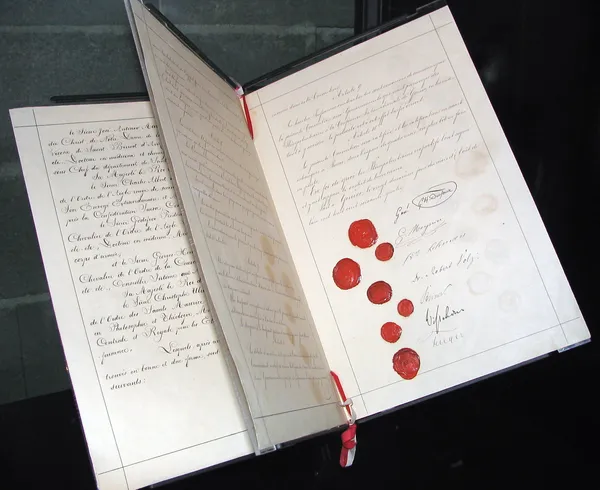
TEHRAN (Defapress) - Following the occurrence of widespread military aggressions against Iran's infrastructure and civilian targets during the Twelve-Day War and the Ramadan War, the framework of international humanitarian law faced one of the toughest tests of the present era. At the center of this challenge lies the performance of the Swiss Confederation, a country recognized as the official depositary and custodian of the Four Geneva Conventions of 1949. An analysis of humanitarian law standards shows that while Washington and Tel Aviv have trampled upon the fundamental frameworks of the United Nations Charter and Additional Protocols through criminal actions, Geneva, by adopting a conservative approach and prioritizing symbolic peacemaking roles, has shirked its intrinsic duty to fully exercise and execute its inherent capacities as the depositary of the treaties.

According to customary international law standards and the text of Common Article 1 of the Four Geneva Conventions, all signatory states, particularly the custodian state of the treaties, are obligated to respect humanitarian law under all circumstances and to guarantee its enforcement. From a legal standpoint, this peremptory principle is not an obligation of result, but an obligation of means; meaning that the custodian state is duty-bound to utilize all possible diplomatic and treaty mechanisms and capacities to exert pressure on violators of humanitarian law.
Although the depositary lacks the legal authority to unilaterally convene an emergency conference of high contracting parties without a UN General Assembly resolution or consensus among member states, and the activation of the "International Fact-Finding Commission" under Article 90 of Protocol I requires the explicit consent of the conflicting parties, Switzerland could have acted far more actively within its legal competencies as a facilitator and communication channel of the treaties.
A review of field developments and committed crimes reveals the shocking dimensions of international standard violations. In the course of their attacks, the U.S. and the Zionist regime have flagrantly violated the fundamental principles of "distinction" and "proportionality." The direct bombardment of a primary school in Minab, the targeted destruction of civilian gatherings and traditional wedding ceremonies in Sirik, as well as the indiscriminate and inhumane firing of dangerous weapons such as cluster bombs at residential areas and a sports hall in Lamerd, constitute concrete and undeniable examples of war crimes based on Article 51 of Protocol I and the Fourth Geneva Convention. These criminal behaviors were not a tactical error, but part of a strategy of indiscriminate attacks against the population and civilian infrastructure.
Although the Swiss government has taken measures such as maintaining diplomatic communication channels via its interest section office, hosting certain talks, rejecting most U.S. military flight requests in line with observing neutrality, and issuing general statements praising self-restraint, from a humanitarian law perspective, these actions are by no means sufficient or proportionate to the disaster that has occurred.
Switzerland's approach has been limited to low-cost diplomatic and ceremonial actions, which are defined more toward preserving its prestige as a neutral host than fulfilling the imperative responsibility under Common Article 1 of the Four Geneva Conventions. Switzerland even refrained from exercising its routine administrative powers, such as the prompt and official circulation of recorded reports of treaty violations among all member states, creating diplomatic groundwork to facilitate the International Committee of the Red Cross's (ICRC) field access to affected areas in Minab and Sirik, and active consultation to build consensus among members for holding consultative meetings.
Ultimately, the performance of the Swiss Confederation regarding the crimes of the U.S. and the Zionist regime demonstrated the deep challenges facing the concept of neutral custodianship in the face of humanitarian disasters. Settling for minimum commitments and prioritizing diplomatic expediency over decisive treaty consultations has reduced the official custodian of the Geneva Conventions from an active player to a conservative observer. According to international law, as long as the existing capacities in Common Article 1 are not fully deployed to protect civilians, the moral and legal responsibility arising from inaction against war crimes will continue to rest upon the custodian states and their claims of neutrality.
