
Recent War Exposed America's Miscalculation
TEHRAN (Defapress) - Following recent developments and the occurrence of the 12-Day War and the Ramadan War, the issue of the country’s readiness against enemy threats, the manner of providing services to victims, and the necessity of strengthening urban infrastructure have received more attention than ever before. In this regard, Mehdi Chamran, Chairman of the Islamic Council of Tehran, in an interview with Defapress correspondent, while detailing the dimensions of the Third Imposed War and the role of the U.S. and the Zionist regime in recent developments, spoke about the actions of the urban management to provide relief to the damaged, house the displaced, and rebuild affected areas, which you can read below:
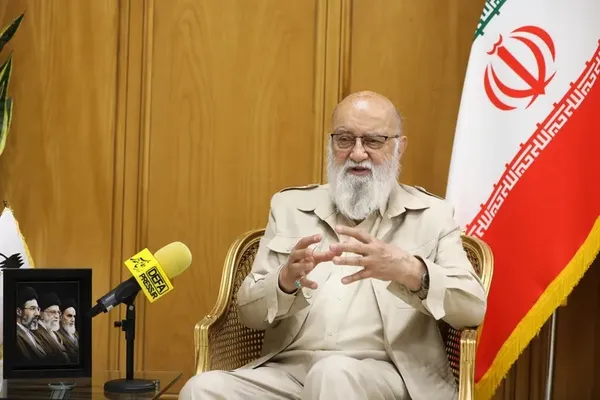
Defapress: Thank you for taking the time to speak with the Defapress News Agency. To begin, could you explain the recent war and the role of the U.S. and the Zionist regime in it?
I wish you success at the Foundation for the Preservation and Publication of Sacred Defense and Resistance Works and Values, as well as the Sacred Defense News Agency. The Foundation for the Preservation and Publication of Sacred Defense and Resistance Works and Values is an organization that I was responsible for in 1989 by the decree of our martyred Leader. We thank God that this organization has now turned into a sturdy tree, and valuable measures have been taken within it, by the grace of Almighty God and the efforts of those involved.
Now, regarding the two recent wars, I believe the U.S. and the Zionist regime designed a hybrid war, the various dimensions of which have been discussed extensively. They assumed that by inflicting military blows, they could finish off the Islamic Republic of Iran and even the very existence of Iran. In their imagination, they had such a plan, but as our dear, martyred Leader said, it's a fake dream.
In the 12-Day War, they attacked our country to test us. This attack took place while we were negotiating, and those negotiations were ultimately nothing more than deception. The enemy observed that the people of Iran, the Armed Forces, and the government stood side by side with strength and firmness and resisted.
In this war, we lost dear and noble commanders; commanders who were each valuable examples, and it may take many years before we can find their likes again. Major General Rashid, Major General Salami, and other commanders and dear ones who were martyred at that junction left a truly big gap.
Of course, the military and political structure of the Islamic Republic of Iran is such that it does not rely on one or two individuals and can continue its activities at high speed even in the absence of great commanders. As we saw during the 12-Day Sacred Defense, just a few hours after the martyrdom of the commanders, our martyred Leader appointed new commanders, and they began their work immediately.
After the negotiations failed to yield results, the second round of talks began, but during those very negotiations, they attacked our country once again. This attack was completely treacherous, and a great crime occurred. Our dear Leader, who was the political, military, and religious leader of the country and our Marja', was martyred at his place of work. This act was an assassination and a great, historical crime.
The U.S. imagined that just as it kidnapped and imprisoned the president in Venezuela, it could carry out such actions in Iran; but since such an operation was impossible for it, it resorted to assassination. They targeted our dear Leader and some officials, commanders, and even ministers of our country, imagining that after these actions, nothing would remain of Iran.
This is the very delusion that Trump has and repeatedly states: "I beat Iran." If you have beaten Iran, enjoy it! But the reality is that no such thing exists, and this issue has become a heavy burden for them.
Trump even insults friends and the presidents of Arab and Islamic countries and exhibits inappropriate behavior. They imagine that the martyrdom and injury of civilians, attacking wedding parties, killing children and civilians, and severing transportation bridges constitute military artistry; whereas these actions carry no military value and are nothing short of war crimes.
In the third battle and the recent Sacred Defense, they committed great crimes and did everything they could during this period; but they achieved no results. Not only did our Armed Forces stand against them, but the negotiators who were invited for talks, when they saw Trump brazenly turn his back on negotiations and even reduce agreements to a mere piece of paper, naturally lost their trust.
Our negotiators are wise and vigilant, and the people of Iran have no trust in the U.S. and Trump. Even our children know that the U.S., and Trump in particular, cannot be trusted.
Netanyahu and other leaders of the Zionist regime are professional criminals and terrorists. They consider themselves superior to other nations and imagine they have the right to kill and destroy others to survive. They state this belief openly and have no fear of saying it.
The Iranian nation came to the scene from the very moment they heard the news of the martyrdom and assassination of our dear Leader. This crime occurred at his workplace and residence, and the people could not tolerate it. The people were present on the scene from that very first night, and to this day, they stand firm and pursue their plans.
Our Armed Forces, with the experience they have gained, are present on the field with greater capability, strength, and readiness. I believe we must abandon the strategy of "an eye for an eye," and if we feel or detect that the enemy intends to attack, we should preempt it.
Our military friends predicted long ago that the array the U.S. assumed in the region was an attack formation. I told our military friends that if this formation is an attack formation, we must strike it and not allow the enemy to organize its attack.
I remember in the early days of Saddam's imposed war against Iran, the martyred Dr. Chamran, along with the Irregular Warfare Headquarters formed there, worked alongside the Supreme Leader. Martyr Chamran believed that we must attack the enemy every night; because if we do not attack, the enemy finds the opportunity to organize and will attack us.
At that time, we faced a shortage of forces, equipment, and readiness. The IRGC was not yet fully organized, and the Army had not yet achieved the cohesion needed after the revolution and coup attempt. Nevertheless, even if we had 15 personnel, we would strike enemy positions and disrupt Saddam's forces' array so he could not attack the following day.
Today, too, I believe that when we are certain the enemy intends to attack, we must disrupt their war array and strike preemptively. This action is a form of defense and part of the deterrence strategy. Our military friends are experts in this field and know better than I do that deterrence does not mean passive defense alone; rather, sometimes a deterrent attack is also part of defense.
We did not start the war and have not attacked anyone, but if we are attacked or feel that the enemy intends to attack, we must defend ourselves well. As a result, their plans and delusions vanished into thin air, and now they are making desperate attempts. To use a Persian proverb, they are trapped in a situation with no way out.
The U.S. believes that all issues must be resolved through military force and power. Since the founding of the U.S. until now, there has been only a short period during which the country was not involved in war. They waged war in Vietnam, Afghanistan, Iraq, and other parts of the world, leaving people soaked in blood.
The U.S. did not turn wedding parties into mourning ceremonies only in Iran; it carried out similar actions in Afghanistan as well. They view attacking ordinary people, students, and innocent individuals as a display of their power. What crime did the student targeted in Minab commit? What military force or offensive capability did she possess that they attacked her with advanced missiles?
After a while, when people gather at the location to rescue the wounded and victims, they target another group and then claim they were unaware of it. This claim is an obvious lie, and the people of the world know it too.
Unfortunately, some countries in the southern Persian Gulf, still under U.S. influence, believe this country can support and protect them, even as they see the results of that dependency. The U.S. has bases on their territory, and when we target these bases, the host country naturally suffers damage as well.
These countries must have honor and ambition, and should not follow U.S. policies for the sake of the Zionist regime and Trump. They must realize that the U.S. cannot remain in the region forever, and supporting the U.S. and the Zionist regime will not create a future for them.
Defapress: One of the enemy's goals in the recent war was to create displacement and harm the people. What measures did Tehran Municipality take for housing, damage compensation, and the reconstruction of damaged areas?
We believe that no matter how much we help the people, this aid still falls short of the people's expectations and merit. For a person whose home has been damaged or destroyed and whose life has been torn apart, no material aid can fully compensate for their mental, psychological, and financial losses.
Nevertheless, we take pride in the fact that, in conditions where we could have waited for budget approvals or the involvement of other agencies, we took immediate action and stood by the people to the extent of our capabilities and resources. Our goal was to prevent the people from suffering further damage and enduring more distress.
Of course, there are still problems. Just last night, while I was present at one of the city's squares, an individual approached me and mentioned that the issue with his home's window glass had not yet been resolved. The district mayor was also present on site; the matter was investigated right there, and the responsible official was introduced to follow up. There might have been a deficiency in the documents or invoices, which was slated to be resolved.
However, I emphasize that carrying out these actions was our duty, and we did not do anything extraordinary. Compared to the forgiveness, self-sacrifice, and losses inflicted upon our dear people, especially the honorable martyrs, no action is comparable or capable of full compensation.
In those very first hours, necessary decisions were made. The City Council also passed a resolution and, through coordination, paved the execution path for the municipality. Council members visited almost all the impacted points and inspected them closely.
We attempted to erase the face of war and the effects of war damage from the city. In some areas, just a few hours after an incident, streets filled with debris were cleared. Damaged buildings were covered with appropriate screening, flags were installed, or necessary actions were taken to preserve the urban landscape.
Relief and rescue operations also began from the very first moments. Municipal forces, firefighters, and other organizations were among the first groups present on scene. In some areas, field management was even handed over to the municipality, as it possessed greater equipment, capability, and readiness to manage operations.
During this period, many municipal managers did not even get the opportunity to visit their homes or rest at night. They were present in various areas of the city, and even under conditions where the municipality itself was exposed to the risk of missile strikes and bombardments, they continued their work.
We also categorized the damaged buildings: some needed full reconstruction, some required retrofitting, and others only needed glass, door, and window replacements. Actions regarding these matters commenced swiftly.
Certain non-essential projects, such as painting curbs, curb construction, and even asphalt paving in cases lacking urgent necessity, were not prioritized. I emphasized directing resources toward necessary civil projects and public urban services.
Basij forces also came to help; groups were dispatched for assistance not only from Tehran, but also from other cities. Their help was extremely effective, sincere, and selfless. Everyone joined hands so that the enemy's plan, which was to create public dissatisfaction, would not materialize.
Trump constantly asks why people do not pour into the streets and riot. This is another one of his miscalculations. The more pressure is applied to the Iranian people, the more united and cohesive they will become, standing firm against Trump, his gang, and criminals like Netanyahu.
I feel sorry for the American people for having such a president; an individual who, for the sake of Netanyahu and a criminal group, exerts immense economic, psychological, and political pressure on his own country's people, while many Americans also oppose these policies.
We entered the field from the very first moments, and actions are still ongoing. Of course, financial, administrative, organizational problems, and equipment shortages exist. In the budget, we anticipated credit allocations for purchasing required equipment that, during the 12-Day War, we felt could have helped us perform better had it been at our disposal.
One of the attacks during the Ramadan War occurred near my house; when I reached the missile impact site, the fire department arrived on scene within six minutes. Basij forces were also immediately present at the location and assisted the people.
If people were upset or even spoke harshly, we understood their situation and deemed them right, because it is natural for someone who has suffered damage from an incident to be in an unsuitable emotional state.
Defapress: Please tell us about the urban management's readiness for emergency conditions and the possibility of another attack on Tehran. What is the status of building and equipping shelters?
On Tuesday, we held a full and comprehensive discussion about shelters on the floor of the Islamic Council of Tehran. Previously, in the form of a bill, we had obligated the municipality to identify existing shelters and assess their condition. The head of the Tehran City Crisis Management Headquarters appeared in the Council and explained that several schools had been examined on a case-by-case basis; some are unusable, and others must be renovated and equipped.
We must utilize all available capacities to create shelters. In the recent war, it became clear that certain spaces lacked the necessary readiness. For example, subway stations have so far been constructed mainly for passenger transport and lack the necessary facilities for people to stay long-term.
Even some stations have only two restrooms for their staff, which is insufficient for passengers as well. We have now projected facilities for passenger use, including restrooms and mother-and-child rooms, to be established in stations.
A shelter does not merely mean entering an underground space; rather, the capability for people to stay, access essential services, emergency exit routes, and proper ventilation and exhaust systems must also be provided. The topic of shelters is very extensive, and even a comprehensive book on this subject has been published by the Passive Defense Organization, which I am also reading.
During the Sacred Defense period, I had experience in constructing shelters and underground hospitals. We even built a hospital in Faw that had three operating rooms. After the retreat, I saw a video where Saddam's forces were saying that Iranians did not build this hospital and that Italians built it for them, whereas its design and execution were carried out by Iranian forces.
At that time, we even took architecture faculty students, where I served as dean, to war zones to help build parts of these complexes. Therefore, we possess valuable experience and must utilize it.
In the recent war, shelters were not utilized by the people as they should have been. While Zionist regime soldiers rushed frantically to shelters out of fear upon hearing the alarm, pushing each other aside due to space shortages to save their lives, our people went to rooftops without fear to see where the impact point was, to reach the site and assist in relief efforts.
We must move toward creating public shelters. Additionally, every building must have a safe space to protect its residents. This does not mean constructing shelters against bunker-buster bombs at depths of 45 or 50 meters in every building, but at least a space should be created that can protect people from explosion shockwaves and shrapnel.
In Article 5 Commission, wherever a construction project is raised, we emphasize two issues: first, water recycling so the complex can use its water and wastewater for green spaces and other uses; second, provision of shelter space.
For example, when multi-story parking garages are built, they should be designed in such a way that they can be used as shelters during emergency conditions.
Defapress: One of the important topics of the recent war was the cooperation between the municipality and the government. Given past controversies and statements by some officials, how do you evaluate this cooperation?
When a government is elected, it is the government of all of us. We must learn from our dear, martyred Leader, who supported every government, guided them, and raised criticisms if he had any.
To the extent possible, we have a duty to cooperate with the government, and of course, this cooperation must be mutual. There are many issues where the government must stand alongside the municipality.
In many instances, the municipality entered the scene voluntarily and executed programs that no one had directly assigned to it. Some individuals in the government might have even believed these actions were not the municipality's duty, but necessity dictated that the municipality step in.
When the honorable President, Dr. Pezeshkian, sees that the municipality's cooperation is done with sincere intentions and out of care, he naturally welcomes it. This cooperation is not limited to the topic of war and continues in areas such as schools and other urban affairs.
Of course, we occasionally remind the mayor and municipality not to stray excessively from their primary responsibilities. They must first fulfill their own duties and then, if they have the capacity and resources, assist other agencies.
The City Council is not merely the Municipality's Council. The law passed in Parliament in 1996, in my view, does not fully align with the spirit of the Constitution and its 100th Article. According to Article 100 of the Constitution, urban affairs should be placed under urban management.
We have repeatedly raised the topic of integrated management, coordinated management, or synchronized urban management, and it is currently being reviewed in Parliament. We do not say that unified urban management must necessarily be created, as it may present problems; but city management must be integrated and coordinated. For instance, the municipality cannot pave a street today, and the power department excavates the exact same spot tomorrow. This is a simple example, but numerous instances of such a lack of coordination exist.
From this perspective, we consider it our right to move along the path of cooperation and coordination with various agencies.
Defapress: Following recent events, the presence of people in city squares has increased. Some media outlets have claimed that these gatherings cause inconvenience for sick individuals. To what extent can the public's presence neutralize the enemy's strategy to create unrest?
During past riots, individuals attacked people with axes, machetes, swords, and even firearms, destroyed buildings, set fires, and destroyed public property. Did those actions not cause inconvenience to the public and patients? Why did they remain silent regarding those actions?
In contrast, people gather in squares under the harshest conditions, from cold, rainy weather to heat and even during the holy month of Ramadan, pursuing their programs peacefully and without causing incidents.
Naturally, no one gathers in front of hospitals, and in public city squares, no such problem exists.
These kinds of claims resemble the narratives Trump constructs and do not align with reality.
After the end of the Sacred Defense, we faced similar viewpoints. Some said we should not talk about war, martyrs, and martyrdom, and that Sacred Defense films should not even be broadcast, because seeing blood and martyrdom makes people sad. In response, we said that the memory of martyrs and the culture of martyrdom give life to nations.
We are alive through the uprising and martyrdom of Imam Hussain (AS). True Shiism and Islam have survived by keeping Muharram, Ashura, and the martyrdom of Imam Hussain (AS) alive. If the name of Islam exists in the world today, it is due to this culture of Resistance and martyrdom; otherwise, American Islam and Saudi Islam accept oppression, yield to force, and submit to serving others.
True Shiism and Islam stand against oppression and force. Look at the people of Lebanon, who stand firm and pay costs under the most difficult conditions, yet resist because of their faith.
Even Lebanese Christians came to the scene at various junctions, including during the martyrdom of Sayyed Hassan Nasrallah, standing against the Zionist regime and the enemy. We have a duty to support the people of Lebanon, and this support must continue.
