

Regional Security Arrangements Will Not Be Operational Without Iran
TEHRAN (Defapress) - Against the backdrop of a new phase of security dynamics in West Asia, where various nations harbor growing concerns over escalating tensions in this strategically vital region, and amid efforts by the U.S. military to impose its preferred security arrangements in the Persian Gulf, which have met a firm stance from Iran's Armed Forces, Major General Seyed Yahya Rahim Safavi, Senior Military Advisor to the Supreme Commander-in-Chief and Head of the Martyr Qassem Soleimani Research Center of Defense Science and Knowledge, addressed these recent developments in an interview with Defapress.
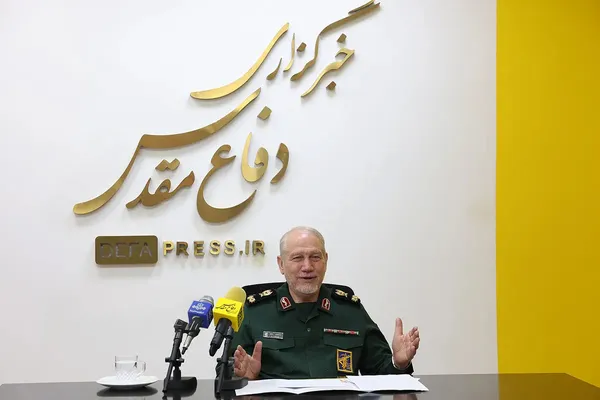
In the interview, Major General Safavi emphasized Iran's pivotal role in regional geopolitical and security equations, asserting that no security arrangement in the Persian Gulf and West Asia can be implemented without Iran's presence and central involvement. Highlighting the shared interests and common destiny of Iran and Yemen, he warned that in the event of any potential future conflict, a new front would open, fundamentally shifting the balance of power.
Elaborating on the dimensions of these strategic alliances, he addressed the geopolitical synergy between Iran and Yemen's Axis of Resistance, identifying the link between two key chokepoints, the Strait of Hormuz and Bab-el-Mandeb, as a decisive factor in future battlefields. According to Major General Safavi, the shared interests between Iran and Yemen have significantly boosted the deterrence capacity and sphere of influence of the Resistance Axis across the region's vital waterways.
Nevertheless, the senior military advisor reiterated Iran's policy of legitimate defense and peace-seeking, asserting that the Islamic Republic does not seek territorial expansion or conflict escalation. Instead, its primary objective remains the withdrawal of extra-regional forces and the establishment of sustainable regional security free from foreign interference. Concluding his remarks, he underscored the critical nature of the narrative war, stressing the essential role of the media in intelligently explaining realities and presenting Iran as a peace-seeking, defensive actor.
