
Ramadan War Led to Greater Unity of the Resistance Front
TEHRAN (Defapress) - Revisiting contemporary decisive battles is the key to understanding a nation’s true capacities when facing great powers. Among these, the "40-Day Ramadan War" (the Third Imposed War), described as an all-out war with the direct involvement of two superpowers, is viewed by Iranian military commanders not merely as a field victory, but as a strategic treasure trove of overt and covert lessons learned.
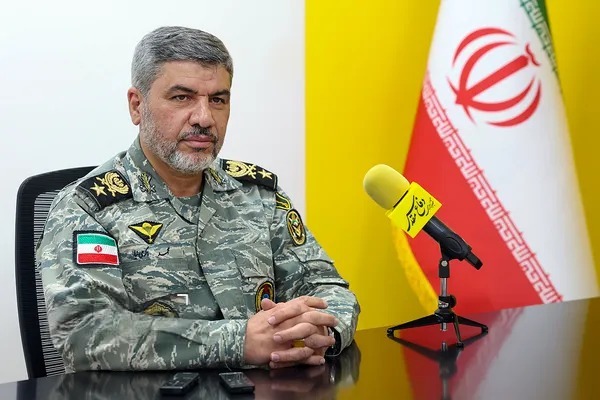
In this context, Brigadier General Akraminiya, Spokesperson for the Islamic Republic of Iran's Army, in a detailed interview with Defapress, emphasized that the full dimensions of this battle have yet to be uncovered. He described it as a mirror for assessing "national self-confidence," "the embodiment of faith in modern hardware," and "the redefinition of Iran's geopolitical power." He believes that what transpired on the battlefield and amid the flames not only led to the identification and rectification of weaknesses and the construction of more advanced equipment during the war but also, by proving Iran's righteousness, altered regional security equations and drove the United States into unprecedented isolation in its confrontation with Iran.
The full text of Brigadier General Akraminiya’s interview with Defapress follows.
Defapress: Some time has passed since the ceasefire in the Third Imposed War (the Ramadan War), yet it seems that various dimensions of this battle have still not been fully analyzed. What is your overall assessment of this event?
Brigadier General Akraminiya: Much has been said and written about the Ramadan War, but many untold aspects remain. I believe that, just as our martyred Imam stated, the first war was a vast, undiscovered treasure; this 40-day Ramadan War is also a tremendous treasure that has brought great achievements for the Iranian nation and its armed forces. We can draw on its lessons and insights for years to come to elevate Iran’s standing and strengthen its national power.
Defapress: If we may speak more concretely, what were the most important strategic achievements of this war?
Brigadier General Akraminiya: The first and most important achievement was "the enhancement of national self-confidence." In this war, we stood against the two great evil powers of the world, whom our esteemed Leader refers to as the heads of arrogance and their armies. We did not surrender, and we did not allow them to achieve their objectives. This instilled self-confidence in us, especially within the armed forces. We saw with our own eyes that a war with the United States, the Zionist regime, and even a simultaneous war with both, is not as difficult as it was imagined. We fought and prevented them from attaining their goals.
Another achievement was "the precise identification of our weaknesses." We came to fully understand our shortcomings in areas such as command, planning, strategy formulation, weaponry, equipment, and tactics. However, the crucial point is that from the very first day of the war, we strove to turn these weaknesses into strengths, and this opportunity remains available for the future.
Defapress: Given the rapid developments on the battlefield, were there also advancements in the hardware domain?
Brigadier General Akraminiya: During the war, we manufactured more advanced equipment. For instance, in the final days of the war, we deployed new drones whose research phases had begun earlier, and we succeeded in operationalizing them amidst the war. Additionally, optimized missiles were employed across the armed forces, both the Army and the IRGC, with higher quality. This demonstrates that while utilizing existing equipment, we never neglected research and development.
Defapress: You mentioned the software and spiritual dimension. What was an example of this faith-based superiority on the battlefield?
Brigadier General Akraminiya: Precisely the factor that has always distinguished the armed forces of the Islamic Republic of Iran from others: courage, faith, and conviction. In this war, we witnessed astonishing manifestations of this spirit. Our combatants, whether in the Army or the IRGC, fully aware that their launchers could be targeted at any moment, stood firm with resolve and seriousness, carried out their missions, fired, and some of them were blessed with martyrdom.
A very striking example was the mission to take down an enemy drone flying over a meeting of senior military officials. Our Air Force pilots could not fire missiles due to the high speed differential between the fighter jet and the drone. With a courageous decision, they resorted to a physical collision, striking a part of the drone with their aircraft and bringing it down. This is the embodiment of faith. Our pilot executed this operation successfully, landed his plane safely, and was ready for another mission the very next day. You will not find such courage anywhere else in the world. Likewise, the smart and daring operation of our F-5 aircraft against the U.S. base in Kuwait, flying at extremely low altitudes despite the presence of numerous enemy aircraft and air defense systems, demonstrated our management capability, precise staff work, and rare bravery.
Defapress: Apparently, one of the turning points of this war was the smart utilization of Iran's geopolitical capacities. Could you elaborate?
Brigadier General Akraminiya: In this war, we realized the immense geopolitical capacity of our country, particularly the Strait of Hormuz. For years, there had been talk of closing the Strait, but in this war, we practically understood how this capacity could effectively halt the enemy's war machine. Our intelligent control over the Strait of Hormuz is not merely for revenue generation but for preserving and enhancing our national power in the region.
This carries a clear message: countries that had cooperated with the U.S. on sanctions will henceforth take the Strait of Hormuz's considerations into account. Fundamentally, our superiority and smart control over this waterway can lay the groundwork for an indigenous regional security mechanism that gradually leads to the expulsion of America from the region and enhances security for both our neighbors and us.
Defapress: In terms of public diplomacy and soft power, what impact did the people's reaction have on the war's equations?
Brigadier General Akraminiya: The manifestation of the people's soft power was unparalleled. At dawn on March first, simultaneously with the start of the war, people took to the streets, and this presence continued until the end of the war and beyond. This support for the system, the leadership, and their children in the armed forces became an effective soft force that influenced the war process. It was a new experience, showing that the Islamic Republic of Iran can count on this vast popular support in any crisis.
Defapress: What is your analysis of the behavior of America's Arab allies and Western countries during this war?
Brigadier General Akraminiya: A major achievement was raising awareness among regional countries. They realized that relying on the United States does not bring them security. In this war, the Americans not only failed to defend their own infrastructure and bases but also did not prioritize their Arab allies. They exerted all their efforts to intercept drones and missiles heading toward the Zionist regime, but brought less capability to defend the Arab countries. This was a major betrayal by the U.S. against its allies in the region, a country that takes billions of dollars annually from these nations' oil revenues and promises security, but, in practice, neither had sufficient equipment to defend them nor placed any priority on them.
On the international stage, the righteousness of the Islamic Republic of Iran was proven. No country was willing to support the United States; even NATO allies refused. The U.S. president threatened them with punishment, but they did not step up until the very end because they knew this war was unjust and false. A telling example is that after the war, when the U.S. president declared that the Zionist regime should leave the confrontation with Lebanon's Hezbollah to al-Jolani in Syria, al-Jolani himself called and said they would not enter a war with Lebanon. This shows that even among its own proxies, America stood alone against Iran, a testament to the Islamic Republic's righteousness.
Defapress: What was the state of the Axis of Resistance after the developments of the past two years, and what impact did this war have on it?
Brigadier General Akraminiya: One of our great achievements was the integration of the Axis of Resistance. After Operation Al-Aqsa Storm, Western analysts claimed that the Resistance Axis had disintegrated and that Hamas and Hezbollah were weakened. However, this war showed that not only was there unity, but that cohesion had even strengthened. Various parts of the Resistance entered the war together, observed ceasefires together, and ultimately Iran stood firmly on its principled positions, to the point that the first clause of the agreement emphasized the cessation of hostilities across all areas involving the Resistance. Through our power, we were able to impose a ceasefire that others were incapable of achieving, while Lebanon's president could not secure a ceasefire through "negotiation," we succeeded in imposing a ceasefire through the exercise of power and steadfastness against the Americans. This demonstrates the high capability of the Islamic Republic of Iran.
Defapress: You referred to America's longstanding enmity. Where do you see its roots?
Brigadier General Akraminiya: Unfortunately, some assume that America's hostility toward us dates only to the post-Islamic Revolution era; that is completely wrong. America's hegemonic nature has a long history. In the August 19, 1953 coup, years before the Islamic Revolution, they overthrew the national and popular government of Dr. Mossadegh. Just nine days after the victory of the Islamic Revolution, before any action could even be taken, Carter ordered the drafting of a plan to overthrow the Islamic Republic. Support for Saddam, the downing of our passenger aircraft, backing terrorist groups whose hands are stained with the blood of 17,000 Iranians, economic sanctions, and repeated insults, all are signs of a long-standing enmity. This U.S. hostility, influenced by the Zionist lobby, continues today against the Iranian nation, but we resist the demands of our enemies.
Defapress: How do you assess the current readiness of the armed forces in light of the lessons learned from the Imposed War?
Brigadier General Akraminiya: Praise be to God, the armed forces are in a very good state of readiness. From the very first day of the ceasefire, and even during negotiations and political dialogues, we declared that we have no trust in the enemy, because they have a record of betraying diplomatic efforts, and we do not rely on them. Without this readiness, the enemy would never have agreed to a ceasefire. The main reason they came to the negotiating table was their failure on the battlefield.
Today, the Army's Ground Force is guarding the borders with full might, and our Air Defense Force, operating within a joint headquarters, has updated its equipment and remains vigilant. The Air Force, with the innovations applied in its successful operations against U.S. bases, has enhanced its experience, and the Navy, despite cowardly attacks, did not allow any passage to enemy destroyers and forced them to retreat.
Defapress: Please explain the production and manufacturing of equipment after the Third Imposed War.
Brigadier General Akraminiya: We have serious planning in two areas: domestic production and procurement of advanced equipment from friendly nations. We will certainly have access to even more advanced equipment in the coming days.
Defapress: Were new drones utilized in the Third Imposed War?
Brigadier General Akraminiya: The drones unveiled in the final days of the war are far more advanced than previous generations, such as the "Arash-2," and we will soon inform the dear Iranian nation about their capabilities. We will use this great treasure to build a safer and more powerful future.
